
目录
- Corner Spout vs Top Spout Pouches at a Glance
- What Are Corner and Top Spout Pouches?
- Dispensing and Consumer Use
- Filling and Production Considerations
- Shelf Display, Handling, and Artwork
- Laminate Structure and Spout Fitment Selection
- How to Choose the Right Spout Location
- Information to Provide When Requesting a Quote
Corner spout and top spout pouches use similar flexible laminate constructions, but spout placement changes pouring ergonomics, filling setup, display orientation, and pack design. This buyer guide explains how to select the right format.
Corner Spout vs Top Spout Pouches at a Glance
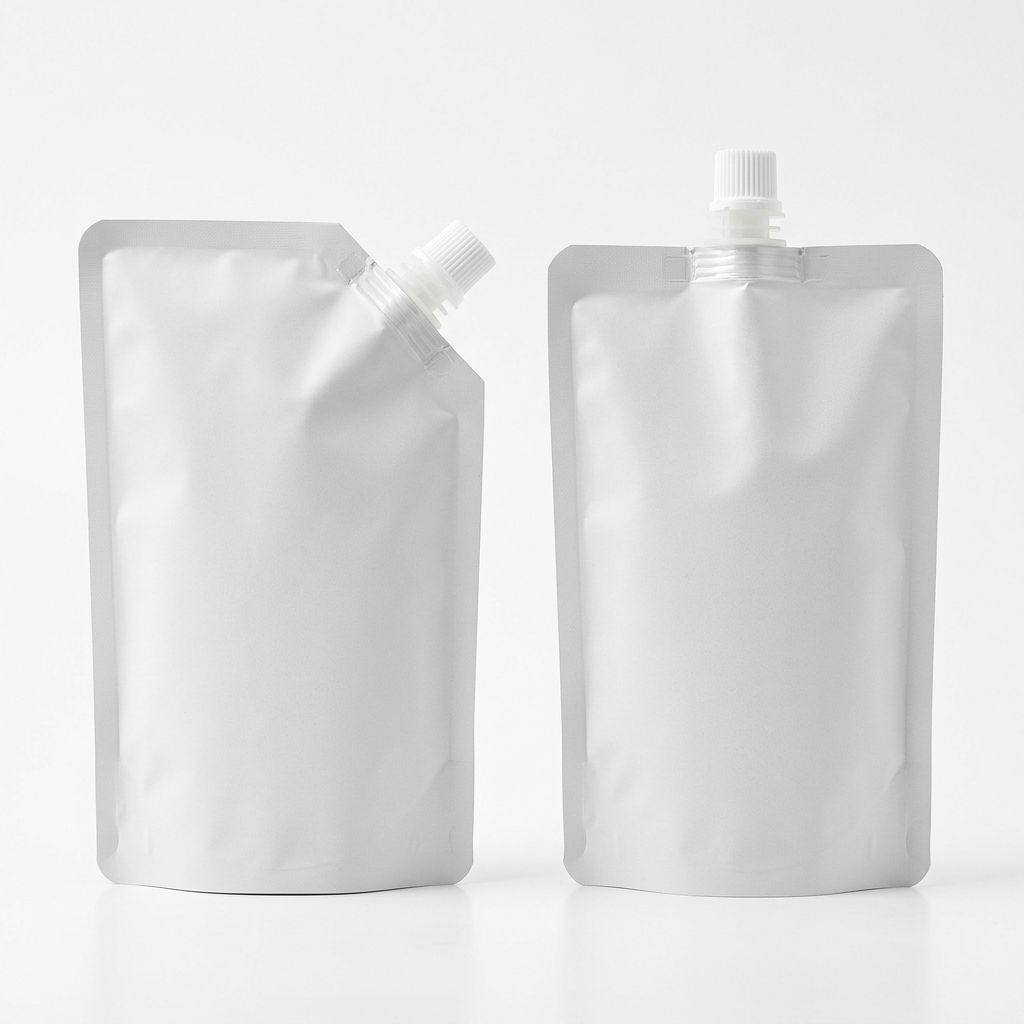
When comparing corner spout vs top spout pouches, choose a corner spout when controlled angled pouring and a broad front-panel design are priorities; choose a top spout when upright filling, centered dispensing, or a bottle-like opening position better suits the product and packing line. Neither format is universally better. The right choice depends on product viscosity, fill method, intended use, pouch dimensions, cap and spout geometry, and how the finished pack will stand, ship, and display.
Both formats are preformed flexible pouches with a fitment sealed into the pouch. They are commonly specified for liquids and semi-liquids such as sauces, purees, concentrates, personal-care products, household liquids, and refill products. A supplier should validate the complete pouch, fitment, cap, and filling process as one system rather than treating spout position as a cosmetic choice.
| Decision factor | Corner spout pouch | Top spout pouch |
|---|---|---|
| Spout position | At one upper corner | Centered or offset along the top edge |
| Typical pouring motion | Angled pour from a corner | Centered, upright-to-tilted pour |
| Front-panel layout | More continuous top-center brand area | Top fitment may affect upper artwork area |
| Filling orientation | Requires line tooling and handling compatible with corner placement | Often aligns naturally with top-fill handling, subject to equipment design |
| Common buyer priority | Pour direction, pack appearance, flexible gripping position | Centered access, refill use, familiar opening location |
What Are Corner and Top Spout Pouches?
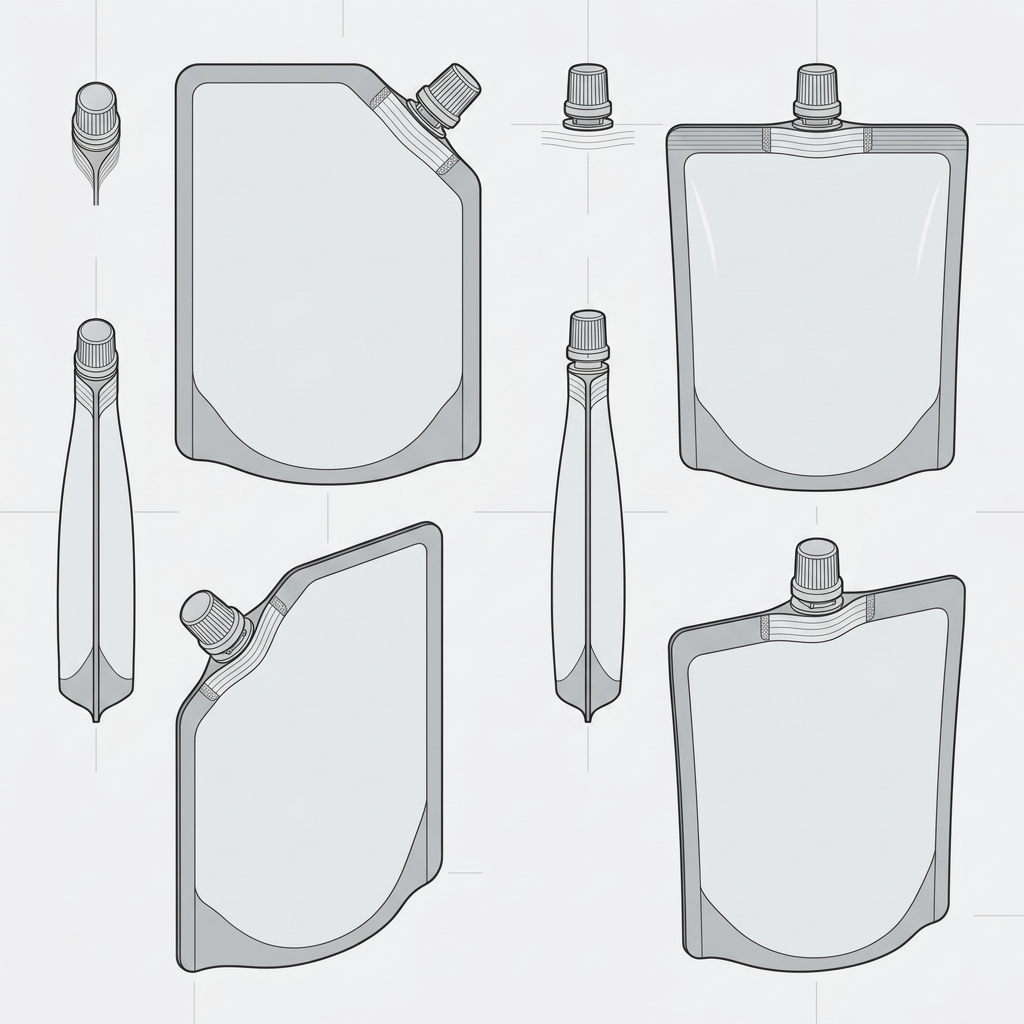
A corner spout pouch has its fitment integrated near the left or right upper corner. The pouch can be made as a three-side-seal, stand-up, or shaped format, depending on the required capacity and shelf presentation. When the user tips the pouch, the corner position can help direct product flow toward the opening.
A top spout pouch has a fitment sealed into the top seal area, usually near the center but sometimes offset. The opening is positioned like the neck of a small container. This format can be practical for refill pouches, products dispensed while held upright, and applications where a centered opening works with the filling and capping process.
In both cases, the fitment normally includes a spout and a screw cap, although exact closures vary. The pouch body is a multilayer laminate selected for sealability, stiffness, puncture resistance, and the appropriate barrier needs of the packed product. Stand-up performance may also require a bottom gusset, dimensional control, and enough product weight to stabilize the pouch.
Dispensing and Consumer Use
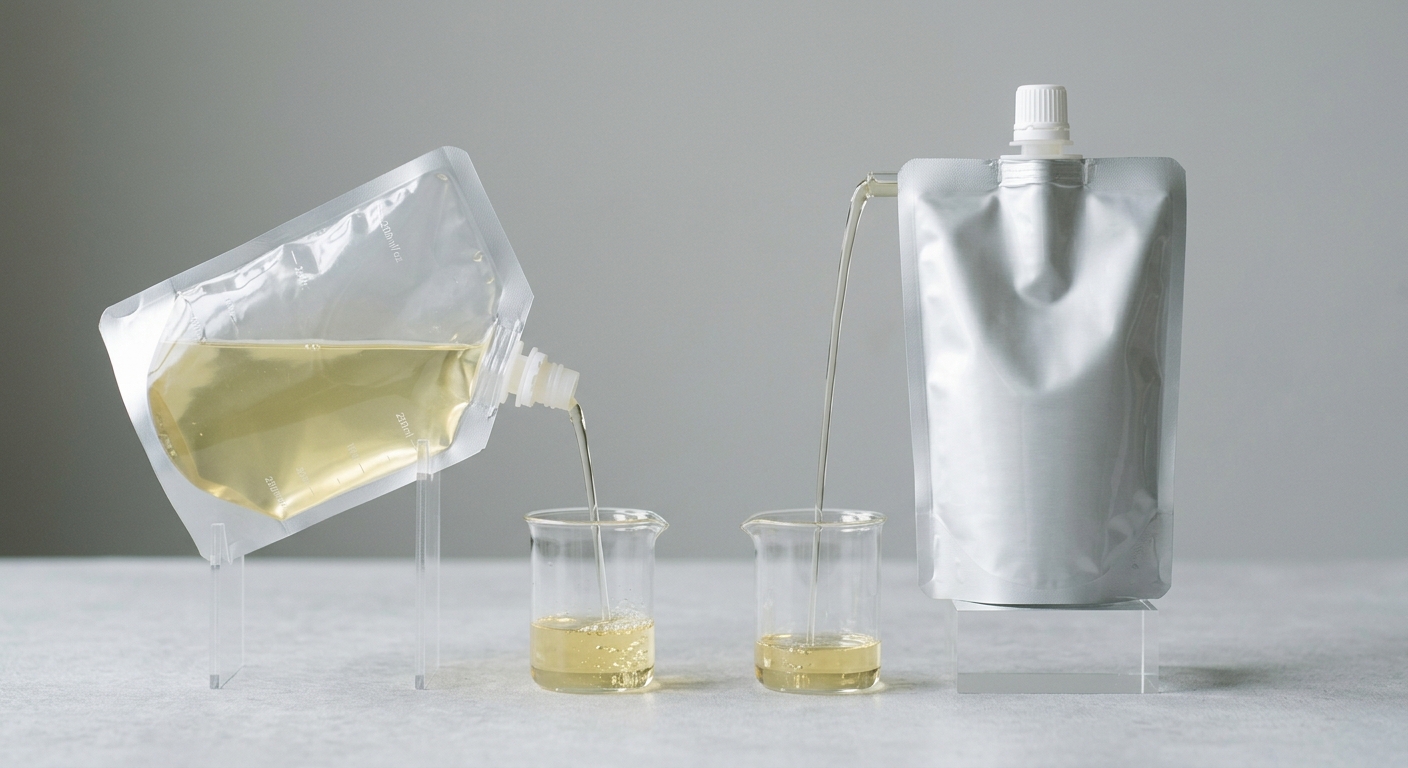
Spout position has its clearest effect at the point of use. For a product that is poured, the corner spout creates a natural directional outlet when the pouch is tilted. This can suit dressings, syrups, edible oils, liquid concentrates, and similar products, but actual flow control still depends heavily on product rheology, spout bore, cap design, and the consumer’s grip.
Top spout pouches can feel more intuitive when the product is squeezed upward through a centered opening, when a refill pouch is decanted into another container, or when the pack is opened and closed repeatedly. A centered top opening can also be easier to access when the pouch is standing in a narrow storage area. However, a top spout does not by itself prevent drips, improve dose accuracy, or guarantee leak resistance.
For viscous sauces or purees, buyers should consider whether the spout diameter permits acceptable product flow and whether residual product can be evacuated from the pouch. For thin liquids, consider the likely pour rate and whether the user needs a narrow, controlled stream. The most reliable approach is to test filled samples under the intended handling conditions. For sauce-specific considerations, review this spout pouch specification guide for sauces.
Filling and Production Considerations
Before selecting a corner or top fitment, confirm how the pouch will be filled, capped, conveyed, and inspected. Preformed spout pouches may be filled through the spout, then capped, or processed with other line arrangements depending on the machinery and product. The filling line needs to hold the pouch consistently, align the fill nozzle with the spout, apply the closure correctly, and manage any product contamination around the sealing and capping areas.
Top spout placement may simplify alignment for equipment designed around a centered top opening. Corner spout pouches may require pouch holders, guides, or indexing designed for the angled fitment position. These are equipment-integration questions, not fixed advantages of either format. Buyers should share pouch drawings, fitment dimensions, desired fill volume, product temperature, viscosity range, and line details with both the pouch manufacturer and filling-equipment provider early in development.
Hot-fill, retort, and cold-fill applications require separate technical review. The laminate, fitment resin, cap, seals, and process conditions must be compatible with the intended treatment. Do not assume that a pouch structure suitable for one product or filling condition is suitable for another.
Shelf Display, Handling, and Artwork
For stand-up pouches, base width, gusset construction, fill volume, product density, and headspace affect stability more directly than spout location alone. Still, the fitment adds local weight and changes where a consumer grips the pouch, so it should be reviewed in physical samples. A tall narrow pouch may behave differently from a wider pouch at the same nominal volume.
Corner spouts leave the top-center area visually open and can support a label or graphic layout that emphasizes the front face. Top spouts occupy part of the upper edge, which should be accounted for in artwork safe areas and any hang-hole, tear feature, zipper, or shoulder shape. Avoid placing essential legal copy, fine type, barcode elements, or critical design details where the fitment seal or production tolerances could interfere.
Capacity should not be estimated from pouch dimensions alone. Product density, target fill level, gusset dimensions, headspace, and fitment placement all matter. Use this spout pouch sizes and capacity guide when preparing an initial size brief, then confirm volume with filled prototypes.
Laminate Structure and Spout Fitment Selection

Spout location does not determine the pouch laminate. Material selection should begin with the product and its distribution environment. A typical printed laminate may combine an outer layer for print and surface protection, one or more functional layers for barrier or mechanical properties, and an inner sealant layer compatible with the product and fitment-seal process. The final structure must be assessed against the actual product formulation, including oils, acids, alcohols, fragrances, or other ingredients that can affect packaging compatibility.
Fitment selection includes the spout’s internal diameter, length, flange geometry, thread design, cap type, and material. Larger bores can assist flow for thicker products but may not provide the same level of control for low-viscosity liquids. The seal area around the fitment needs sufficient design allowance and must be evaluated in production trials.
Specify whether the package needs a tamper-evident closure, a tethered cap, or another closure configuration only when it is appropriate for the market and application. Such features require confirmation of fitment availability, line compatibility, and performance testing. The pouch supplier can help develop the package, but the brand owner remains responsible for validating the final package for its product and intended use.
How to Choose the Right Spout Location
Use the following selection sequence to compare corner spout and top spout pouches objectively:
- Define the use case. Is the pouch poured, squeezed, used as a refill, or consumed directly from the opening?
- Characterize the product. Provide viscosity, density, fill temperature, ingredient considerations, and any process treatment.
- Review the filling line. Confirm pouch presentation, nozzle access, capping method, throughput expectations, and inspection requirements.
- Select preliminary dimensions. Consider target net content, headspace, standing stability, case packing, and display orientation.
- Choose the fitment. Match bore and cap design to product flow, reclosure needs, and line capability.
- Build artwork around production zones. Keep critical graphics clear of fitment seals, top seals, gussets, and trim allowances.
- Test prototypes. Evaluate filling, closure application, leaks, drops, transport, standing performance, opening, and dispensing with the real product.
If the product also requires a resealable dry-product format, a zipper pouch buying guide for food packaging can help distinguish zipper-based access requirements from fitment-based dispensing requirements.
Information to Provide When Requesting a Quote
A complete request helps a manufacturer recommend a feasible corner spout or top spout configuration and prepare an accurate quotation. At minimum, provide the target product, net fill quantity, pouch format, preliminary dimensions, preferred spout location, fitment and cap preference, product viscosity, fill conditions, expected order quantity, destination market, artwork status, and target delivery timing.
Also state whether you need samples for filling trials and whether your team has specific requirements for barrier, finish, print colors, pouch shape, bottom gusset, hang holes, or other features. If some details are not final, identify them as assumptions. Early technical discussion can narrow the options before artwork and tooling decisions are made.
For many buyers, the practical conclusion is simple: use a corner spout when the product benefits from an angled pour and the branding or use case favors that layout; use a top spout when centered access and filling-line alignment are the stronger priorities. Confirm the choice through a sample and production-line evaluation rather than relying on appearance alone.


