目录
- What Spout Pouch Filling Machine Compatibility Means
- Start With the Product Being Filled
- Match the Pouch Format to Machine Handling
- Confirm Spout and Cap Fitment Requirements
- Select a Filling Method That Fits the Product
- Consider Sealing and Thermal Process Conditions
- Use a Structured Compatibility Qualification Process
- Buyer Checklist Before Ordering Pouches
A practical guide for B2B buyers evaluating whether a spout pouch design, fitment, and product can run reliably on a selected filling machine.
What Spout Pouch Filling Machine Compatibility Means
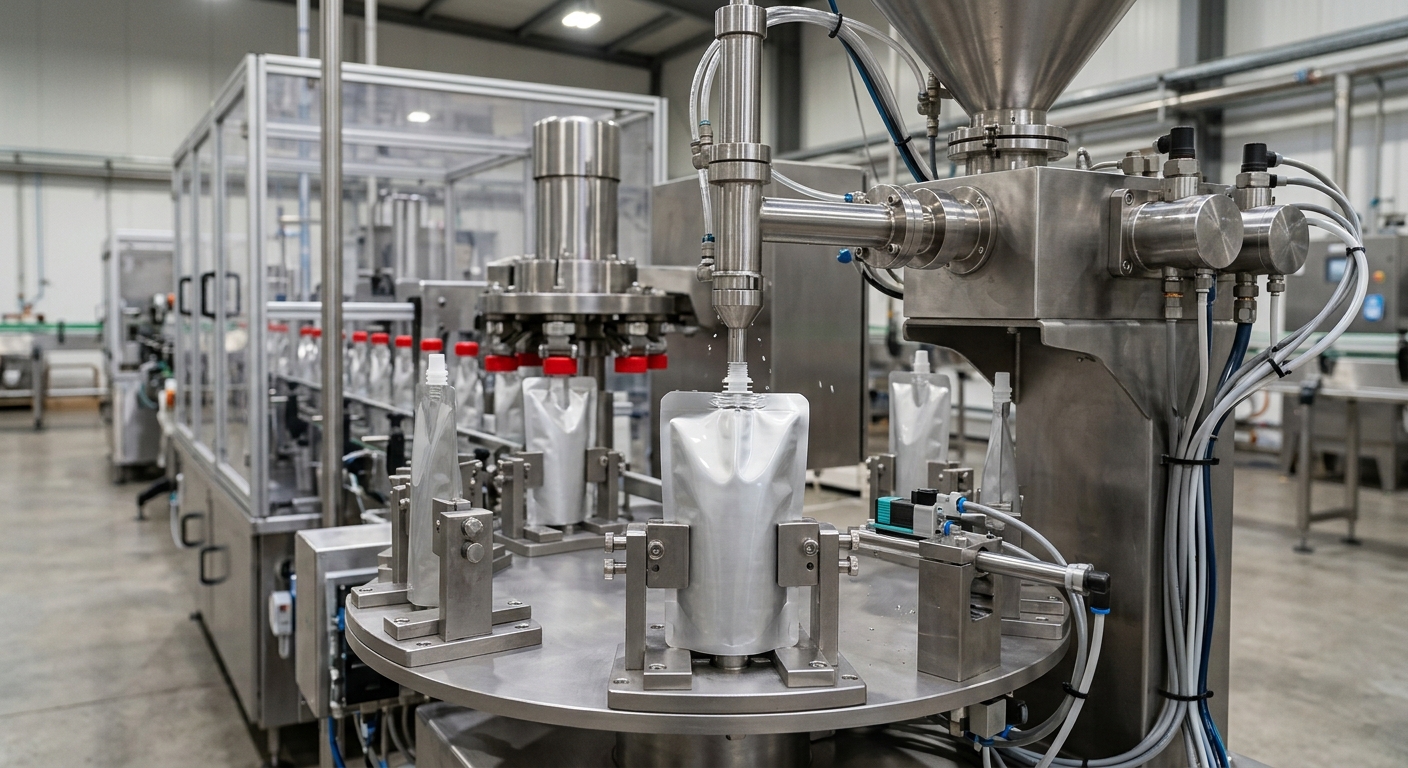
A spout pouch filling machine is compatible with a pouch only when it can consistently pick up, open, position, fill, seal or cap, discharge, and inspect that pouch without damaging the package or creating unacceptable variation. Compatibility is not determined by pouch volume alone. Buyers need to align pouch geometry, spout location, fitment dimensions, laminate structure, product rheology, fill temperature, target output, and the machine’s handling method.
For most projects, the correct sequence is to define the product and required process first, then select a pouch format and fitment that the filler can handle. A pouch manufacturer and equipment supplier should review the same approved drawing and technical data. This avoids a common issue: a pouch that holds the desired volume but cannot be securely clamped, opened, indexed, or capped on the planned line.
In this guide, compatibility assumes a pre-made spouted pouch being filled through its fitment. Requirements differ for form-fill-seal equipment, aseptic systems, and bag-in-box equipment. Machine capability must always be confirmed by the machine supplier and validated through line trials using representative pouches and product.
Start With the Product Being Filled

The product sets the practical limits for filling accuracy, nozzle design, cleaning needs, and package construction. Before discussing machine speed, document the product’s viscosity range, particle content, density, foaming tendency, temperature at filling, acidity or chemical characteristics, and required shelf-life process.
Low-viscosity liquids can drip or splash when the nozzle retracts, particularly at higher speeds. Viscous products such as condiments, purees, gels, and concentrates may require a larger product path, controlled nozzle movement, or positive-displacement filling. Products containing particulates require special attention because particle size and concentration can affect nozzle clearance and fill consistency. Foaming products may need slower filling, bottom-up filling, or an appropriate headspace target.
Use actual process conditions rather than a laboratory-only product description. A sauce at ambient temperature may behave differently when hot filled, and a product’s viscosity can vary with temperature, shear, and batch formulation. For sauce projects, the packaging considerations in this spout pouch specification guide for sauces are a useful starting point for aligning product, laminate, fitment, and filling conditions.
- Product viscosity: Influences pump selection, nozzle diameter, fill speed, and post-fill drip control.
- Particles: Affect the minimum product path and whether valve, piston, or rotary filling components are appropriate.
- Fill temperature: Influences pouch dimensional stability, seal performance, and safety requirements.
- Foaming: Affects nozzle position, dosing speed, and usable fill level.
- Required process: Determines whether the pouch must tolerate hot filling, retort processing, or another validated preservation method.
Match the Pouch Format to Machine Handling
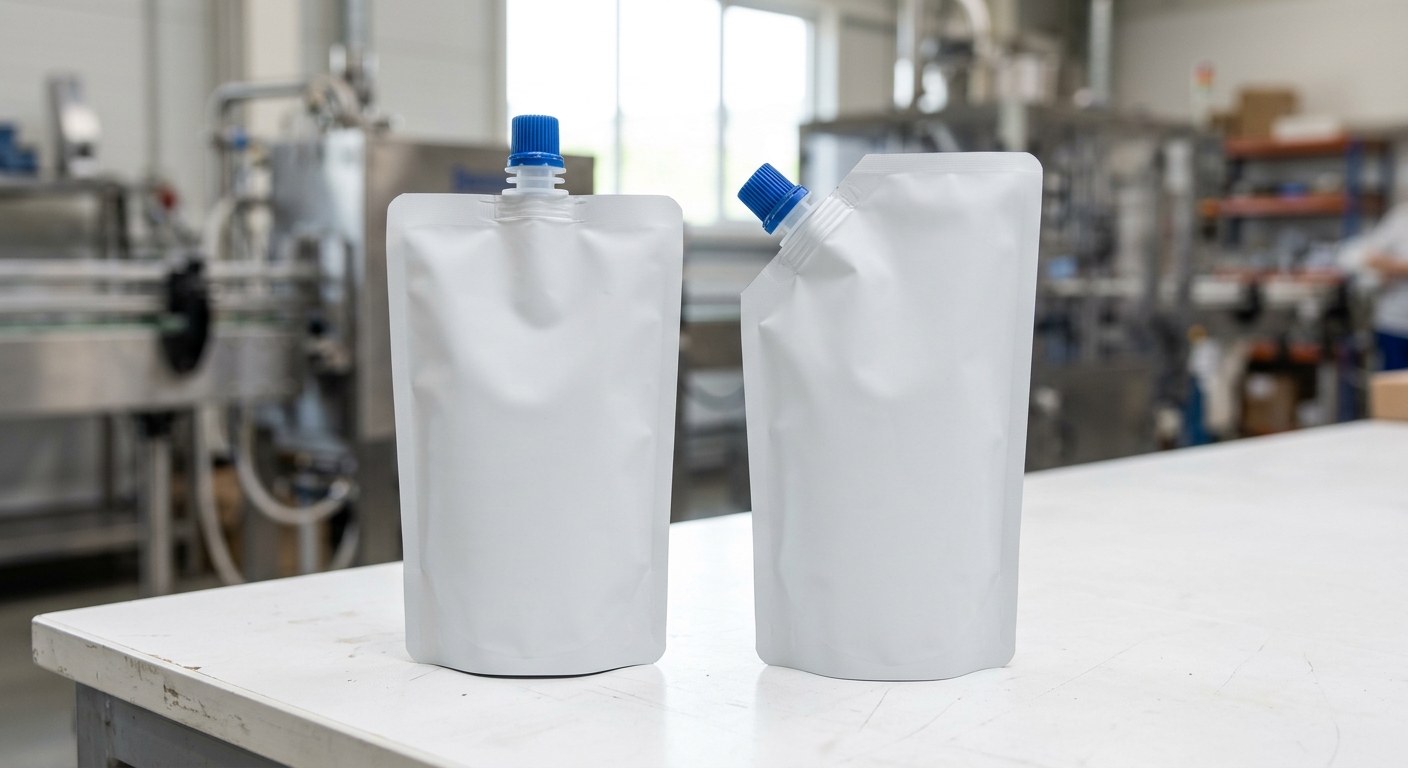
Pre-made pouch fillers handle a pouch through specific contact points, such as the top web, side edges, gusset, fitment neck, or a locating feature. The pouch format must provide stable handling throughout the machine cycle. A stand-up pouch with a bottom gusset may require different magazine settings, grippers, and support plates than a three-side-seal pouch.
Spout location is especially important. A top-spout pouch is often presented and filled from the top edge, while a corner-spout pouch may need a machine designed to locate and hold an off-center fitment. The machine’s tooling must accommodate the pouch’s orientation and preserve sufficient clearance for the fill nozzle and capping head. Review corner-spout and top-spout pouch differences before finalizing a format, because the choice affects filling setup as well as consumer use.
Dimensions should be controlled with a pouch drawing that identifies overall width, overall height, gusset dimensions, spout centerline location, fitment orientation, seal widths, and tolerances. Do not rely only on a visual artwork proof. A small change in spout position can affect whether a capper head aligns correctly or whether a pouch clears a guide rail.
Pouch capacity is also a physical design question, not just a nominal volume decision. Product density, intended fill level, headspace, and gusset opening all affect the finished package. Buyers can use the spout pouch sizes and capacity guide to prepare the dimensional inputs needed for machine and pouch discussions.
Confirm Spout and Cap Fitment Requirements
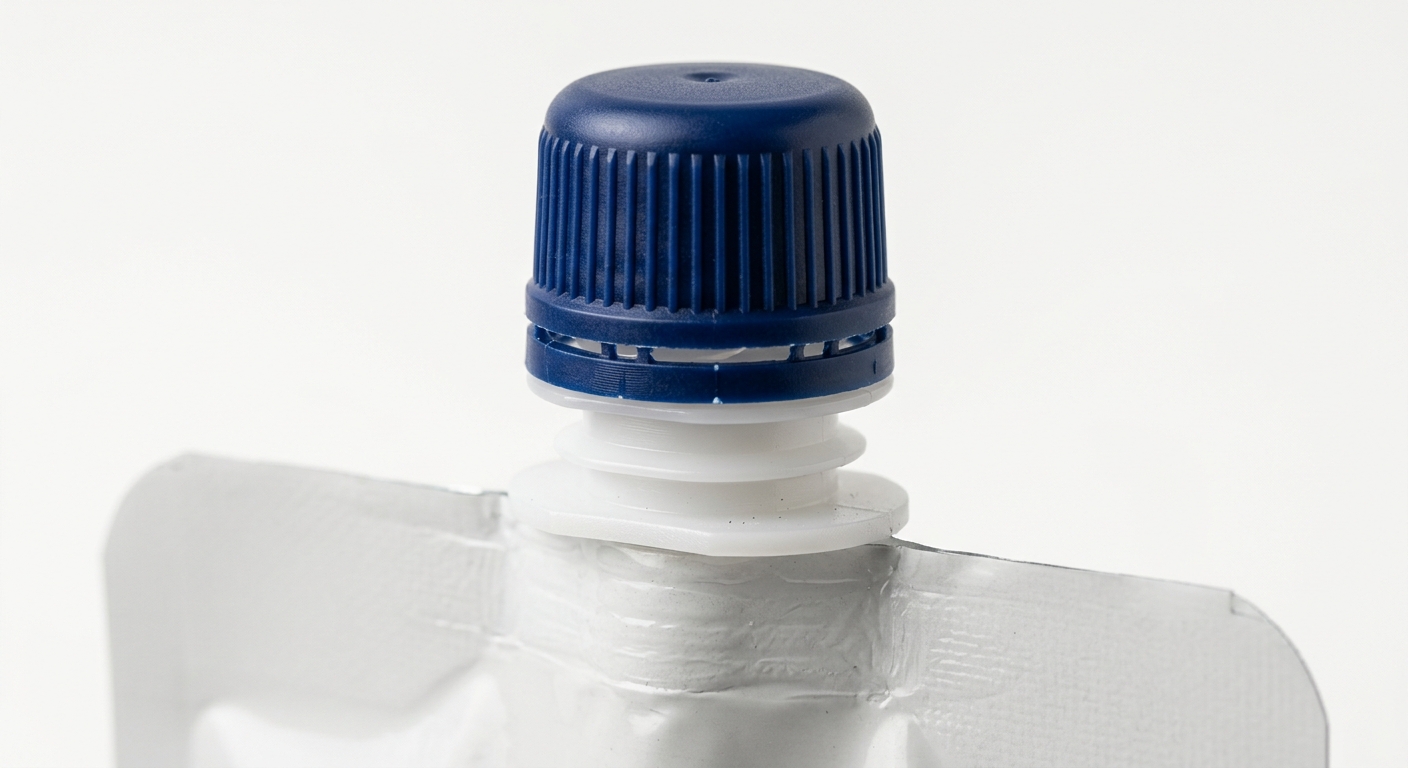
The spout and cap are the machine interface. A filling line may be designed around a particular fitment series, including a specific neck diameter, thread profile, cap style, flange shape, cap torque range, and tamper-evident feature. Similar-looking fitments are not necessarily interchangeable.
Provide the equipment supplier with fitment drawings or physical samples early. The supplier should confirm the method used to orient the pouch, hold the neck, locate the fill nozzle, apply the cap, and verify cap presence or closure. Where a cap is supplied separately, evaluate cap feeding and orientation as part of the project. Where the pouch is supplied pre-capped, confirm how the line removes, retains, or replaces the closure.
Key fitment details to exchange include:
- Spout internal diameter and usable filling opening.
- External neck geometry and thread profile.
- Spout flange dimensions and weld area.
- Cap type, height, diameter, and tamper-evident band design.
- Required cap application method and torque specification, where applicable.
- Spout position relative to pouch edges and top seal.
- Material compatibility with the product and intended thermal process.
Fitment selection should be treated as a joint packaging-and-equipment decision. Changing a cap after commissioning can require changes to cap sorting, capping heads, torque settings, and quality checks.
Select a Filling Method That Fits the Product

Filling principle has a direct effect on product control and machine compatibility. The appropriate option depends on the product’s flow behavior, required dosage accuracy, production environment, and cleaning requirements. The equipment supplier should recommend and document the filling principle based on product samples and stated operating conditions.
Common approaches include:
- Volumetric piston filling: Often considered for thicker or more consistent products. Suitability depends on product texture, particle size, and cleanability.
- Flowmeter filling: Can be used where product flow can be measured reliably. The meter and process controls need to suit the product and cleaning regime.
- Time-pressure filling: May be used for some liquid products, but process variation can influence deposited volume.
- Pump-fed filling: The pump type should suit viscosity, shear sensitivity, particulates, and sanitary requirements.
The nozzle should enter the spout without scraping the inner wall or contacting the pouch seal area. Its outside diameter, insertion depth, product cut-off behavior, and retract path need to be assessed against the actual fitment. For hot or sticky products, residue around the spout can interfere with cap application; line trials should therefore inspect the neck and cap area after filling.
Target fill volume should include an agreed headspace. Excessive filling can increase the risk of product contacting the closure area or creating package stress during handling. Too much headspace may affect the intended finished appearance or required process. Establish a nominal fill weight or volume and acceptable production limits with the brand owner, filler, and equipment supplier.
Consider Sealing and Thermal Process Conditions

For pre-made spouted pouches, the pouch body and spout flange are normally supplied already sealed by the pouch manufacturer. The filling line’s primary closure task is commonly cap application after filling. However, the line still needs to protect package integrity. Product contamination on the neck, misapplied caps, pouch distortion, and excessive mechanical force can all affect the finished pack.
Thermal conditions require early review. A pouch intended for ambient filling may not be suitable for hot-fill or retort conditions, and a machine’s contact surfaces and timing may need adjustment when filling at elevated temperatures. The laminate structure, sealant layer, fitment material, cap, and product process should be specified together. Do not assume a material structure is appropriate for a given preservation process without package and process validation.
Useful line checks include visual inspection of the pouch and fitment, fill-weight verification, cap presence, closure application checks, leak testing appropriate to the product and pack, and review of pouch appearance after cooling or post-process handling. The inspection method and acceptance criteria should be agreed by the responsible parties before commercial production.
Use a Structured Compatibility Qualification Process
Compatibility should be qualified in stages rather than assumed from a drawing. A practical process starts with a technical review, proceeds to sample checks and machine trials, then concludes with an approved production specification. Each stage should record the pouch revision and fitment version used, since an untracked change can invalidate earlier results.
- Share technical inputs. Provide pouch drawings, fitment drawings, cap details, intended fill volume, product information, fill temperature, process needs, target output, and artwork constraints.
- Review the machine interface. Confirm magazine capacity, pouch pickup method, gripper or holder positions, pouch opening method, nozzle clearance, capping system, and discharge path.
- Run representative samples. Use production-intent pouches and, where possible, the actual product at the intended processing condition.
- Evaluate output and package quality. Check handling consistency, fill accuracy, product residue, cap application, leaks, cosmetic condition, and rejects.
- Freeze the specification. Approve the pouch drawing, laminate structure, fitment and cap, artwork, fill parameters, and inspection standards before repeat ordering.
For an international supply project, define communication ownership as well. HUACANG Packaging can provide pouch and fitment documentation, while the equipment supplier confirms machine suitability and operating settings. The contract filler or brand owner should retain responsibility for product process validation and final production approval.
Buyer Checklist Before Ordering Pouches
Before placing a commercial pouch order, assemble a single specification package for the pouch manufacturer, filler, and equipment supplier. This makes it easier to identify conflicts before materials, tooling, or production schedules are committed.
- Product name, ingredients or relevant physical description, viscosity range, particle information, and density.
- Fill volume or fill weight, target headspace, and allowed production tolerance.
- Fill temperature and any downstream thermal or preservation process.
- Pouch type, dimensions, gusset design, nominal capacity, and orientation on the line.
- Spout location, fitment drawing, cap drawing, neck opening, and closure requirements.
- Laminate requirements based on the product and process, subject to validation.
- Machine make and model, filling principle, target output, and available tooling details.
- Required artwork, coding area, finished-pack inspection, shipment configuration, and sampling plan.
For buyers developing a new format, use the pouch dimensions, fitment location, and production conditions to request samples before approving final artwork. Keeping all parties on the same revision-controlled specification reduces avoidable changes after machine setup.