目录
- What Are Spout Pouch Materials?
- How Each Laminate Layer Works
- Choose Materials by Product and Process
- Match Barrier to Shelf-Life Needs
- Check Sealant and Spout Compatibility
- Confirm Format, Artwork, and Testing
- Spout Pouch Material Specification Checklist
A practical B2B guide to selecting spout pouch laminate materials for liquids, gels, and other pourable products. Compare layer functions, barrier needs, processing conditions, and specification questions before production.
What Are Spout Pouch Materials?
Spout pouch materials are usually multilayer flexible laminates selected to give a pouch the required print appearance, mechanical strength, barrier protection, and heat-seal performance. The right laminate depends first on the product, filling and thermal process, intended shelf life, and the pouch’s spout-and-cap design. There is no single best material for every liquid, puree, sauce, detergent, or refill pack.
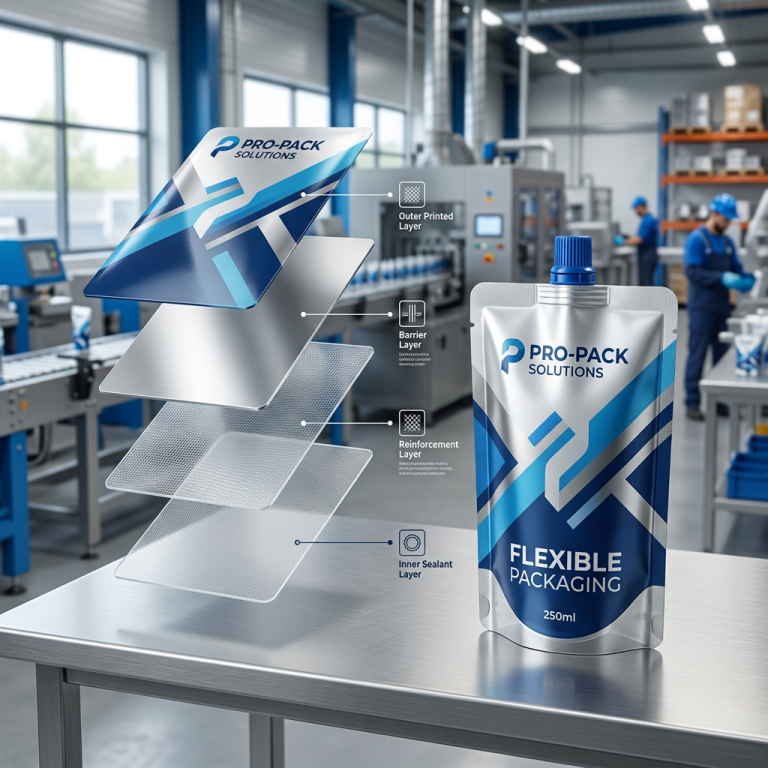
A typical construction combines an outer printed web, one or more functional barrier or reinforcement layers, and an inner sealant layer. These films are bonded by lamination and converted into the pouch body. The fitment is then sealed into the pouch during converting or matched to the filling operation, depending on the supply format and process.
For a buyer, the practical decision is to define what the pack must withstand: product chemistry, oxygen and moisture exposure, light exposure where relevant, transport handling, filling temperature, retort or hot-fill conditions if applicable, and consumer dispensing. Pouch capacity and geometry also matter because a large, heavy pouch places different demands on seals and film stiffness than a small sample pack. Review spout pouch sizes and capacity considerations alongside material selection so the laminate is evaluated in its final format.
This guide assumes a conventional multilayer flexible package for a non-sterile or process-specific product. Final material selection should be validated with the actual product and intended filling process; film descriptions alone cannot establish product compatibility, shelf life, or regulatory suitability.
How Each Laminate Layer Works
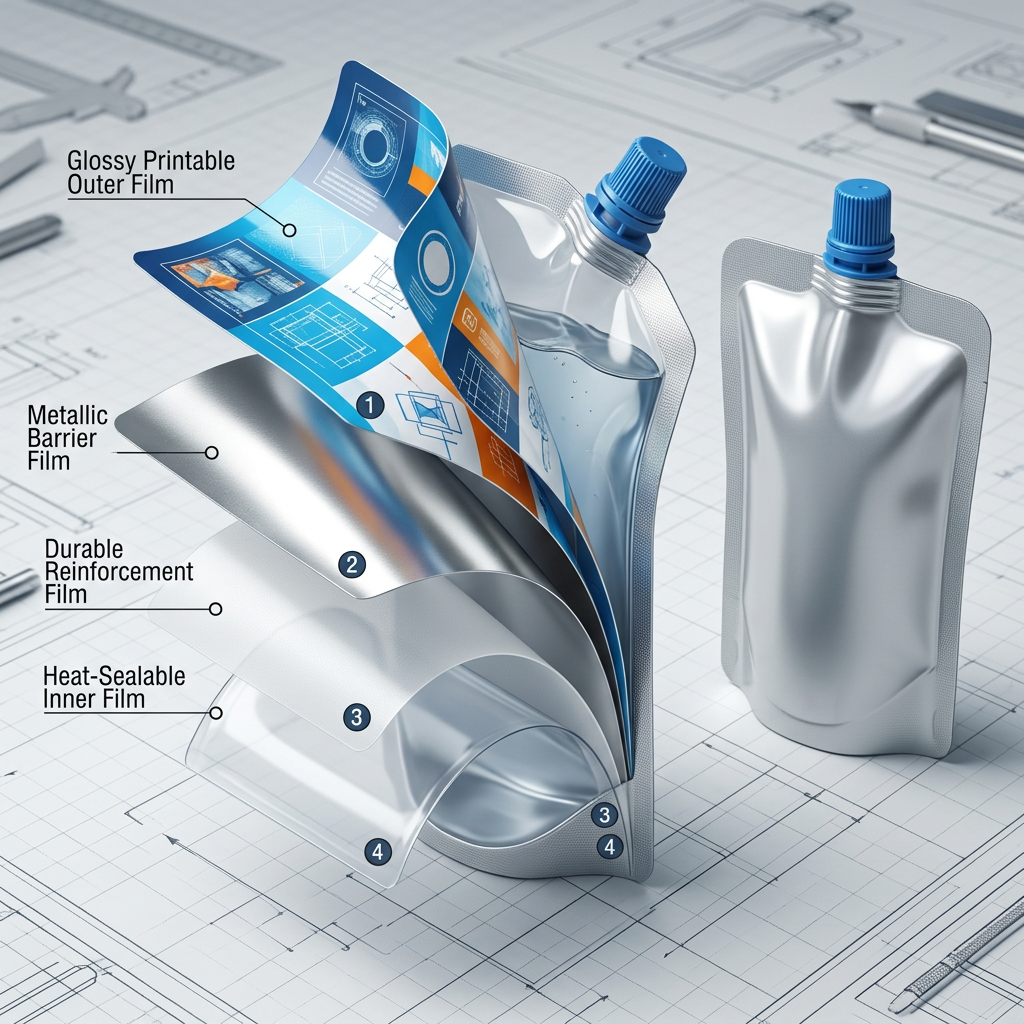
Most spout pouch laminates use layers with different jobs. Specifying each job separately helps avoid selecting a structure solely because it is familiar or visually similar to another package.
| Layer or component | Typical role | Material examples | Questions for buyers |
|---|---|---|---|
| Outer web | Print surface, scuff resistance, stiffness, and puncture support | PET, BOPP, paper in selected constructions | Does the pack need reverse printing, a matte finish, high stiffness, or strong graphics protection? |
| Barrier layer | Reduces transmission of oxygen, moisture, aroma, or light, as required | Aluminum foil, metallized film, EVOH-containing structures, coated films | Which exposure is most critical, and what shelf-life target is being evaluated? |
| Reinforcement layer | Adds puncture resistance, flex-crack resistance, and body strength | PA/nylon, PET, PE-based layers | Will the pouch face drops, sharp handling, freezing, or high product weight? |
| Sealant layer | Forms pouch seals and interfaces with the fitment seal area | PE, CPP, specialized sealant blends | What sealing window, filling temperature, product contamination level, and process are expected? |
| Spout and cap | Provides controlled filling, pouring, reclosing, and tamper-evident options where specified | Commonly injection-molded polyolefin fitments | Is the fitment compatible with the pouch design, filling head, closure torque, and intended use? |
Film abbreviations identify only part of the decision. For example, PET commonly provides a stable printable outer layer, while PE is often chosen for the product-contact sealing layer. A foil layer can provide strong light and gas barrier, but its suitability still depends on flexing, fold locations, pouch shape, and the full converting process. PA can improve toughness, but it does not replace a dedicated barrier layer where a demanding oxygen barrier is needed.
Adhesives, inks, coating systems, seal geometry, and converting controls are also part of the package system. Ask the manufacturer to describe the complete proposed laminate in layer order, including nominal film types and the purpose of each layer, rather than approving only a shorthand material name.
Choose Materials by Product and Process
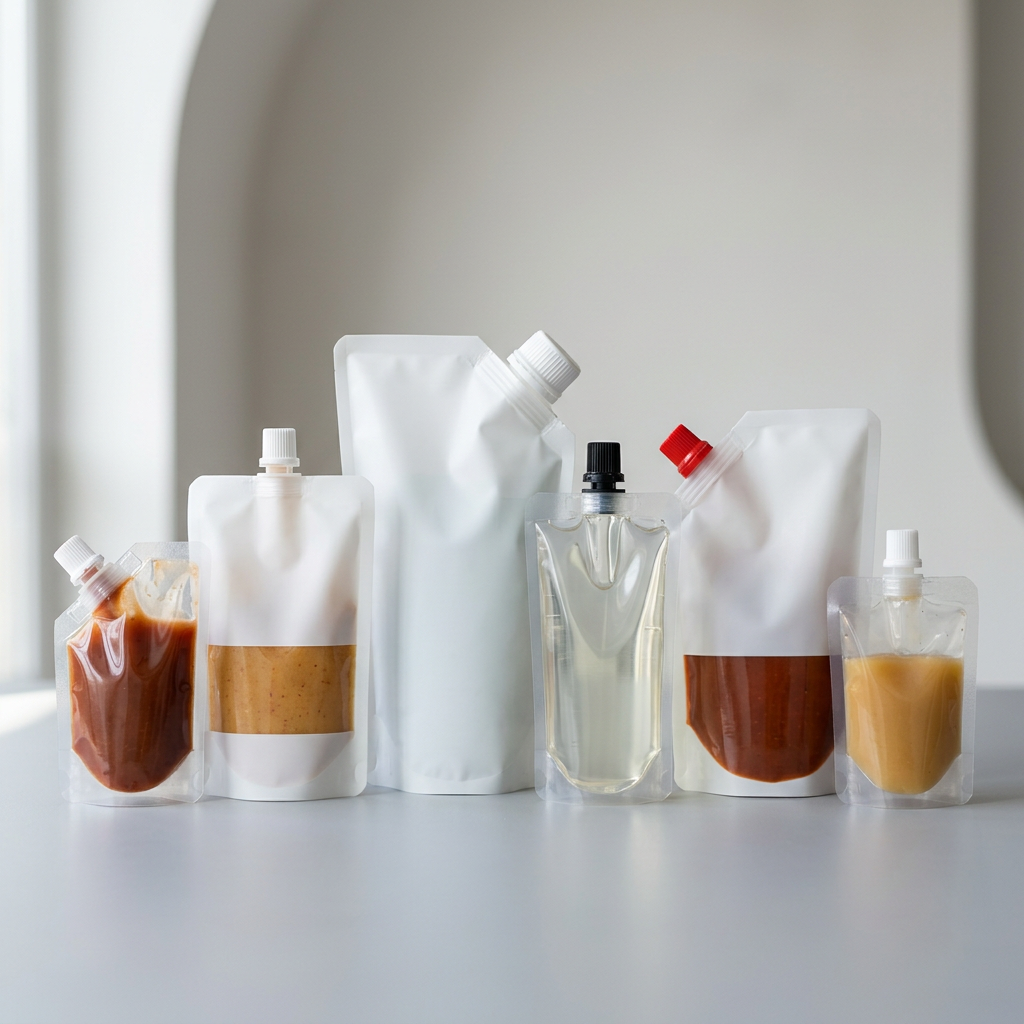
Start with the packed product and process, not with a preferred film stack. Two products with the same viscosity can require different structures because acidity, fat content, essential oils, alcohol content, particulates, or storage conditions can affect barrier needs and seal behavior.
Low-viscosity liquids and beverage concentrates
Liquid packs need reliable seals because the product can migrate into the seal area during filling and handling. Consider fill temperature, headspace, pack weight, and whether the product is sensitive to oxygen, moisture, or light. A stronger pouch body may be appropriate for larger formats, but the sealing layer and fitment interface must be evaluated with equal care.
Sauces, dressings, and condiments
Sauces may combine acidity, oil, salt, and suspended particles. These characteristics can influence material compatibility and increase the importance of clean, repeatable seals. If the product is hot-filled or receives a thermal process, identify the maximum product and process temperature before selecting the sealant system. For application-specific details, see this spout pouch specification guide for sauces.
Purees, baby food, and nutritional products
For products where oxygen or light exposure may affect product quality, assess the required barrier based on the actual formulation and validated shelf-life program. Thermal processing can change the decision substantially. Retort processing requires a structure engineered for the relevant process conditions and should not be assumed from a standard hot-fill pouch construction.
Household, personal-care, and industrial liquids
Detergents, cleaners, gels, and similar products should be assessed for chemical compatibility with the inner film, fitment, cap, inks, and adhesive system. Fragrance components, solvents, surfactants, and elevated storage temperatures may affect the package differently from food products. Supply the manufacturer with a safety data sheet or a representative product description where appropriate, then perform compatibility testing on production-representative packs.
Also define whether pouches will be filled manually, on a semi-automatic line, or on an automated spouted-pouch filling line. The chosen fitment diameter, position, pouch stiffness, and dimensional tolerances must work with the equipment. Material selection is therefore a packaging-and-processing decision, not a film-only decision.
Match Barrier to Shelf-Life Needs
Barrier is the laminate’s resistance to transmission of gases, water vapor, aromas, or light. The correct level is determined by the product’s sensitivity and the intended distribution environment, not by a general preference for the highest-barrier film.
Oxygen barrier can be relevant where oxidation, flavor changes, color changes, or ingredient degradation are concerns. Moisture barrier can be important where water gain or loss changes product consistency or performance. Light barrier may be considered for light-sensitive products. Aroma barrier may matter for products with volatile fragrances or strong flavors. These needs can overlap, but they should be identified separately.
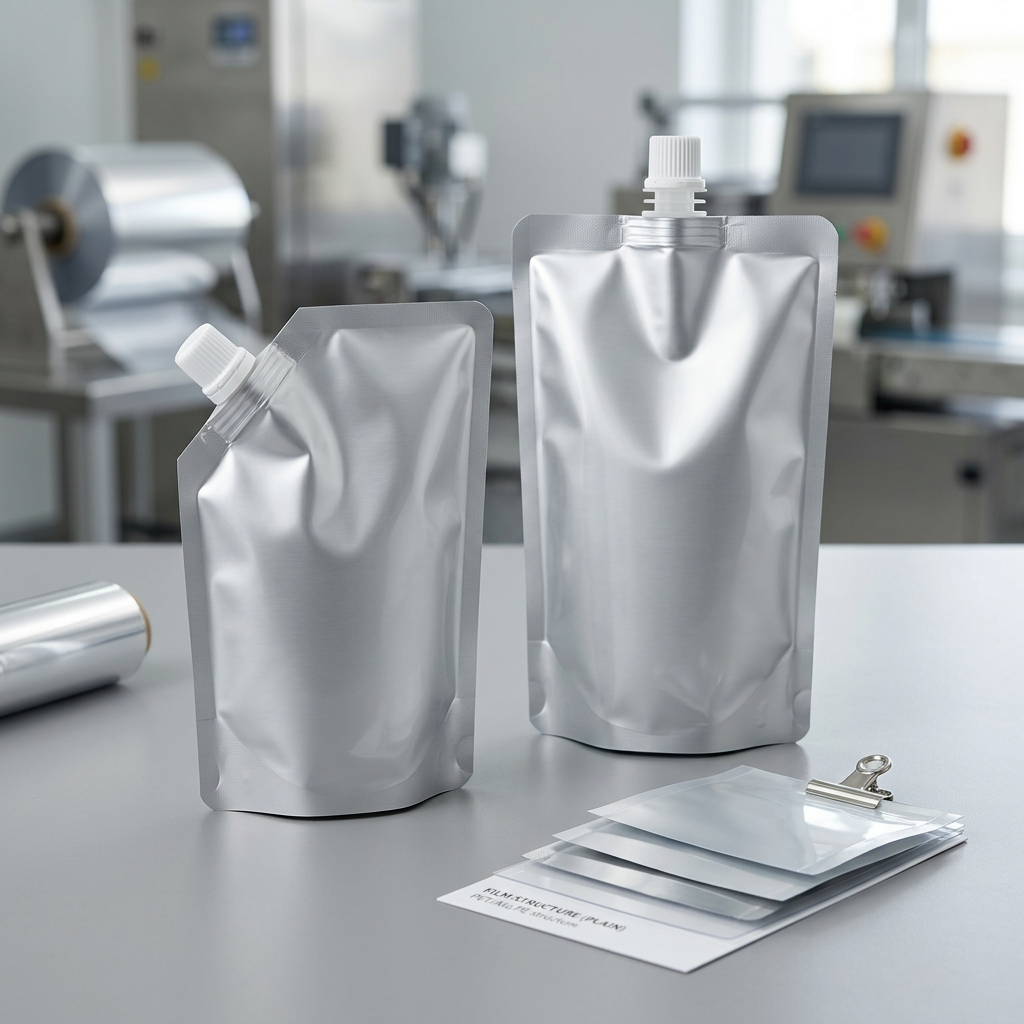
Aluminum foil is commonly used when a very high barrier to light and gases is required. It also changes the pouch’s appearance and handling characteristics and needs careful design to limit damage from severe flexing or folding. Metallized films can provide barrier and an opaque metallic appearance, but their barrier properties differ from foil and depend on the construction. Clear high-barrier options may use specialized coatings or EVOH-containing structures when product visibility or a transparent window is desired.
Request barrier data relevant to the proposed construction and test conditions, then interpret it with the finished pack in mind. Transmission values for an individual web do not alone predict finished-pouch performance. Seals, gussets, fitment areas, pinholes, abrasion, shipping conditions, and product interactions can all affect real-world results. Shelf life should be established through a product-specific validation program rather than inferred from a material label.
Check Sealant and Spout Compatibility
The inner sealant layer is central to pouch integrity. It must form consistent perimeter seals and work with the fitment seal area under the planned converting and filling conditions. A structure with appropriate barrier can still fail commercially if seals are difficult to control or if product contamination in the seal area is not considered.
Discuss these points during specification:
- Sealing window: The process needs a practical range of sealing temperature, pressure, and dwell time, not merely a theoretical seal temperature.
- Hot tack: When packs are handled soon after sealing, adequate hot tack can help prevent seal disturbance before cooling.
- Product contamination: Liquids, oil, powder, or particulates near the seal area can reduce seal consistency. Filling control and sealant selection should be reviewed together.
- Process temperature: Hot-fill, pasteurization, retort, or frozen distribution may require a different material system than ambient filling.
- Fitment design: Spout diameter, flange geometry, cap style, tamper-evident requirement, and weld area need to match the pouch material and filling equipment.
Spout location also affects use and pack mechanics. A corner-spout pouch and a top-spout pouch can use related laminates, yet their load paths, pouring orientation, display behavior, and filling setup may differ. Use this corner spout versus top spout pouch comparison when choosing the format before finalizing the structure.
Ask for prototypes or production-representative samples where possible. Evaluate seal appearance, leakage, burst or compression behavior as appropriate, dispensing, cap application, and handling after the actual process. Test methods and acceptance criteria should be agreed in advance for meaningful comparisons.
Confirm Format, Artwork, and Testing
Material selection should be completed alongside the pouch drawing and artwork plan. The finished format determines film stress points, seal lengths, gusset construction, and fitment placement. Stand-up pouches, shaped pouches, and larger refill formats may require different stiffness or puncture-resistance priorities even when they contain the same product.
Artwork can also influence the outer-web choice and print process. Confirm whether graphics will use reverse printing under a clear outer film, whether a matte or gloss finish is needed, and whether areas around seals, gussets, and the spout need special treatment. Provide dielines, color references, regulatory copy supplied by your team, barcode requirements, and any variable-data needs before final artwork approval.
A practical pre-production review normally includes the proposed layer structure, pouch dimensions, gusset type, spout position and diameter, cap configuration, print specification, fill weight or volume, product details, filling temperature, storage conditions, and shipment assumptions. When the pack is new or the product is demanding, conduct trials with the actual product and process before moving to a full production order.
For food-contact, chemical, recycling, or market-specific claims, requirements vary by destination and material system. Buyers should state the selling market and required documentation at the inquiry stage. Do not assume that a material used in one market or product category is automatically appropriate for another.
Spout Pouch Material Specification Checklist
Use the following checklist to prepare a clear request for a custom spout pouch laminate:
- Product name, formulation characteristics, and whether it contains acid, oil, alcohol, solvents, fragrance, or particulates.
- Target fill volume or weight, product density where available, and required pouch dimensions.
- Filling method, fill temperature, line speed expectations, and whether the product undergoes hot fill, pasteurization, retort, freezing, or another process.
- Target shelf-life period, expected storage conditions, distribution route, and primary concerns: oxygen, moisture, light, aroma, or physical abuse.
- Desired pouch format, including stand-up, flat, shaped, corner-spout, or top-spout configuration.
- Fitment requirements: position, diameter, cap type, color, tamper-evident features if required, and filling-equipment compatibility.
- Artwork files, finish preference, market destination, documentation needs, planned order quantity, and sample requirements.
A complete brief enables the converter to recommend a structure based on defined conditions rather than assumptions. It also makes it easier to compare alternatives, such as a clear barrier laminate versus an opaque foil-based construction, on the factors that matter to the product.