目录
- What Are Hot Fill Pouches?
- Start With the Product and Filling Process
- Specify the Laminate Structure
- Specify Seals, Spouts, and Caps
- Match Barrier and Pouch Format to Distribution
- Hot Fill Pouch Specification Checklist
- Validate Before Commercial Production
A practical B2B guide to specifying hot fill pouches, from product and process data through laminate, seals, spout fitments, testing, and supplier documentation.
What Are Hot Fill Pouches?
Hot fill pouches are flexible packages designed to be filled and sealed while the product is hot, then cooled in the closed package. To specify the right structure, start with the actual filling temperature, dwell time, product chemistry, and cooling method. Those conditions determine whether the laminate, sealant layer, pouch seals, and any spout fitment can maintain package integrity through filling and downstream handling.
Hot fill is not a generic material grade. A pouch that performs for one sauce may be unsuitable for an acidic fruit preparation, an oil-containing dressing, or a high-viscosity puree filled at a different temperature. The correct specification is a validated package-and-process combination, rather than a material selection based on temperature alone.
This guide assumes a commercially filled food or beverage-style liquid, gel, puree, or sauce pouch. It does not assume retort processing, aseptic filling, a specific shelf life, or regulatory approval; those requirements must be defined for the target market and product.
Start With the Product and Filling Process
Give the packaging supplier a process brief before requesting a laminate recommendation. “Hot filled” alone is insufficient because thermal exposure occurs at several points: product contact during dosing, the time before the final seal is made, the interval before cooling, and any pressure or mechanical stress during handling.
Record the operating conditions
- Product name, ingredients relevant to packaging, pH range, oil or fat content, salt, alcohol, particulates, and viscosity.
- Target fill volume, fill weight tolerance, headspace, and product density.
- Nominal and maximum fill temperature at the pouch, plus expected time at elevated temperature before cooling.
- Filling orientation, nozzle type, fill rate, sealing method, cooling method, and line speed.
- Expected storage, transport, display, and consumer-use conditions.
For spouted formats, identify whether the spout is pre-applied, whether filling occurs through the spout, and how the cap is applied. The pouch geometry, neck diameter, cap torque, and machine handling features must work with the filling line. Use a spout pouch filling machine compatibility guide to frame the machine-side questions before tooling or production approval.
Hot fill temperatures vary by product and process. A supplier should evaluate the maximum credible condition, not only a nominal setpoint, because startup variation, pauses, and product temperature drift can change the thermal load on the package.
Specify the Laminate Structure
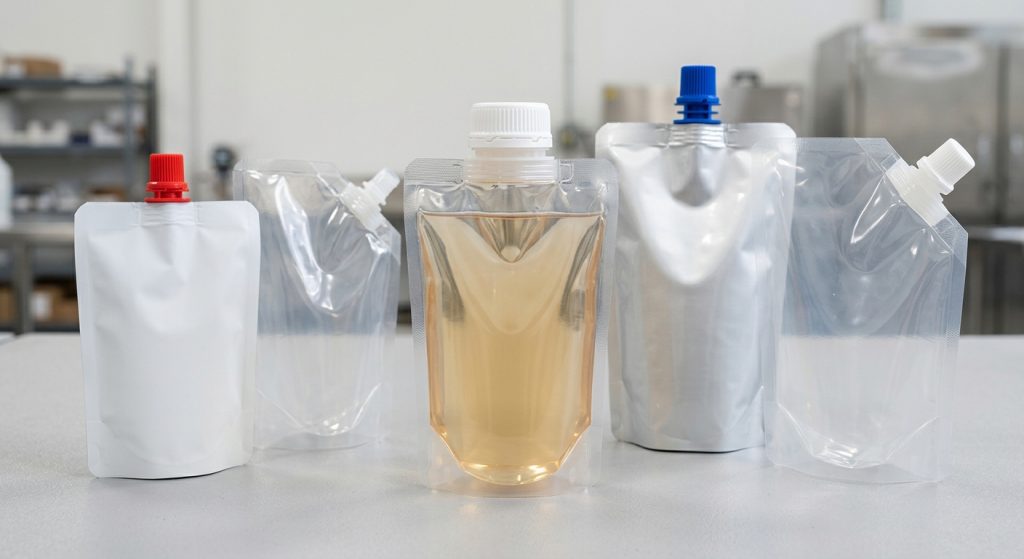
A hot fill pouch laminate normally combines layers that serve different functions: an outer web for print and handling, one or more barrier layers where required, and an inner sealant layer that contacts the product and forms heat seals. Adhesives and lamination conditions also matter because the finished laminate must tolerate the intended conversion, filling, and cooling sequence.
Specify functions and validation criteria rather than naming a structure without context. For example, a buyer may require an opaque printed exterior, an oxygen or moisture barrier appropriate to the product, resistance to product contact, a sealant compatible with the hot-fill sealing window, and adequate stiffness for the selected pouch format. The supplier can then propose materials and gauge based on those needs.
| Structure element | Role in a hot fill pouch | Questions to resolve |
|---|---|---|
| Outer web | Supports graphics and contributes to puncture and handling resistance. | What print finish, stiffness, scuff resistance, and shelf appearance are needed? |
| Barrier layer | Helps control transmission of oxygen, moisture, aroma, or light where product needs justify it. | Which barrier property matters, and what shelf-life study supports the target? |
| Sealant layer | Creates pouch seals and contacts the product. | Can it seal reliably after hot filling and resist the product formulation? |
| Adhesive system | Bonds laminate layers. | Has the finished laminate been assessed for the fill temperature and cooling cycle? |
A foil-containing structure may be considered when light and high barrier are important, while clear barrier options may be considered where product visibility is desired. Neither approach is automatically correct. Transparent barrier materials can have different handling and barrier trade-offs from foil laminates. Review the available choices in this guide to choosing a spout pouch laminate, then confirm the final structure through trials.
Specify Seals, Spouts, and Caps
Seals are often the critical feature in hot fill pouch performance. Side seals, bottom gusset seals, top seals, and fitment-to-film seals can experience different stresses. A fill process may expose seals to heat, product contamination, internal pressure, flexing during cooling, and later squeeze forces from consumers.
For a spout pouch, specify spout location, outside diameter or neck finish, cap style, tamper-evidence requirement if applicable, and the intended filling route. Top-spout and corner-spout designs can change filling presentation, pouring ergonomics, and panel layout. A corner spout versus top spout pouch comparison can help buyers align format with production and use requirements.
Fitment material and welding design must be assessed alongside the pouch laminate. Do not assume that a fitment suitable for ambient filling will be suitable for the same hot-fill condition. Select the cap and fitment only after confirming product behavior, filling temperature, pouch construction, and user needs; see this spout pouch caps and fitments selection guide.
Include seal dimensions, seal appearance criteria, fitment position tolerance, and acceptable leakage criteria in the purchase specification. These details make inspection and corrective action more objective.
Match Barrier and Pouch Format to Distribution
Barrier specification should follow the product’s degradation risks and the intended distribution period. Oxygen, moisture, light, aroma loss, aroma pickup, and oil migration are separate considerations. Ask the product owner which changes define end of shelf life, then determine what package properties and test data are needed to support that target.
Pouch dimensions and format also affect hot fill behavior. Headspace supports filling and thermal expansion; an underspecified headspace may increase stress, while excessive headspace can affect pack presentation and oxygen exposure. Stand-up pouch gussets, fill volume, product density, and seal geometry should be reviewed together. For volume planning, use a spout pouch size and capacity guide as an initial reference, then verify using the actual product.
Specify the package’s route to market: case packing, pallet arrangement, ambient or refrigerated storage, e-commerce handling if relevant, and likely temperature extremes in transit. These conditions influence gauge, puncture resistance, seal requirements, and outer-surface finish. They should be stated as design inputs rather than assumed from the pouch’s nominal capacity.
Hot Fill Pouch Specification Checklist
A complete request for quotation or technical brief reduces avoidable revisions. Include the following information:
- Product: formulation details relevant to packaging, pH range, viscosity, particulates, density, and sensory sensitivity.
- Process: nominal and maximum fill temperature, hot dwell time, filling route, seal process, cap application, and cooling method.
- Pouch: format, finished dimensions, gusset, target fill volume, headspace, spout placement, and orientation.
- Structure: requested functional requirements for barrier, opacity or clarity, stiffness, puncture resistance, and product-contact sealant.
- Fitment: neck size, cap type, opening function, and any tamper-evident feature requirements.
- Artwork: number of colors, finish, mandatory copy, barcode area, version count, and color-approval process.
- Quality plan: samples, trial quantity, dimensional tolerances, seal and leak-test methods, sampling plan, and acceptance criteria.
- Commercial details: estimated order quantity, delivery destination, delivery schedule, and Incoterms if applicable.
Artwork and pouch geometry should be finalized after the usable panel area, seal areas, and fitment position are confirmed. This prevents important copy or graphics from being placed in distortion-prone or non-printable areas.
Validate Before Commercial Production
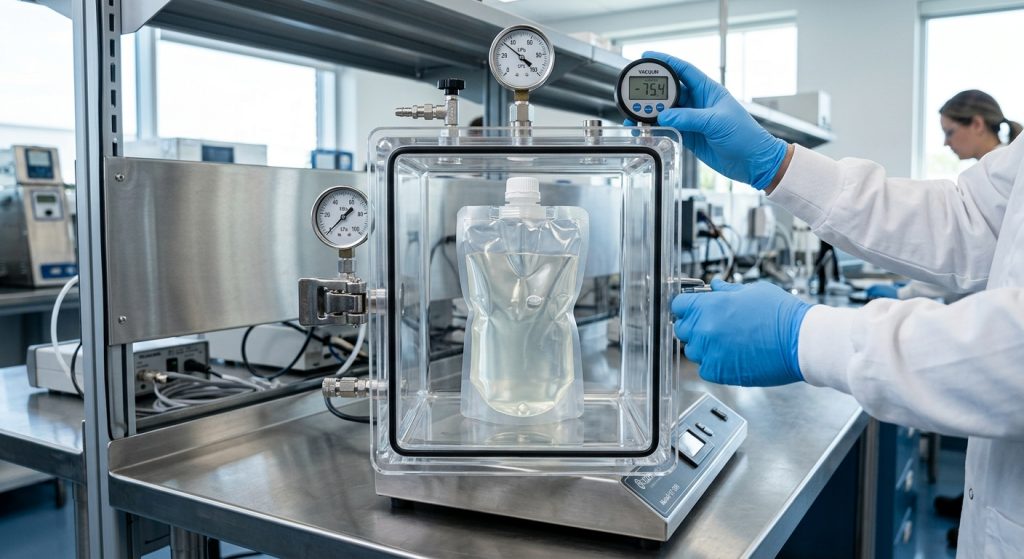
Approve hot fill pouches only after trials represent the intended package, product, and line conditions as closely as practical. Start with material and fitment samples, then run a controlled filling trial using the highest expected fill temperature and normal operating conditions. Retain samples after cooling and assess them at defined points during the intended evaluation period.
Typical evaluation areas include visual seal condition, pouch distortion, fitment security, leakage, cap function, package dimensions, print appearance, product compatibility, and transport simulation appropriate to the route to market. A spout pouch leak resistance testing guide provides a useful framework for documenting package-integrity checks.
Do not equate hot fill with retort capability. Retort processing imposes a different and usually more demanding thermal and pressure profile. If the product requires retort, aseptic processing, or another preservation system, state that requirement at the start of development and obtain a structure recommendation and validation plan for that process.
After approval, keep a controlled specification that identifies the approved laminate, pouch drawing, fitment and cap, artwork version, production tolerances, testing method, and change-control process. Any material, adhesive, gauge, fitment, artwork, or process change should be reviewed against the validated design.