Table of Contents
- What Is a Pet Food Spout Pouch?
- Start With the Pet Food Product
- Choose the Film Structure and Barrier
- Specify the Spout, Cap, and Opening
- Define Capacity, Dimensions, and Fill Level
- Confirm Filling and Seal Requirements
- Review Printing, Quality, and Validation
- Pet Food Spout Pouch RFQ Checklist
A pet food spout pouch must match the product’s viscosity, filling process, distribution conditions, and dispensing requirements. This buyer guide explains the specifications brands should confirm before requesting samples or quotations.
What Is a Pet Food Spout Pouch?
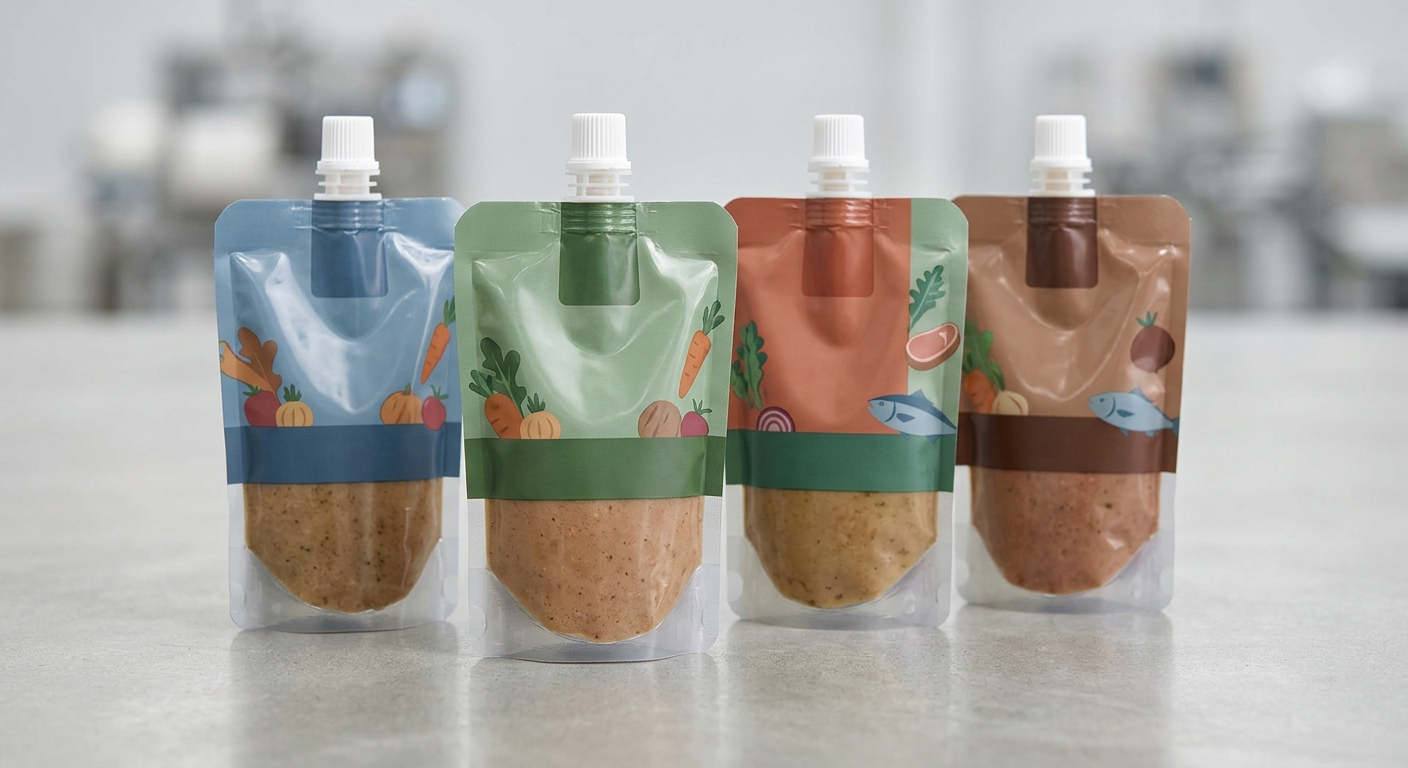
A pet food spout pouch is a flexible pouch with an attached spout and closure for dispensing pourable or semi-liquid pet food. It is commonly considered for wet food, food toppers, gravies, broths, purees, pastes, and liquid supplements. The correct specification depends on the product’s viscosity and particles, the filling process, required shelf life, distribution conditions, and how the consumer will dispense the contents.
Spout packaging is not automatically suitable for every pet food format. Dry kibble, large chunks, and products that require a wide opening may be better suited to a zipper pouch, traditional retort pouch, tray, can, or another package format. Buyers should therefore define the product and use case before choosing pouch dimensions or a fitment.
For a general overview of material decisions, review this guide to spout pouch material structures. The same principles apply to pet food, but the product’s fat content, moisture level, particles, processing temperature, and intended shelf life must be evaluated specifically.
Start With the Pet Food Product
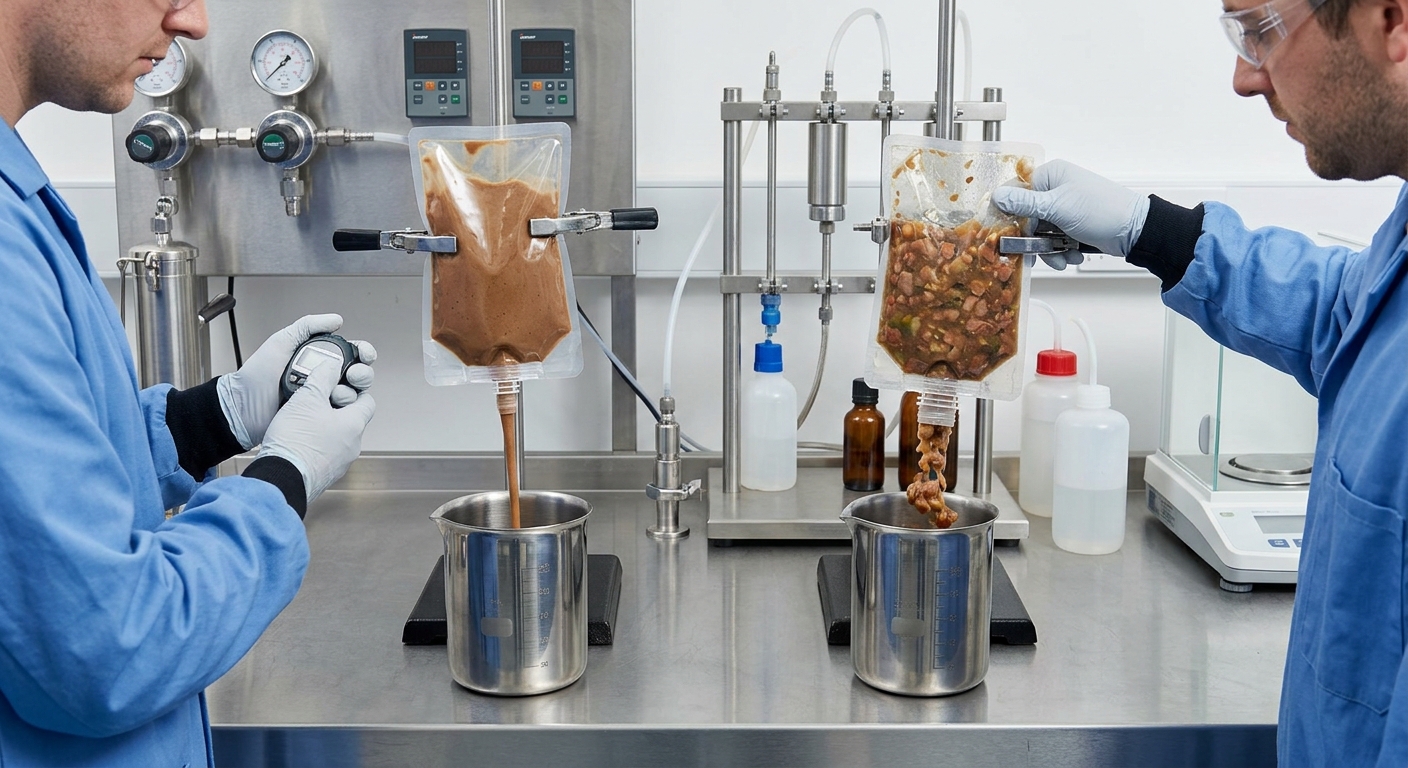
The first specification should describe what will be packed, not the pouch size. A manufacturer needs representative product information to assess seal contamination risk, filling behavior, spout diameter, laminate suitability, and testing requirements.
Information to provide
- Product type: wet food, puree, gravy, broth, topper, paste, supplement, or another formulation.
- Viscosity: indicate whether the product flows easily, pours slowly, or requires pressure to dispense.
- Particle size: note whether the product is smooth or contains meat pieces, vegetables, grains, fibers, or other particulates.
- Composition: identify relevant characteristics such as oil or fat content, acidity, salt, moisture, and sensitivity to oxygen or light. The packaging supplier should not infer the final barrier requirement without product and shelf-life inputs.
- Processing method: state whether the filled pouch will be retorted, hot filled, pasteurized, aseptically filled, or filled at ambient conditions.
- Target shelf life and distribution: include the intended market, storage conditions, transport route, and expected handling environment.
If the product contains particles, the opening must allow the contents to pass without frequent blockage. A smooth puree may work with a smaller opening, while chunky food or dense toppers may need a larger spout or a different package format. Samples should be tested with the actual product rather than water alone.
Choose the Film Structure and Barrier
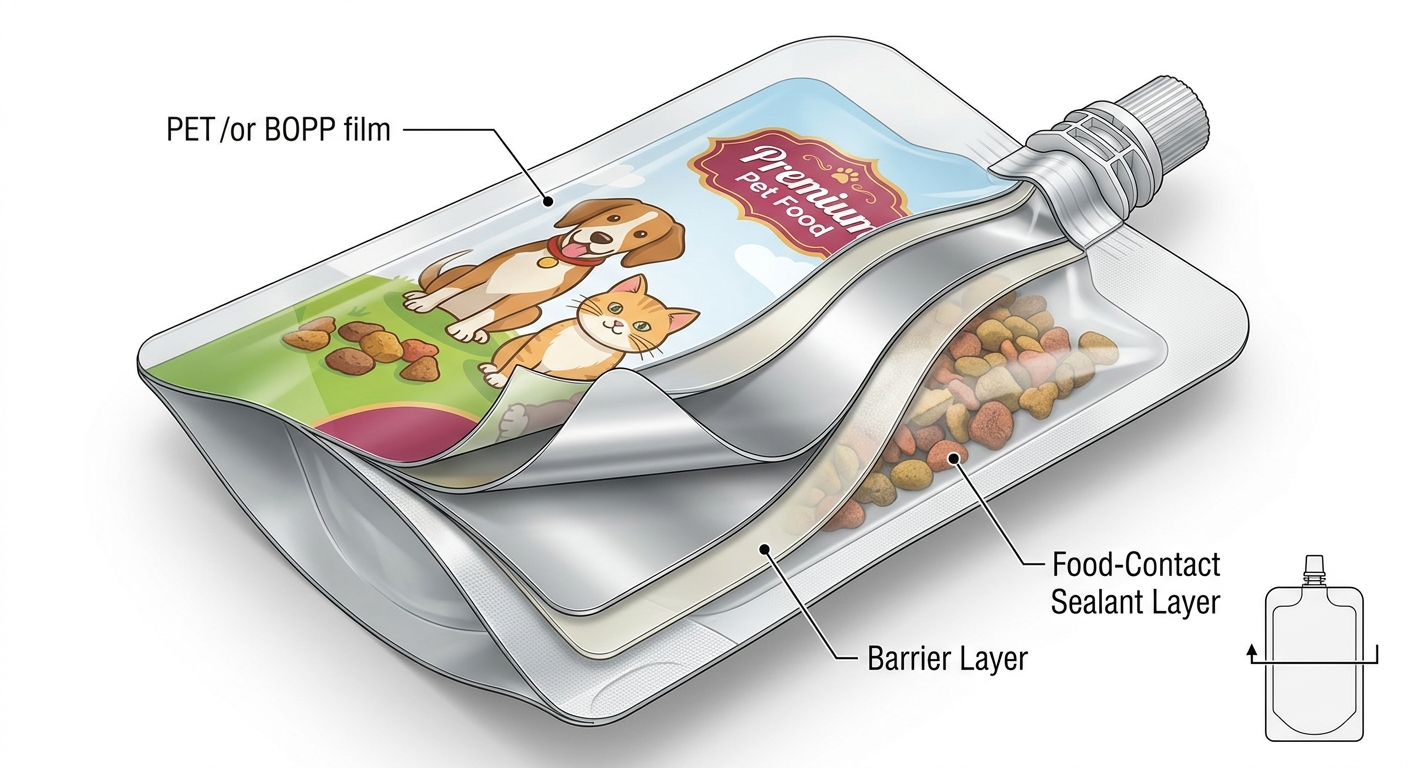
A pet food pouch normally uses a multilayer flexible structure in which each layer performs a different function. The outer layer supports printing and handling, the middle layer may provide oxygen, moisture, light, or aroma barrier, and the sealant layer creates the pouch seals and contacts the product where applicable.
There is no single laminate that is correct for all pet food applications. Structure selection should consider:
- Product sensitivity: oxygen, moisture, light, and aroma requirements may differ between a wet topper and a shelf-stable puree.
- Thermal process: retort or other elevated-temperature processing can require a structure and adhesive system designed for that process.
- Seal performance: the inner sealant must tolerate the product and provide a suitable sealing window for the filling line.
- Mechanical demands: the pouch must withstand filling, transport, stacking, handling, and consumer use without excessive damage.
- Appearance and branding: select clear, metallized, foil-containing, matte, or gloss constructions according to the required barrier and visual result.
Buyers should request the proposed layer structure, nominal thickness, barrier information where relevant, intended process suitability, and sealing considerations. Avoid selecting a material only by total gauge or price. The spout pouch laminate selection guide can help organize the technical questions for a supplier discussion.
For products requiring retort processing, provide the process temperature, time, pressure profile, and filling conditions before the structure is finalized. A retort application should be reviewed separately from an ambient-fill pouch; buyers can consult this retort spout pouch specification guide for the information typically needed.
Specify the Spout, Cap, and Opening
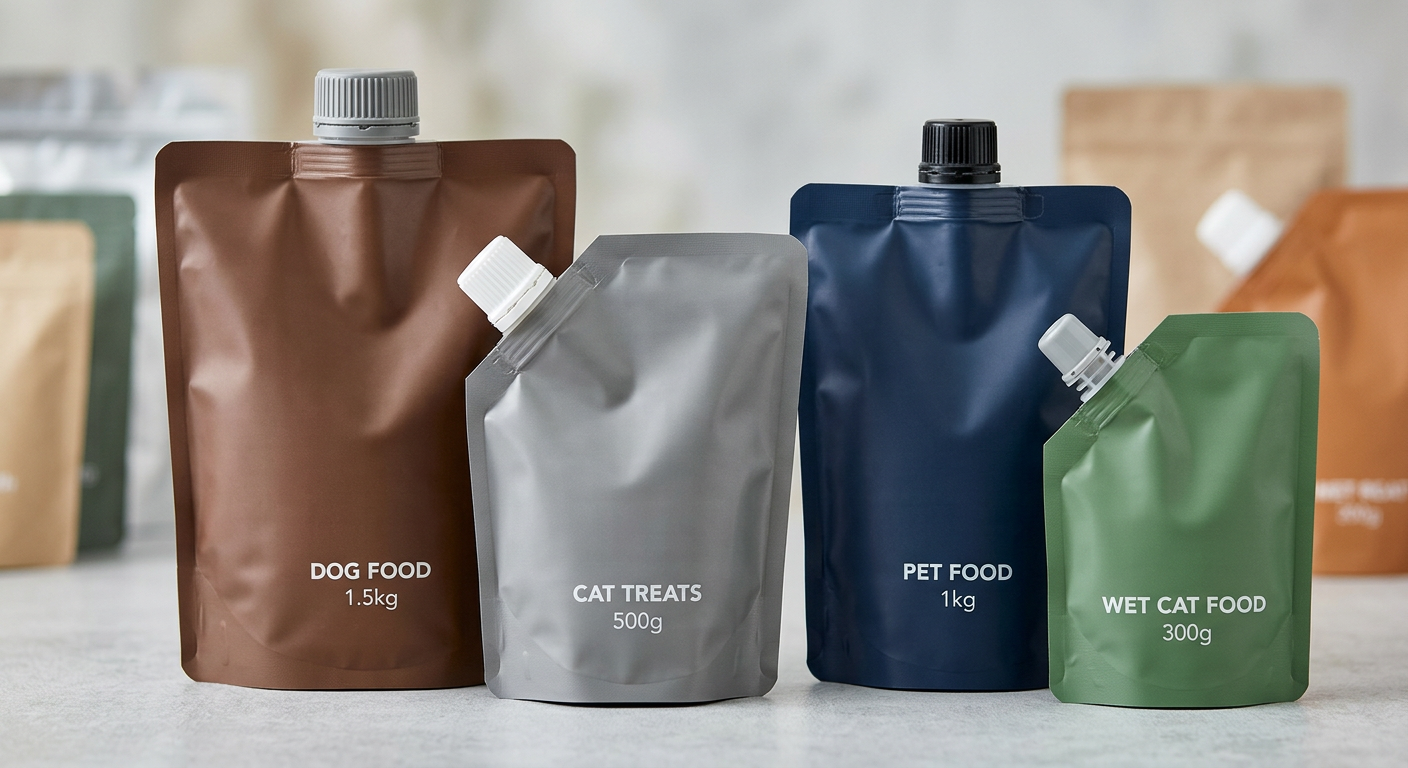
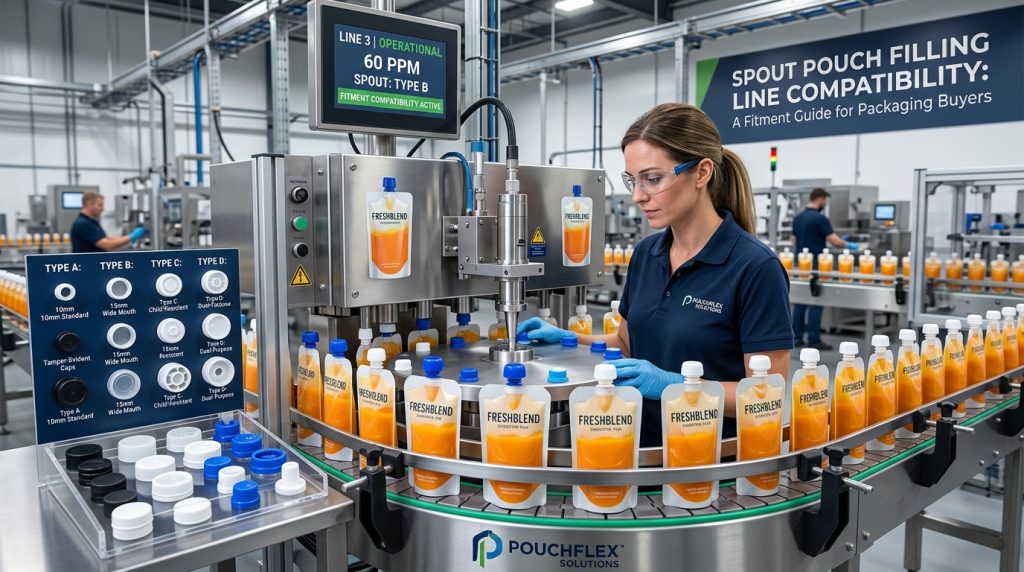
The fitment controls how the pet food leaves the pouch and how the package is closed. Specify the spout location, opening size, neck dimensions, cap type, color, and tamper-evident requirements as a coordinated set. The pouch, spout, cap, and filling equipment must be compatible.
Key fitment decisions
- Spout position: top, corner, or another position based on shelf presentation, draining behavior, filling access, and consumer handling.
- Opening diameter: match the opening to viscosity and the largest product particle that must pass through it.
- Cap design: confirm screw thread compatibility, cap size, reseal expectations, cap color, and whether a tethered or other closure format is required for the target market.
- Tamper evidence: determine whether the closure or pouch design needs a visible opening indication. The exact solution depends on the selected fitment and market requirements.
- Spout material: confirm the resin and product-contact suitability with the intended process and application.
Do not approve a fitment from a dimensional drawing alone. Test the actual cap and spout with the filled product, including opening torque, dispensing, resealing, leakage, and consumer handling. Spout selection should also account for the filling machine’s insertion, sealing, and cap application method.
Define Capacity, Dimensions, and Fill Level
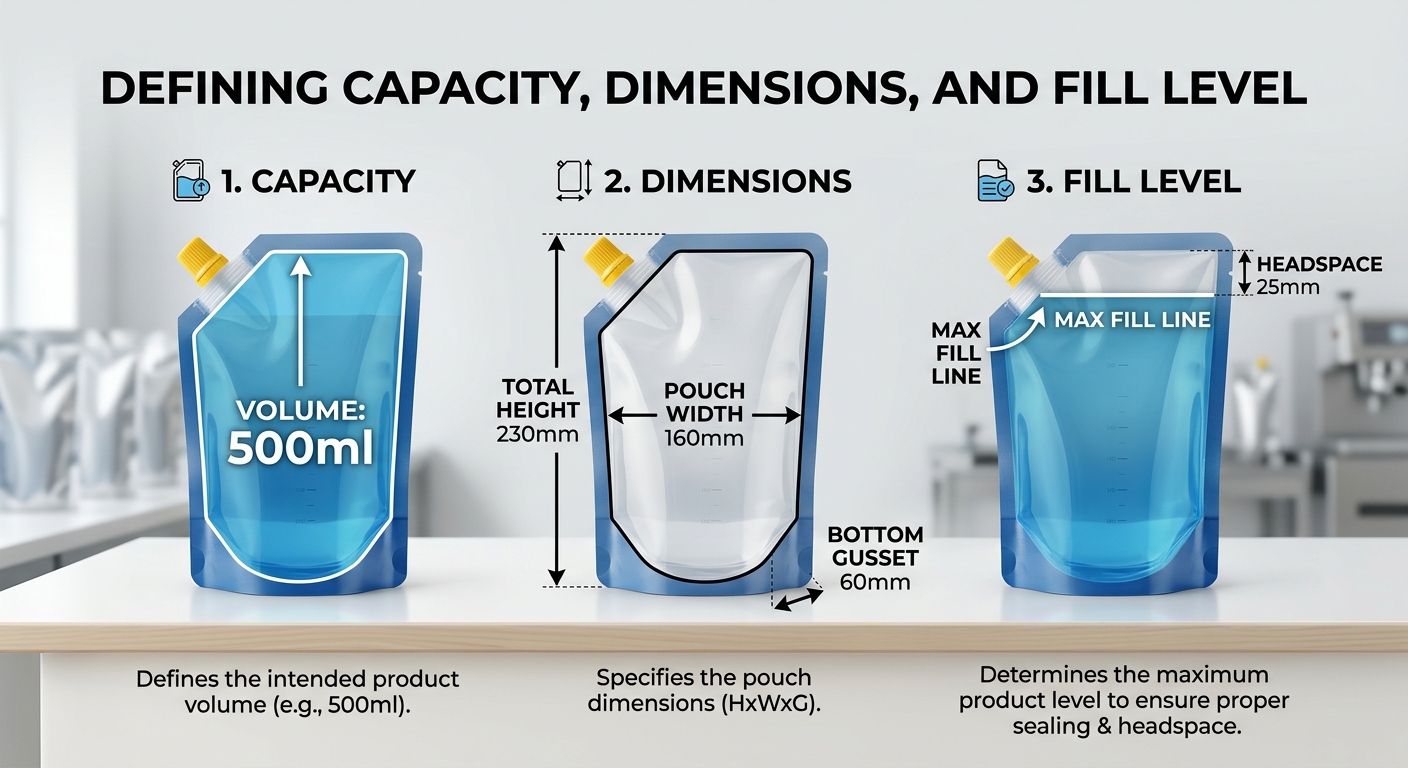
Nominal volume alone is not enough to specify a pet food spout pouch. Pouch dimensions, gusset design, product density, headspace, spout position, seal width, and the filling line all affect usable capacity and appearance.
Provide the following dimensional information:
- Target net weight or volume
- Product density or a representative filled sample
- Finished pouch width and height, if already established
- Gusset requirements, if applicable
- Top and bottom seal dimensions
- Spout location and fitment projection
- Target fill level and acceptable headspace
- Display orientation and any shelf-ready requirements
A pouch that is too small may create excessive product pressure at the seals or restrict dispensing. A pouch that is too large may look underfilled, increase material consumption, or change its behavior during filling and transport. Confirm dimensions using production-intent samples and the actual product density. This spout pouch capacity guide provides additional questions for matching nominal capacity to finished dimensions.
Confirm Filling and Seal Requirements
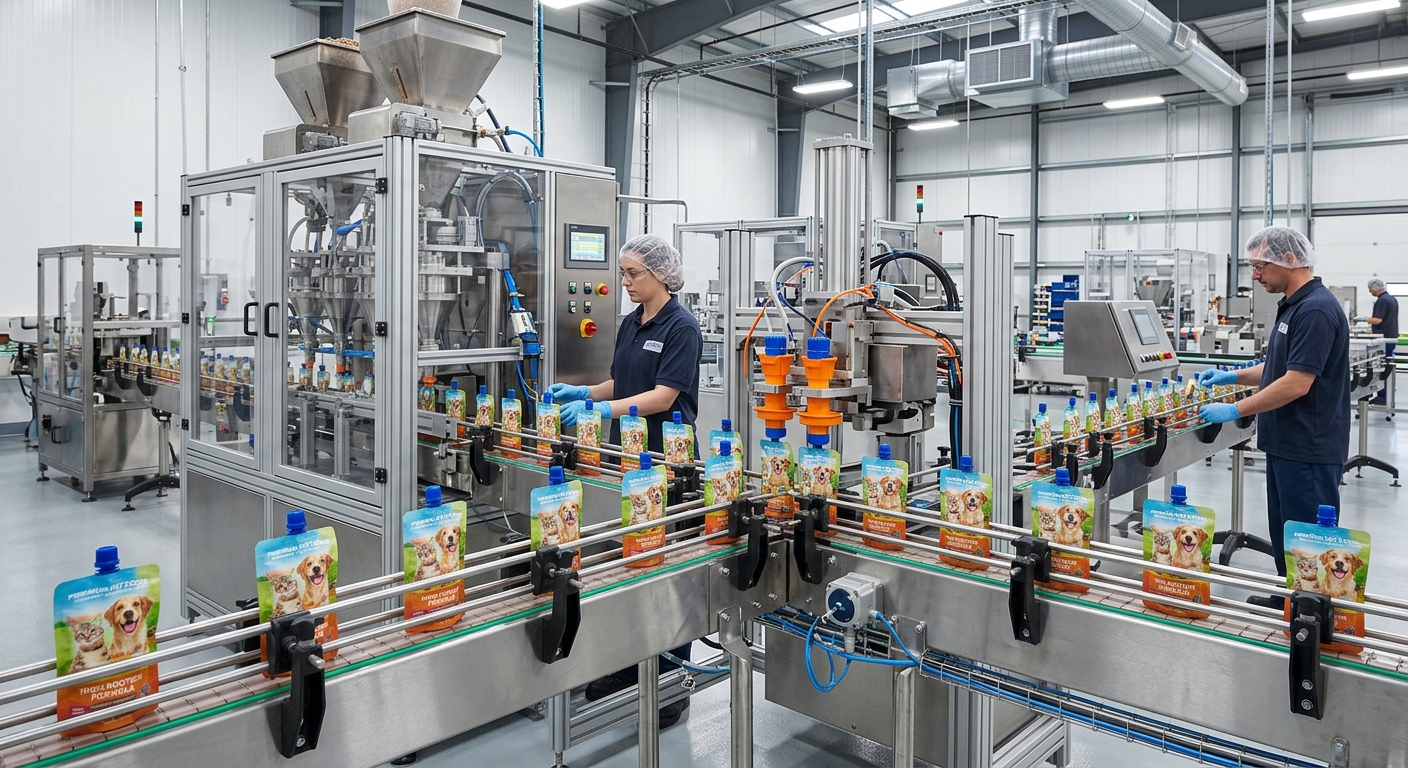
Filling conditions influence the pouch construction, seal design, and fitment specification. A pet food product can contaminate the seal area if the filling nozzle, product temperature, speed, or pouch handling is not controlled. The packaging supplier and filling partner should review these variables together.
Questions for the filling line
- Is the pouch filled through the spout or through an open top before fitment insertion?
- What filling machine and cap application system will be used?
- What are the product temperature, filling speed, and target fill accuracy?
- Will the product contact the seal area during filling?
- What are the sealing temperature, pressure, dwell time, and cooling conditions?
- Are the pouches supplied individually, in stacks, or on roll stock for conversion or filling?
Seal width and construction should be defined with the filling process rather than treated as artwork details. Ask for a sealing window and recommended operating range where available, then validate it on the intended equipment. Production approval should include filled-pouch checks for seal appearance, fitment attachment, cap application, dimensional consistency, and leakage.
Review Printing, Quality, and Validation
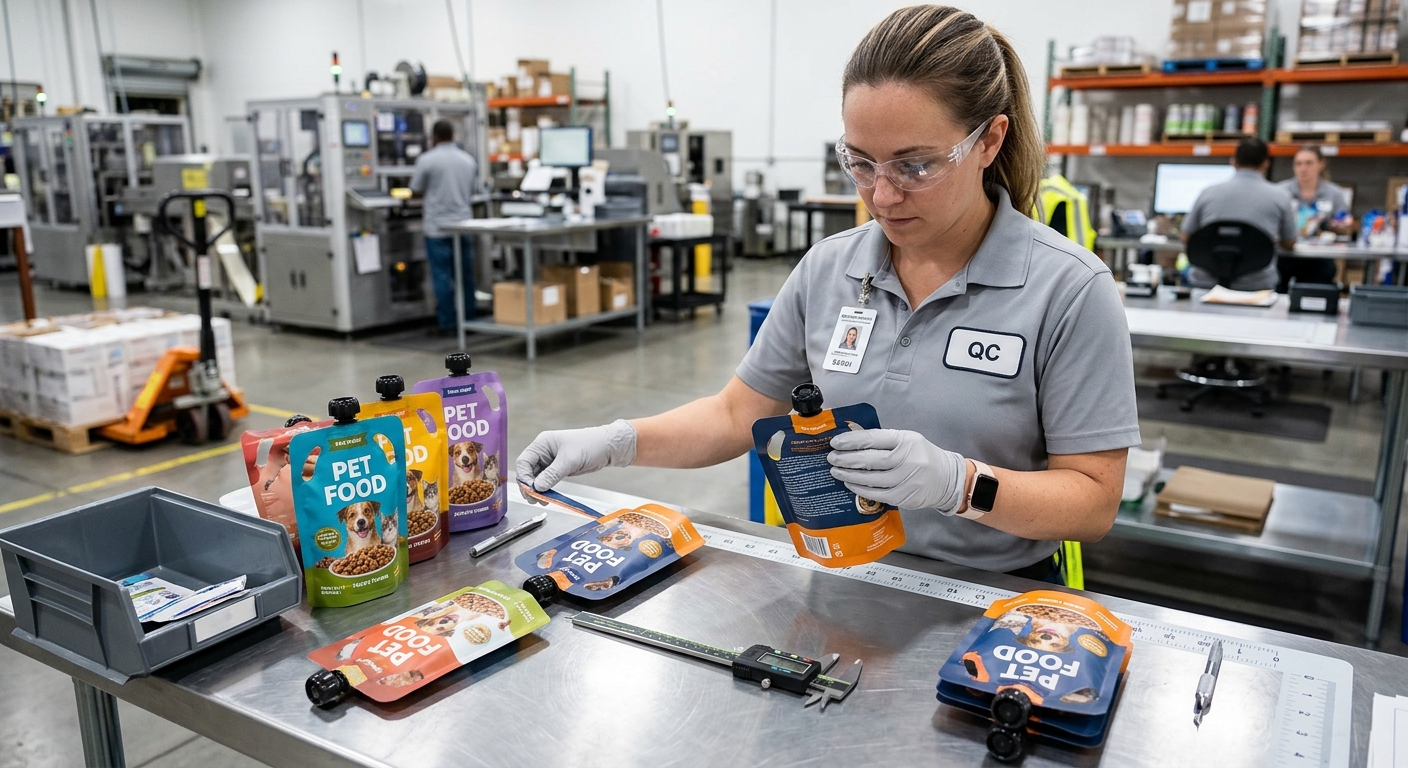
Printed graphics should be specified together with the pouch geometry. Confirm the print method, number of colors, registration requirements, finish, barcode placement, artwork orientation, and the area reserved for the spout and seals. Before production, approve a proof or press sample according to the supplier’s standard process.
Quality validation should reflect the actual product and supply chain. A practical approval plan may include:
- Visual inspection of film, printing, seals, spout attachment, and cap fit
- Dimensional checks for pouch width, height, seal width, and fitment position
- Filled-pouch leak or seal-integrity testing using an agreed method
- Dispensing trials with the actual pet food, including products with particles where applicable
- Opening, reclosing, and handling checks under expected consumer use
- Distribution or drop testing based on the planned shipping environment
- Process validation for hot fill, retort, pasteurization, or other thermal treatment when applicable
- Shelf-life evaluation using a defined protocol and representative storage conditions
Testing acceptance criteria should be agreed before samples are approved. A supplier can provide packaging samples, but the brand and filling partner remain responsible for confirming product suitability, labeling, and market-specific requirements.
When comparing manufacturers, use a documented review process covering technical capability, sample quality, communication, and production controls. The supplier evaluation checklist can support that review.
Pet Food Spout Pouch RFQ Checklist
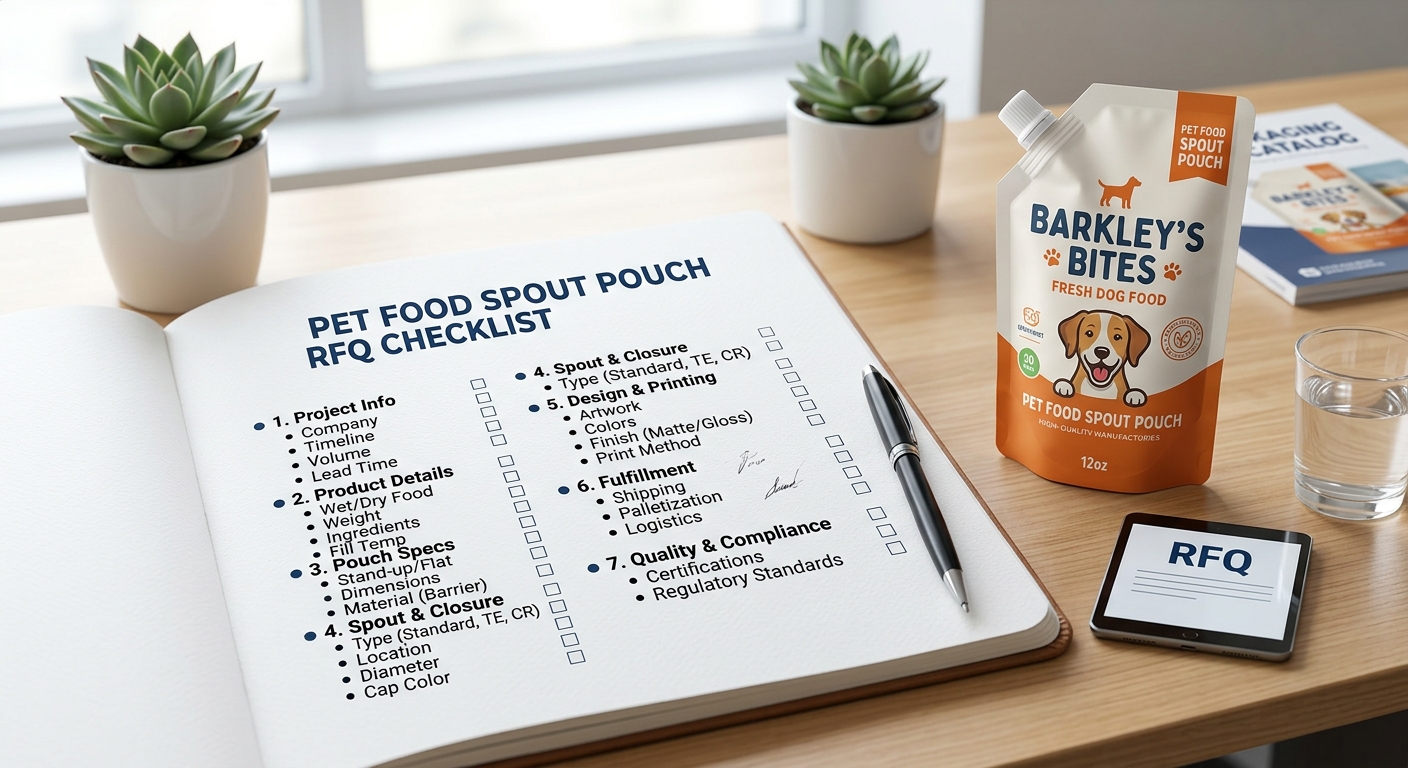
A complete request for quotation helps suppliers recommend a suitable construction and reduces avoidable sample revisions. Include the following details:
- Pet food category and product description
- Viscosity, particle size, density, and representative product sample if available
- Filling method, equipment, temperature, and expected production speed
- Thermal process, if any, including time and temperature conditions
- Target shelf life and storage or distribution environment
- Net weight or volume and preferred finished pouch dimensions
- Spout position, opening diameter, cap type, color, and tamper-evidence expectations
- Film appearance, barrier objectives, total thickness target, and preferred finish
- Artwork files, print colors, barcode requirements, and regulatory copy
- Estimated annual volume, initial order quantity, delivery destination, and timing
- Required samples, tests, quality documents, and approval procedure
Ask the supplier to identify assumptions in the quotation. The response should distinguish confirmed specifications from recommendations, show the proposed pouch structure and fitment, state sample and production lead times, and identify any information still needed for final approval.
For products that may be better suited to another flexible format, compare the dispensing requirement and processing conditions before committing to a spout pouch. This prevents a convenient opening feature from being prioritized over product protection or filling compatibility.