Table of Contents
- What spout pouch material thickness means
- Gauge, mil, and micron: Which unit should you use?
- How laminate structure affects thickness
- How to select thickness by application
- Technical factors that should be specified with gauge
- How to verify the specified thickness
- Spout pouch thickness RFQ checklist
Spout pouch material thickness should be specified as a complete laminate thickness in a clearly defined unit, not as an isolated gauge number. This guide explains how to convert mil and micron values, select thickness by application, and confirm sealing, fitment, filling, and distribution requirements with a packaging supplier.
What spout pouch material thickness means
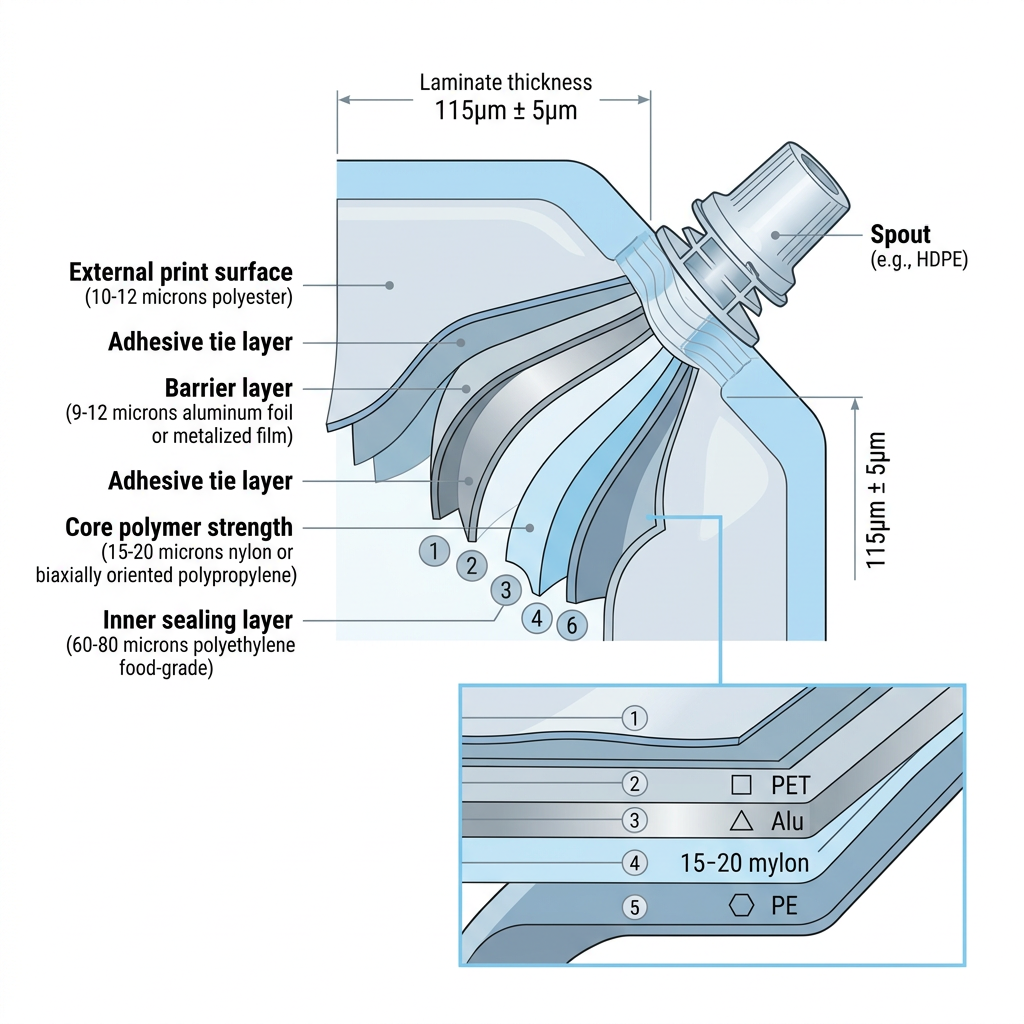
Spout pouch material thickness is the total thickness of the flexible laminate used to make the pouch body, usually expressed in microns or mil. It is one factor in pouch strength, stiffness, puncture resistance, seal performance, barrier design, and filling-line behavior. However, thickness alone does not define package performance. A thinner laminate with a suitable structure and seal system may be more appropriate than a thicker laminate selected without considering the product or process.
For a commercial specification, identify the complete laminate structure, target total thickness, unit of measurement, acceptable tolerance, and intended application. For example, a specification may state: “Printed PET / PE laminate, approximately 100 microns total thickness, subject to supplier construction review.” The final structure must also account for the spout fitment, cap, sealant layer, pouch dimensions, and filling conditions.
Buyers should avoid sending a supplier only a number such as “5 gauge.” The term gauge is used inconsistently across packaging markets. A supplier needs to know whether the number means mil, a film gauge convention, or a nominal thickness in another unit.
Gauge, mil, and micron: Which unit should you use?
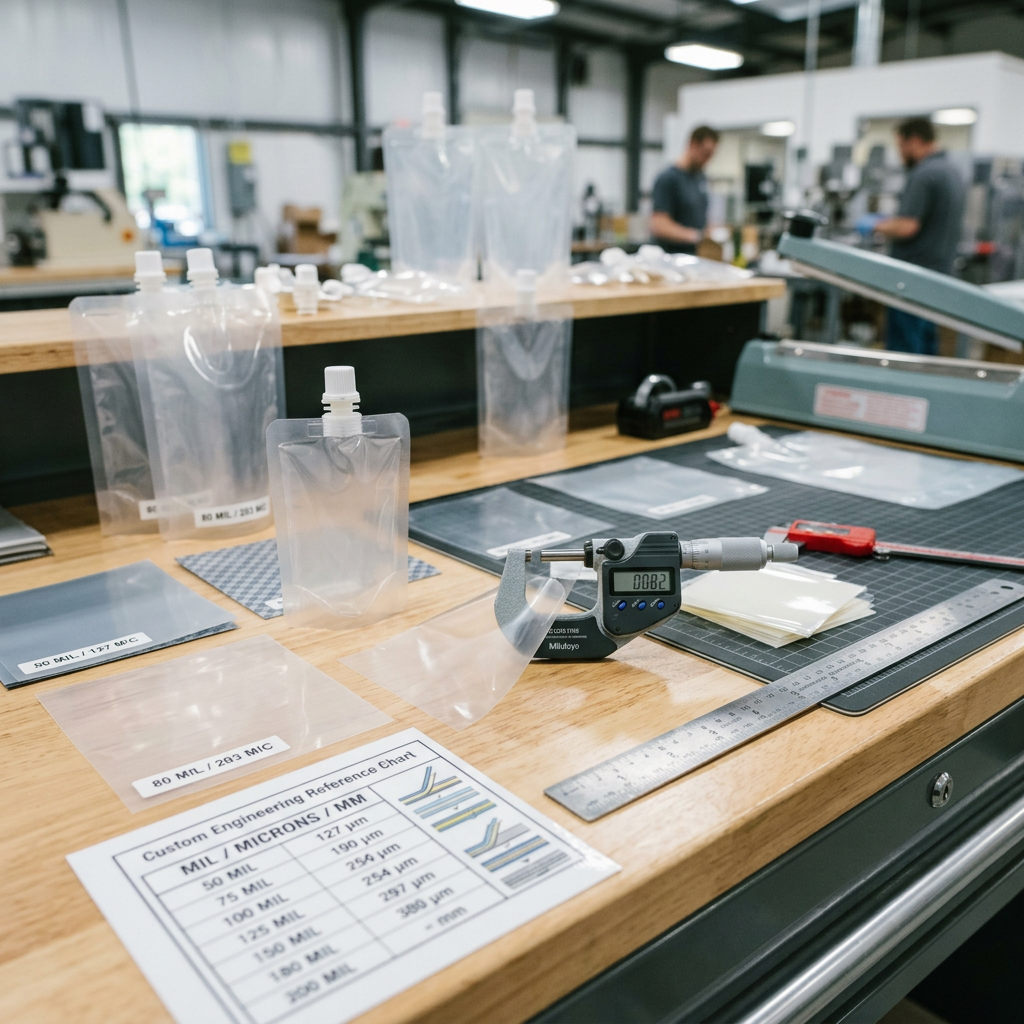
Micron and mil are the clearest units for international packaging specifications when their meanings are stated explicitly:
- Micron (µm): one micron equals one-thousandth of a millimeter.
- Mil: one mil equals one-thousandth of an inch.
- Gauge: a commercial term that may refer to film thickness, but its meaning should be confirmed with the supplier.
The basic conversion is 1 mil = 25.4 microns. Therefore, 3 mil is approximately 76.2 microns, 4 mil is approximately 101.6 microns, and 5 mil is approximately 127 microns. These are mathematical conversions, not manufacturing tolerances.
In some purchasing environments, “gauge” is used as a synonym for mil. In others, gauge may be based on a numbering convention or used loosely for a film specification. That ambiguity can create mismatches between a buyer’s requested thickness and the supplier’s quoted structure. The safest purchase order format is “approximately ___ µm total laminate thickness” or “approximately ___ mil total laminate thickness,” followed by the structure and tolerance.
Do not add the nominal thickness of each layer without checking the construction method. Adhesive, ink, coating, and extrusion layers may contribute to total thickness, while quoted layer values can be rounded. Ask the supplier whether the stated value is a nominal total, a minimum, or a target range.
How laminate structure affects thickness
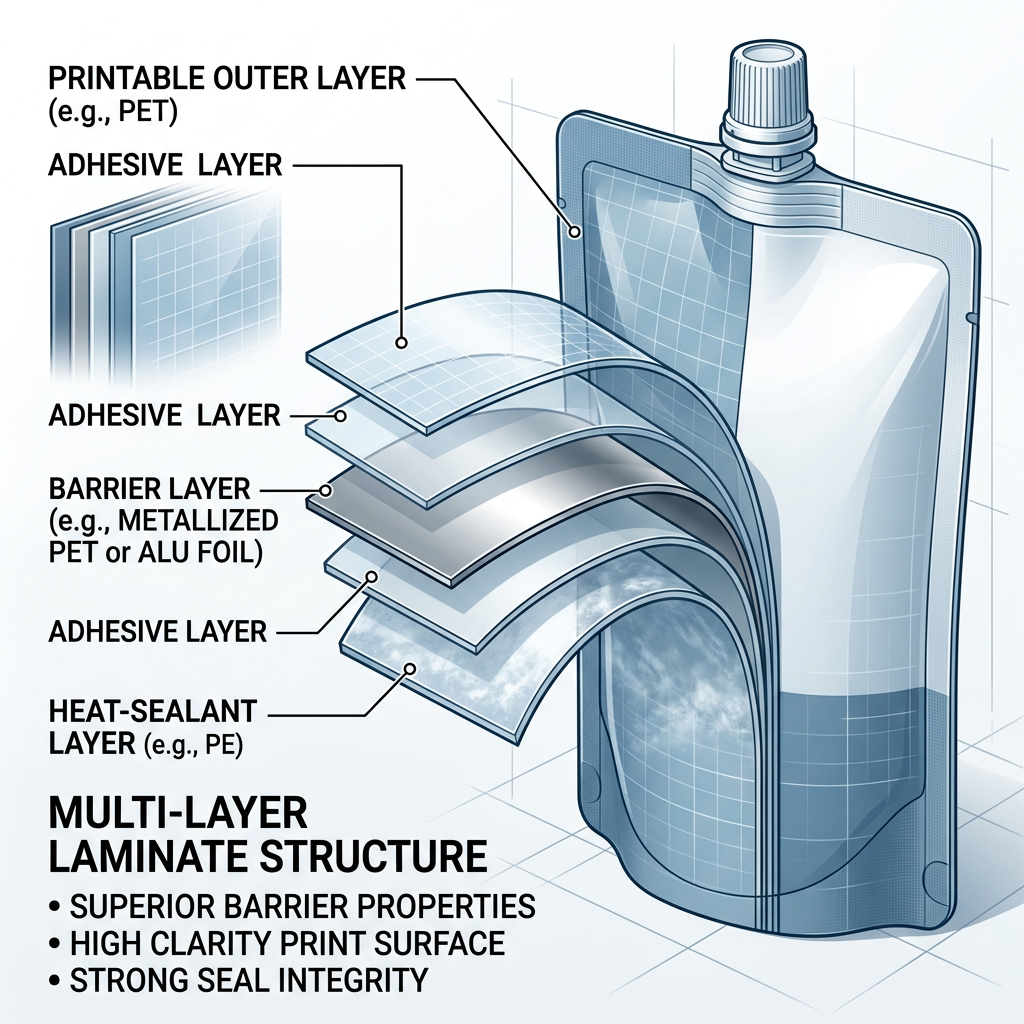
A spout pouch is normally made from multiple layers, with each layer performing a different function. A typical construction may include a printable outer layer, an adhesive or bonding layer, an optional barrier layer, and an inner heat-sealant layer. The exact materials depend on product chemistry, oxygen and moisture sensitivity, light protection, temperature exposure, filling method, and disposal requirements.
The outer layer supports printing and handling. Polyester, for example, is commonly considered when print stability and dimensional performance are important. A barrier layer may be selected when the product requires protection from oxygen, moisture, aroma loss, or light. The inner sealant layer contacts the product and forms the pouch seals; its seal initiation temperature, hot tack, chemical resistance, and sealing window can be more important than total thickness alone.
Increasing total thickness can improve handling feel and may provide additional resistance to some distribution stresses, but it can also increase material consumption, stiffness, sealing demands, and package cost. A very stiff laminate may not run well on equipment designed for a more flexible web. Conversely, a thin structure may not provide the required puncture or seal margin for a heavy, abrasive, acidic, oily, or viscous product.
For that reason, specify thickness together with the intended product and process. A supplier reviewing the structure should assess whether the selected films, adhesive system, sealant, and fitment are compatible as a package system.
How to select thickness by application
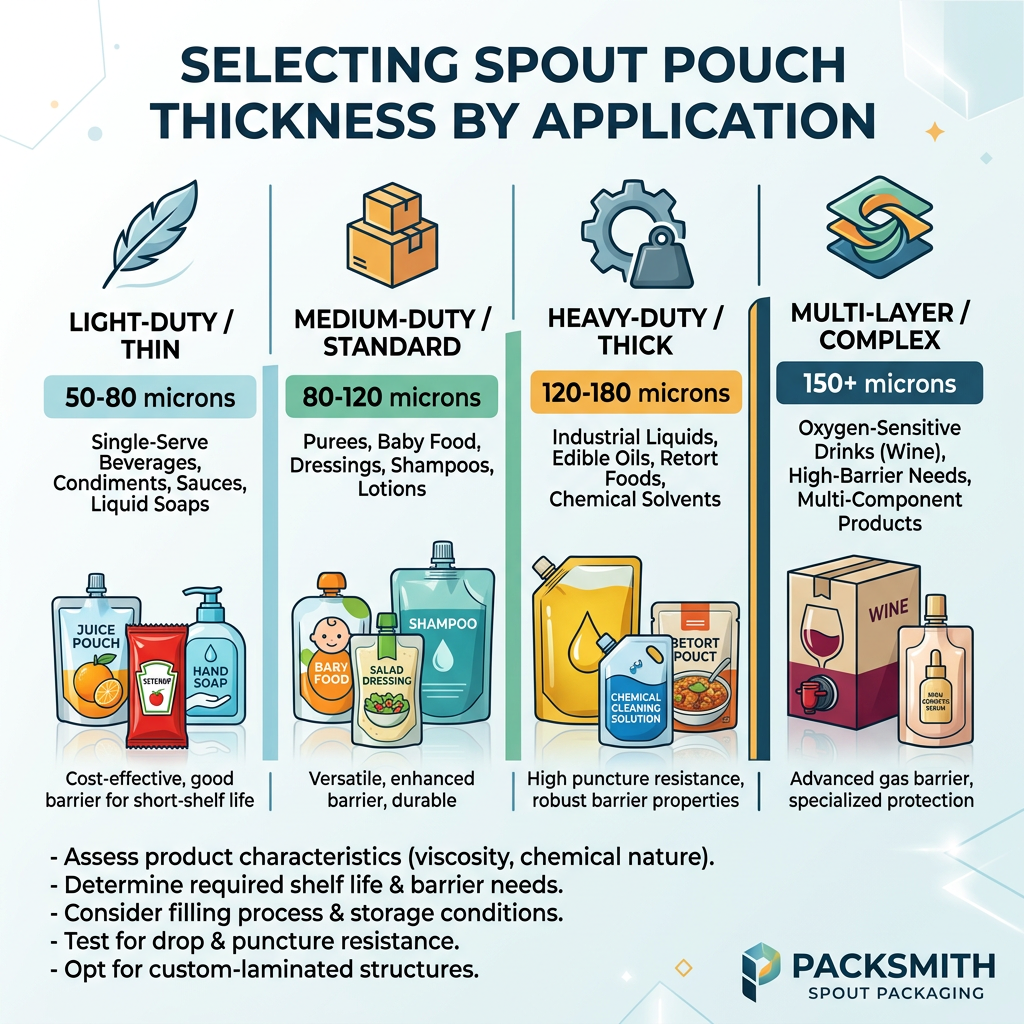
There is no universal thickness that fits every spout pouch. Start with the product’s physical and chemical characteristics, then evaluate the package through the filling and distribution process.
Light liquids and single-use formats
Small single-use pouches containing relatively low-viscosity products may use a lighter construction when the pouch dimensions, seal geometry, handling conditions, and distribution route are controlled. The supplier should still confirm seal strength and fitment integrity, especially if the pouch will be squeezed during use.
Viscous products and larger capacities
Thick sauces, concentrates, purees, detergents, and larger-volume packs can place more load on the pouch body, bottom seal, side seals, and spout area. A higher total thickness or a more puncture-resistant structure may be appropriate, but filled weight and pouch geometry must be considered together. A large pouch with a narrow seal margin may require a different design than a small pouch made from the same laminate.
Products exposed to temperature or freezing
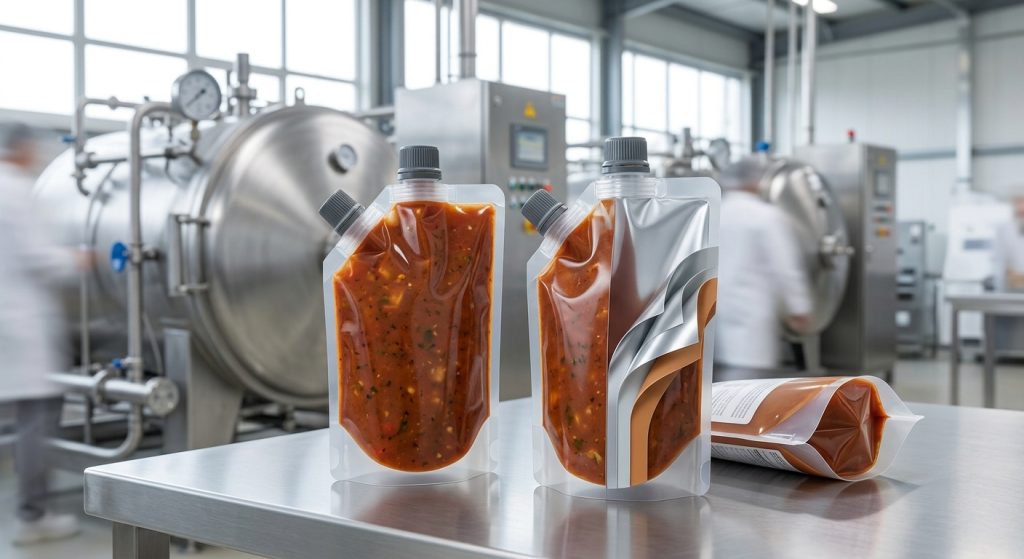
Hot-fill, pasteurization, retort, and frozen applications require structures and seal systems that have been selected and tested for the relevant temperature profile. Thickness should not be used as a substitute for thermal validation. Freezing can affect flexibility and seal behavior, while heat can affect dimensional stability, adhesive performance, and seal strength.
Products needing barrier protection
Oxygen-sensitive, aroma-sensitive, or light-sensitive products may need a barrier layer. The barrier choice and its continuity can matter more than simply increasing the thickness of a non-barrier layer. Define the desired shelf-life target, storage conditions, and product sensitivity so the supplier can recommend a suitable construction and testing plan.
Technical factors that should be specified with gauge
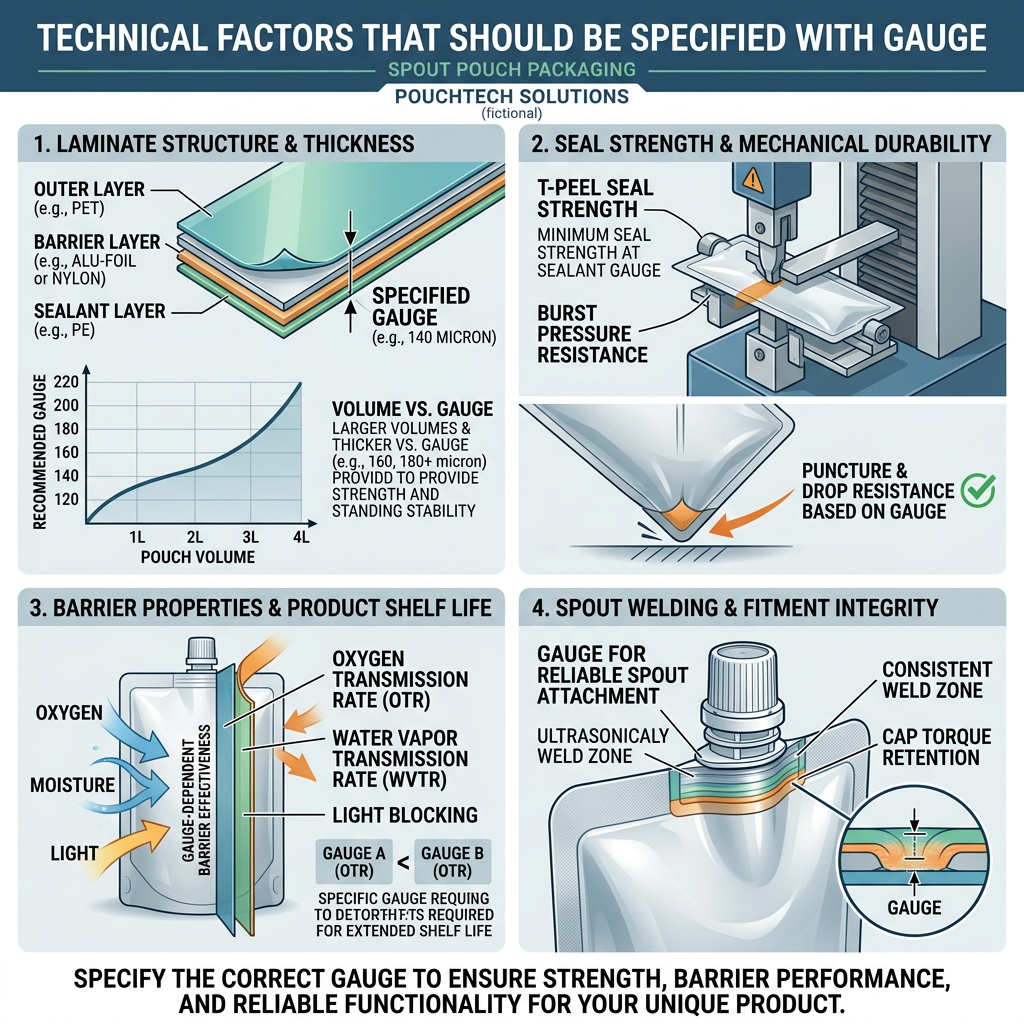
A complete spout pouch thickness specification should cover more than the film number. Include the following information in an RFQ or technical drawing:
- Finished laminate thickness: State the target total thickness in microns or mil and identify whether it is nominal or minimum.
- Layer structure: List the proposed or required outer, barrier, adhesive, and sealant layers where known.
- Pouch dimensions and capacity: Provide width, height, bottom gusset or side gusset details, nominal fill volume, and filled product weight.
- Product characteristics: Identify viscosity, pH where relevant, oil or solvent content, particulates, abrasiveness, and sensitivity to oxygen, moisture, or light.
- Filling conditions: State filling temperature, product temperature, filling speed if known, sealing temperature range, and whether the pouch is filled manually or on an automated line.
- Spout and cap: Confirm spout position, opening diameter, fitment material, cap type, and the required fitment-to-film sealing method.
- Distribution conditions: Describe stacking, shipping distance, palletization, freezer exposure, compression, vibration, and expected consumer handling.
- Quality criteria: Define appearance, seal width, leak acceptance, dimensional tolerance, print requirements, and any required tests or documentation.
These details help the converter distinguish between a pouch that needs primarily barrier protection and one that needs additional mechanical or sealing margin. They also reduce the risk of quoting a structure that cannot run on the buyer’s filling equipment.
How to verify the specified thickness

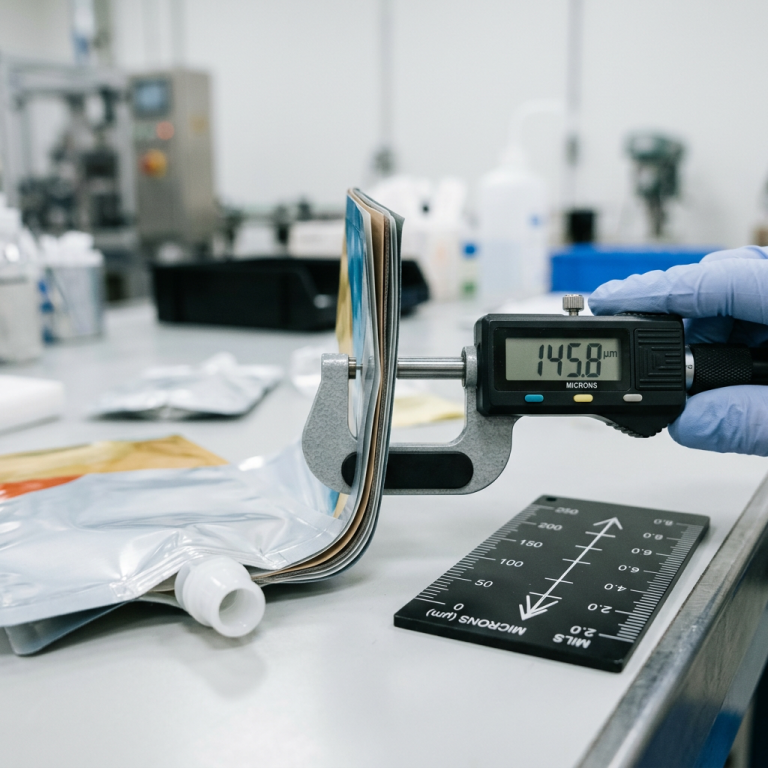
Thickness should be verified on production-intent samples or an agreed material sample, not only on a supplier’s drawing. Ask how thickness is measured, where measurements are taken, and whether the result represents the finished laminate or an individual film layer. Measurements can vary by location because of film, coating, printing, adhesive, and converting variation.
For a new pouch, confirm the following during sample approval:
- Measured or reported total laminate thickness and the stated unit.
- Film construction and sealant identity.
- Spout and cap fitment, including the fitment sealing area.
- Seal appearance, seal width, and evidence of channel leaks or wrinkles.
- Filled-pouch dimensions, weight, balance, and handling feel.
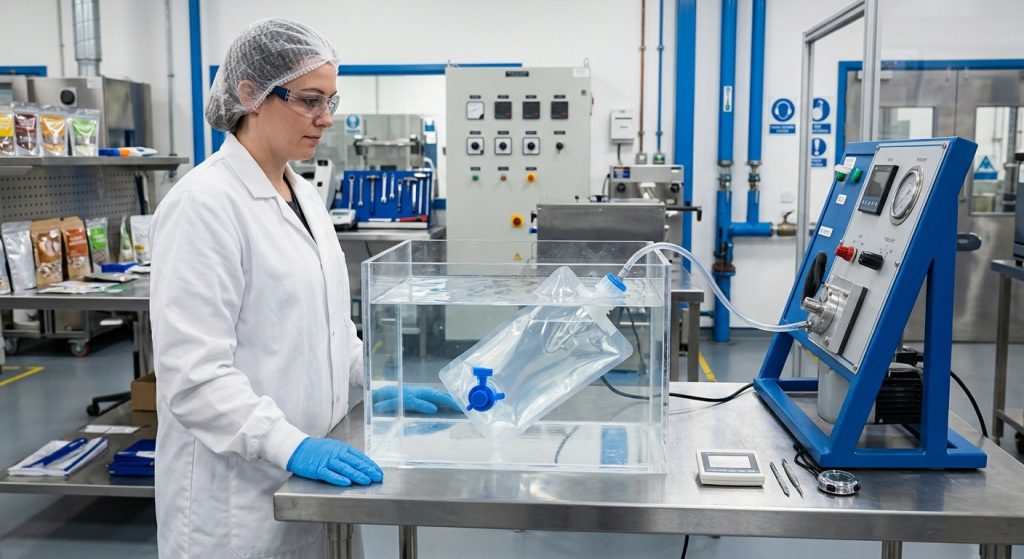
- Leak, burst, compression, drop, or temperature testing appropriate to the application.
- Filling-line performance at representative settings.
Thickness is commonly measured with a thickness gauge or micrometer under a defined method. Because test pressure and sampling location can affect readings, buyers should agree on the method and acceptance range with the supplier. A certificate or inspection report should identify the sample, lot, measurement unit, and result where documentation is required.
Approval should be based on package performance, not on thickness alone. If a sample meets the nominal gauge but fails leakage, fitment, or machine testing, the structure or process may need revision.
Spout pouch thickness RFQ checklist
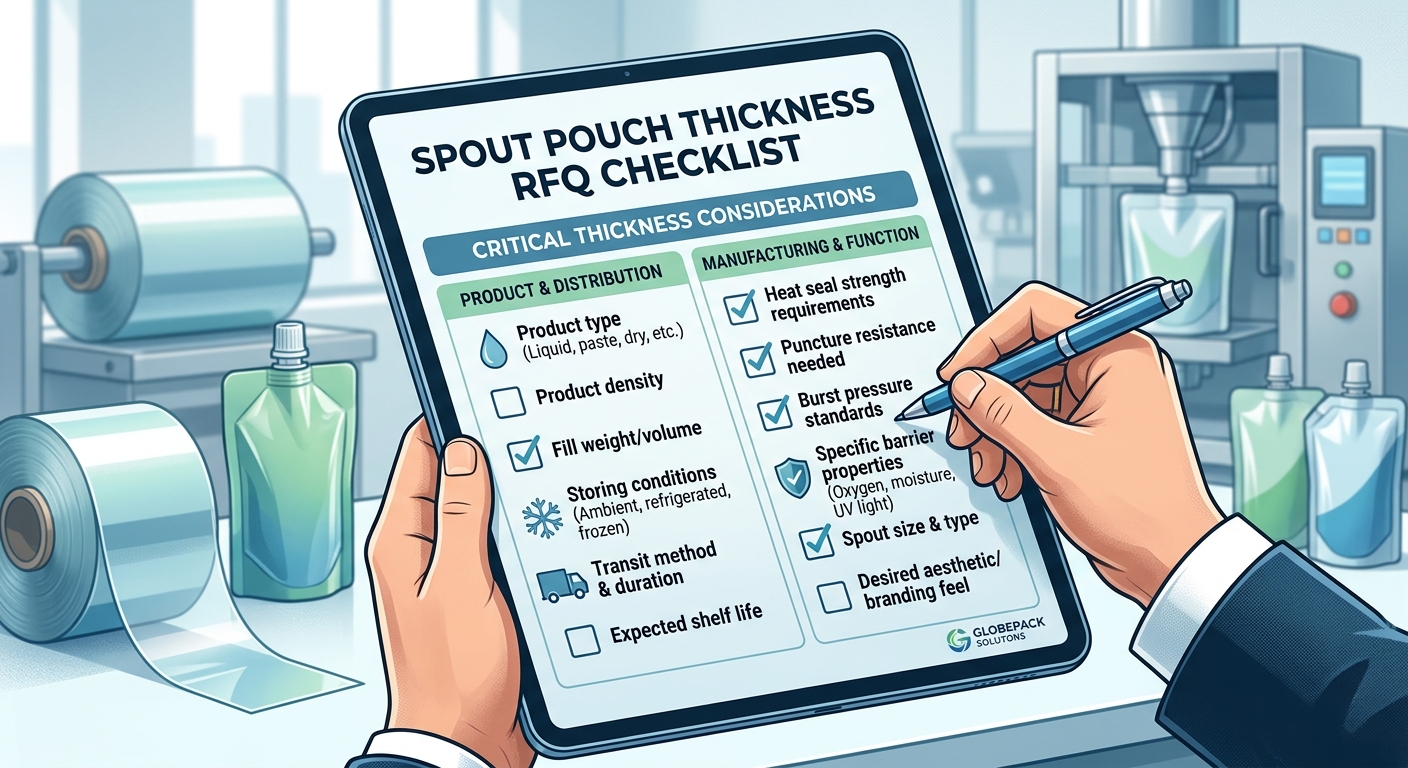
When requesting a quote, buyers can use the following short specification format:
- Product and intended use
- Nominal fill volume and filled product weight
- Pouch width, height, gusset, and spout position
- Target total laminate thickness in µm or mil
- Preferred or required laminate structure
- Barrier, opacity, or light-protection requirements
- Filling and sealing temperature
- Fitment opening, cap, and spout material requirements
- Distribution and storage conditions
- Expected annual volume, order quantity, and artwork status
- Required samples, tests, inspection records, and compliance documentation
If the buyer does not know the correct thickness, provide the application details instead of guessing a gauge. A qualified flexible packaging manufacturer can review the product, pouch size, fitment, filling process, and distribution requirements before recommending a construction for sampling.
For international B2B purchasing, keep the specification consistent across the quotation, approved sample, purchase order, and inspection record. This reduces confusion caused by converting between gauge, mil, and micron during procurement.