Table of Contents
- What Are Shampoo Refill Pouches?
- How to Choose the Film Structure
- How to Select the Spout and Cap
- Pouch Format, Capacity, and Dimensions
- Seals, Filling, and Quality Checks
- Artwork and Sourcing Requirements
Shampoo refill pouches require a coordinated choice of laminate, film thickness, spout, cap, seal design, and filling format. This guide explains the main technical decisions B2B buyers should confirm before sampling and production.
What Are Shampoo Refill Pouches?
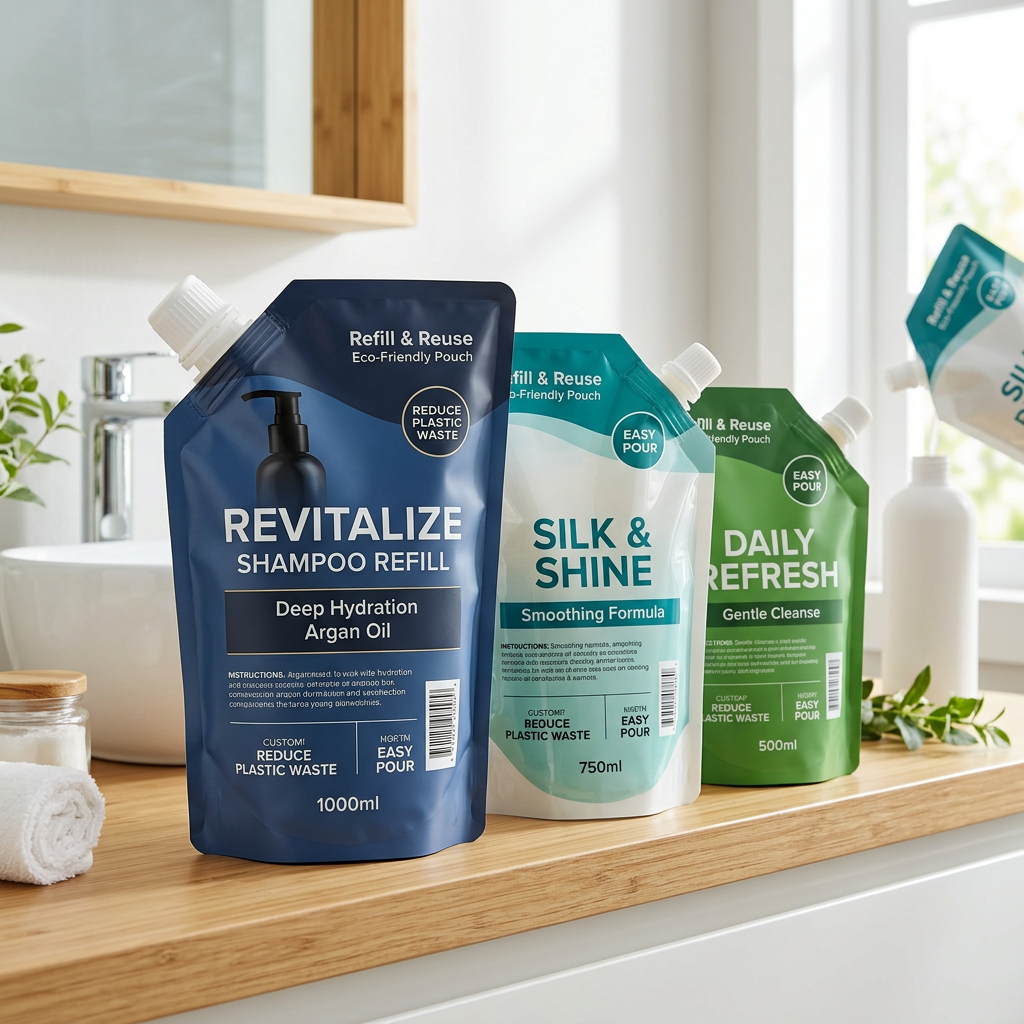
Shampoo refill pouches are flexible bags designed to hold shampoo for direct use or for transferring product into a reusable bottle. A typical package combines a printed multilayer film, a heat-sealed pouch body, a fitment or spout, and a cap. The correct specification depends on the shampoo formula, viscosity, filling process, distribution conditions, dispensing preference, and target volume.
Compared with a rigid bottle, a refill pouch can provide a lightweight format with a large printable surface and controlled dispensing through the spout. However, the pouch should not be selected by appearance alone. The laminate must protect the formula and withstand handling, while the spout and seal system must remain compatible with the filling line and consumer use.
For buyers, the main decisions are:
- Film family, barrier level, thickness, and sealant layer
- Spout position, opening diameter, fitment material, and cap style
- Pouch capacity, dimensions, headspace, and filling tolerance
- Printing process, surface finish, and artwork requirements
- Leak, seal, fitment, transport, and product-compatibility testing
These specifications should be confirmed before requesting a final quotation because they affect tooling, material consumption, machine setup, sampling, and production yield.
How to Choose the Film Structure
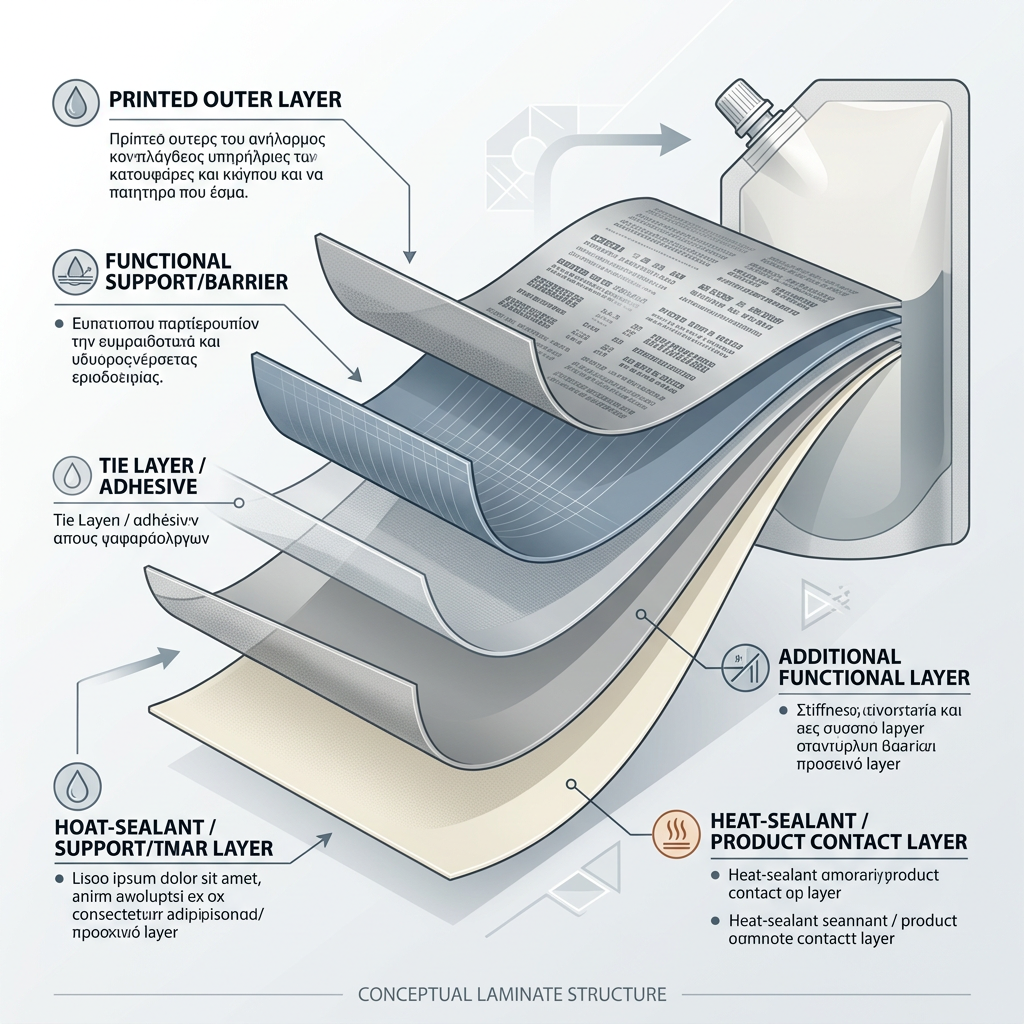
The film structure is the primary barrier and mechanical system of a shampoo refill pouch. A laminate commonly includes a printable outer layer, one or more support or barrier layers, adhesive, and an inner heat-sealant layer. The exact combination should be selected according to the formula and expected storage conditions rather than copied from another product category.
Product compatibility
Shampoo may contain surfactants, fragrances, oils, botanical extracts, solvents, salts, or conditioning ingredients. These components can interact differently with sealant layers, adhesives, inks, and barrier films. Provide the packaging supplier with the formula type, pH range if available, fragrance or oil content, filling temperature, and intended shelf-life target. A supplier can then recommend a structure for compatibility evaluation.
Barrier requirements
Barrier needs depend on the formula, pack size, shelf-life objective, and storage environment. If fragrance retention, color stability, oxidation control, or moisture protection is important, discuss the required barrier rather than assuming that every shampoo needs the same construction. Aluminum foil, metallized films, and transparent barrier films offer different combinations of protection, appearance, flexibility, and recyclability considerations.
Thickness and sealant layer
Film thickness affects stiffness, puncture resistance, fold behavior, pouch feel, and material usage. The inner sealant must form reliable seals across the specified filling and sealing conditions. Shampoo residue in the seal area can increase the risk of weak or inconsistent seals, so the filling line and seal window should be considered during development.
Buyers evaluating a recyclable or simplified structure should also confirm whether the selected spout, cap, adhesive, ink system, and pouch laminate are compatible with the intended material approach. A material description alone does not establish recyclability in every market.
Our guide to mono-material spout pouches provides additional points for evaluating material families, barrier tradeoffs, and fitment compatibility.
How to Select the Spout and Cap
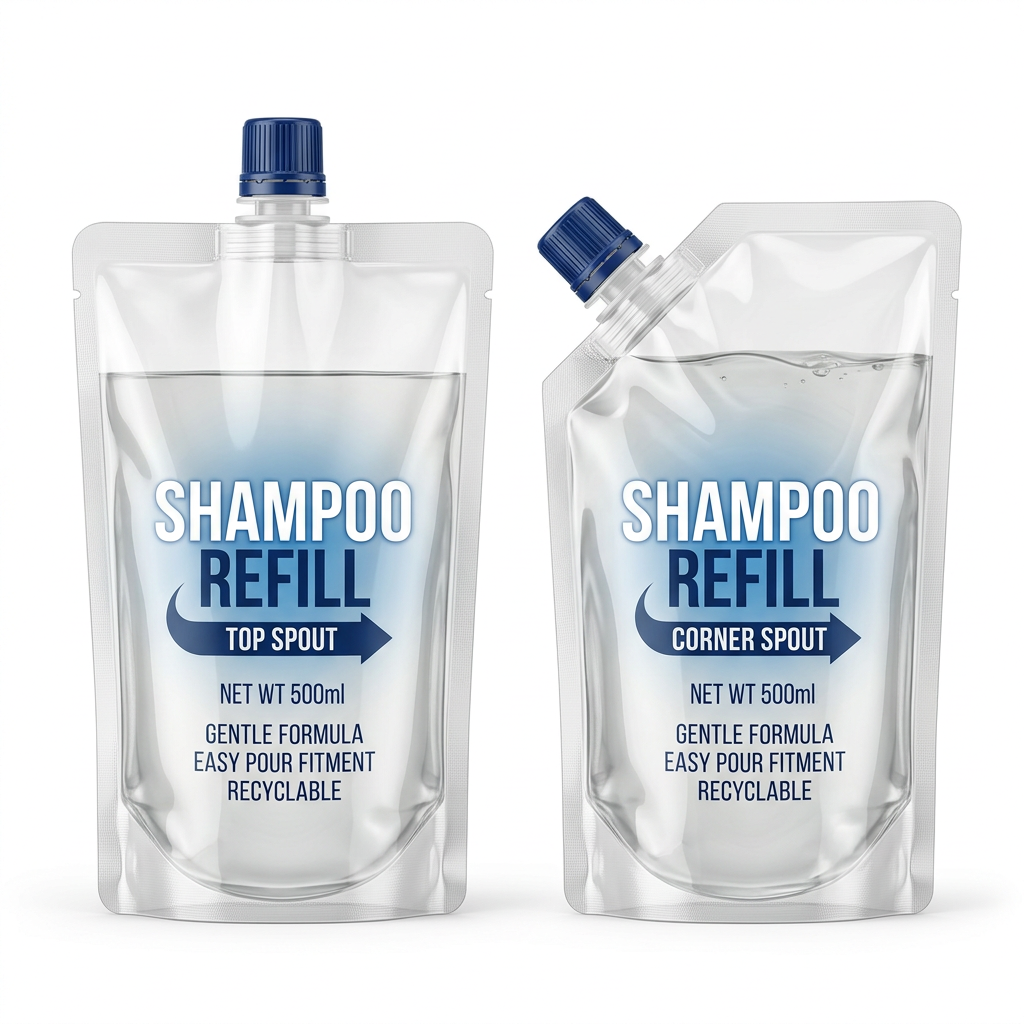
The spout controls how shampoo is filled, dispensed, closed, and handled. It should be specified together with the pouch film because the fitment seal, insertion process, and pouch geometry all influence package integrity.
Spout position
A top spout is suitable when the package is designed to stand or dispense from the upper edge. A corner spout may support angled pouring and can work well for compact refill formats. The best position depends on the pouch shape, shelf presentation, filling equipment, product flow, and how consumers are expected to empty the package.
Opening diameter and flow
Shampoo viscosity varies widely. A narrow opening may support controlled dispensing but can be less suitable for thick formulas or formulas containing suspended particles. A larger opening can improve flow but may release more product per use. Confirm the target dispensing rate through samples using the actual formula, not only water or a low-viscosity substitute.
Cap and tamper evidence
Common closure decisions include screw-cap size, cap retention, tethering requirements, liner or plug configuration, and tamper-evident features where required by the market or customer specification. The cap must match the spout thread or fitment design and should be tested after repeated opening and closing if the product is intended for multiple uses.
Also confirm whether the pouch will be filled through the spout, through an open top before fitment insertion, or through another filling configuration. This decision affects the fitment design, machine tooling, seal geometry, and production process.
For more detail on technical dimensions and fitment matching, see our guide to spout pouch capacity, dimensions, and fitments.
Pouch Format, Capacity, and Dimensions
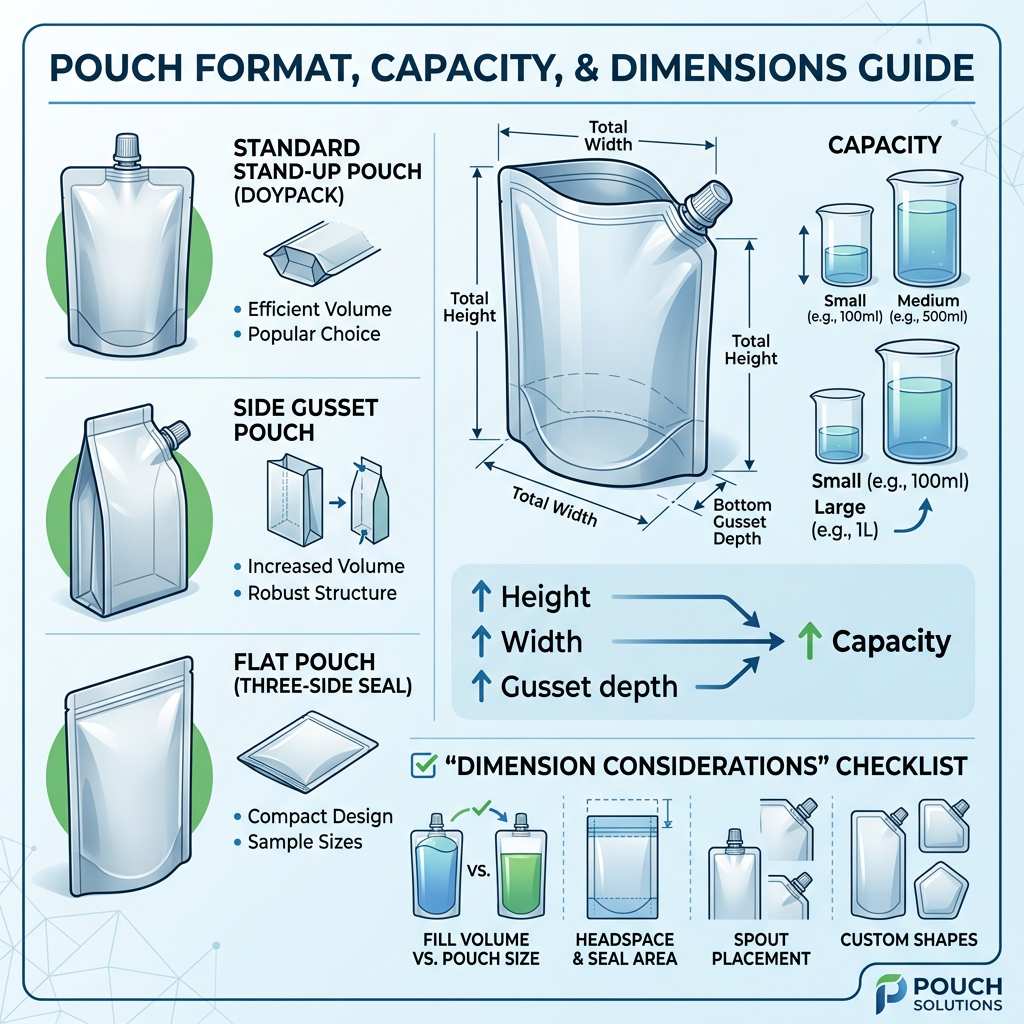
Nominal volume does not fully define a shampoo refill pouch. A 500 mL or 1 L pouch must also have suitable width, height, gusset or bottom construction, usable fill volume, headspace, and spout placement. The final dimensions should be tested with the formula and the intended secondary packaging.
Important dimensional inputs
- Target fill weight or volume: Specify whether the commercial quantity is controlled by grams, milliliters, or both.
- Product density: Density affects the relationship between fill weight and volume.
- Viscosity: Thick shampoo may need additional headspace and a larger opening.
- Headspace: The required empty space depends on filling behavior, sealing method, and product expansion during storage.
- Display orientation: Confirm whether the pouch must stand, lie flat, or hang.
- Case packing: Check carton dimensions, stacking pattern, pallet layout, and protection during transport.
Flat pouches can be appropriate for compact refill formats, while bottom-gusset or other expanded constructions may offer a different shelf presentation. A shaped pouch can create a distinctive outline but may require dedicated tooling and more detailed approval of the seal perimeter.
When comparing formats, evaluate the full use cycle: opening, pouring or dispensing, temporary storage after opening, and the amount of residual shampoo left in the pouch. These practical factors can be as important as the nominal capacity.
Seals, Filling, and Quality Checks

Shampoo refill pouch performance depends on the complete package system: laminate, seams, fitment seal, cap, filling process, and distribution handling. A visually attractive pouch is not ready for production until these elements have been evaluated together.
Filling-line compatibility
Share the filling machine model or process description, target speed, fill temperature, fill range, nozzle arrangement, and sealing method with the supplier. Confirm whether the pouch is filled before or after spout insertion and whether the line requires a specific pouch pitch, registration mark, or fitment orientation.
Seal evaluation
Test the top, bottom, side, and fitment seals. Useful checks may include visual inspection, seal-strength testing, leak testing, pressure or vacuum testing where appropriate, and examination after handling. The test method should reflect the actual pouch construction and product conditions.
Distribution and use testing
Evaluate filled samples after transport simulation or other agreed handling conditions. Inspect for punctures, delamination, seal opening, cap leakage, fitment movement, scuffing, and print damage. For a refill package, also check controlled pouring and closure performance after the first opening.
Testing should be based on the intended market, product, pack size, and distribution route. Avoid treating a passing result on one formula or pouch size as automatic validation for every version.
Before mass production, use a documented approval process. Our guide to approving spout pouch samples covers the key checks buyers should record before placing an order.
Artwork and Sourcing Requirements
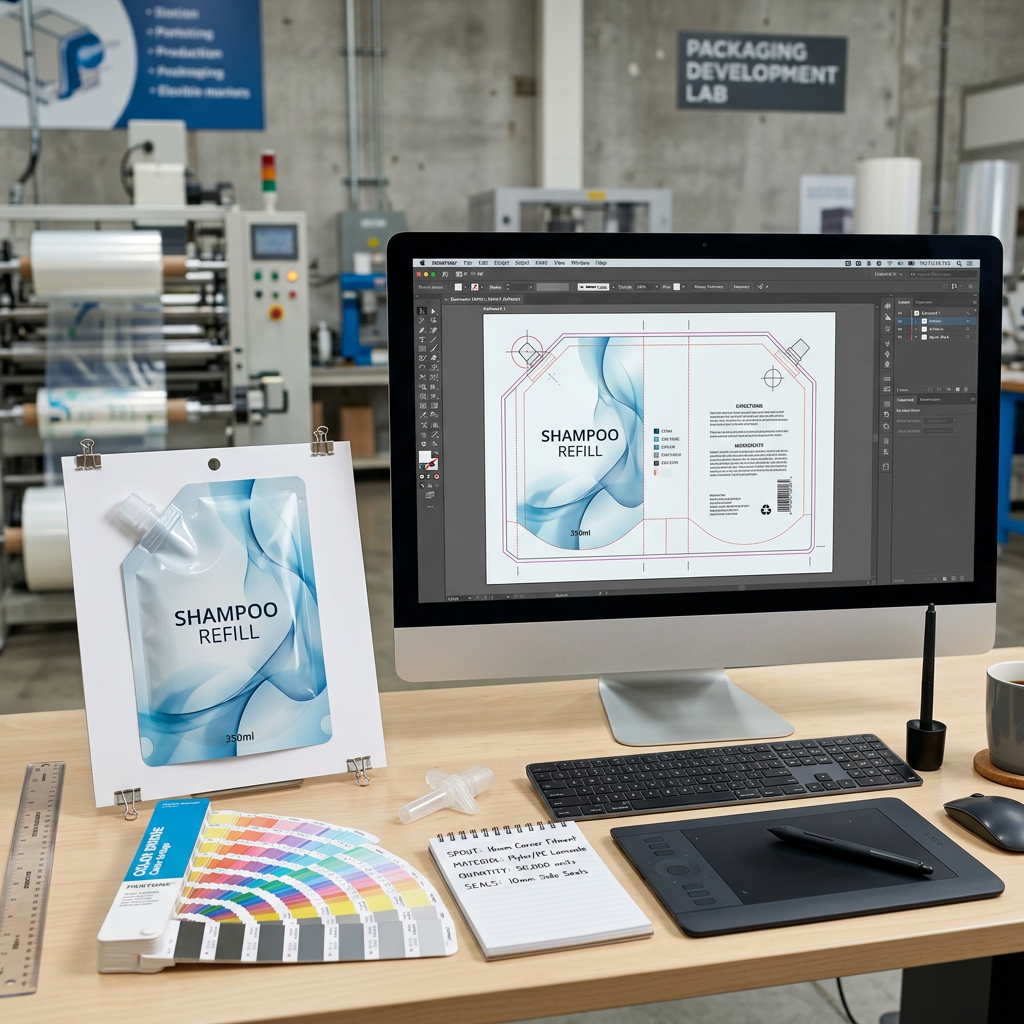
Artwork should be developed around the pouch structure, seal zones, spout area, and printing process. Keep important text, barcodes, regulatory information, and graphics away from the seal margins and any area that may be covered by the fitment.
Artwork details to confirm
- Finished pouch dimensions and bleed
- Print repeat length and registration requirements
- Number of colors and color reference system
- Gloss, matte, or other surface finish
- Barcode location and scan verification
- Lot, date, or variable-data printing area
- Spout and cap color coordination
Ask for a dieline showing the pouch outline, seal boundaries, spout location, and safe artwork area. A digital proof confirms layout, but a physical sample is better for checking scale, handling, opening, dispensing, and color appearance.
When sourcing shampoo refill pouches, provide a clear RFQ containing the formula category, fill volume, dimensions if known, film preference, spout and cap requirements, annual or initial quantity, artwork status, filling method, destination market, and requested testing. Also ask the supplier to identify assumptions in the quotation, such as whether tooling, cylinders, samples, freight, or testing are included.
Supplier evaluation should cover converting capability, fitment installation, quality documentation, communication, sampling process, and commercial terms. Our spout pouch supplier evaluation checklist can help organize these questions.
For a structured request, use the spout pouch RFQ checklist when preparing specifications for quotation.
Shampoo Refill Pouch Specification Summary
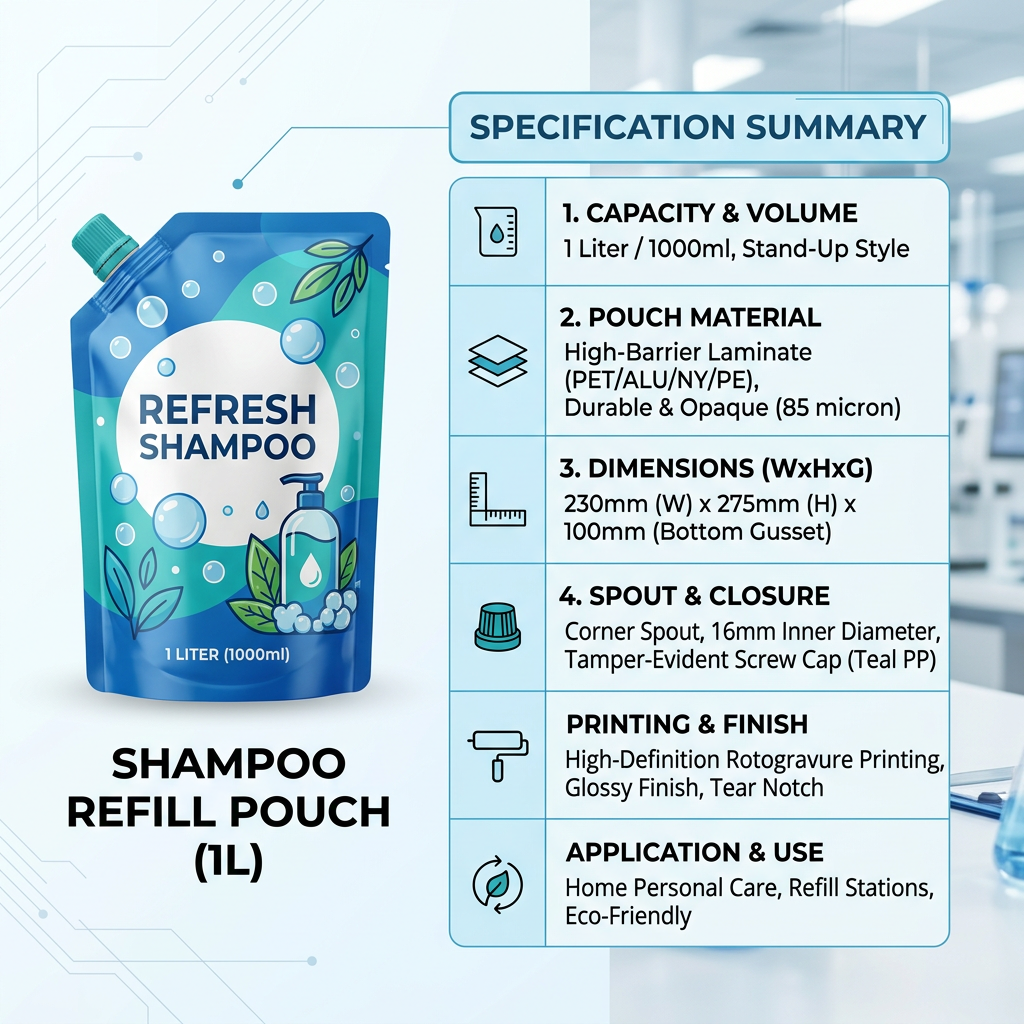
A practical specification for shampoo refill pouches should connect the product, package, filling process, and commercial requirements. Before approval, confirm the following:
- Shampoo formula characteristics, viscosity, density, fragrance or oil content, and filling temperature
- Target fill weight or volume and acceptable filling tolerance
- Pouch format, finished dimensions, headspace, spout position, and display orientation
- Film construction, total thickness, barrier objective, sealant layer, and finish
- Spout opening diameter, fitment material, cap design, and tamper-evident requirements
- Filling equipment, sealing conditions, registration marks, and fitment orientation
- Artwork file, dieline, print colors, barcode location, and variable-data area
- Sample quantity, testing plan, production quantity, packaging method, and delivery terms
The final choice should be validated with filled samples using the actual shampoo or a representative formula. This reduces the risk of selecting a pouch that looks suitable but does not dispense, seal, or travel as required.