Table of Contents
- What Is a BIB Bag?
- Start With the Product and Filling Process
- Capacity, Dimensions, and Bag Format
- Film Structure and Barrier Selection
- Fitments, Taps, and Dispensing Compatibility
- Seals, Handling, and Validation
- Printing and Artwork Requirements
- BIB Bag RFQ Checklist
A practical B2B guide to specifying bag-in-box bags for food, beverage, and non-food liquid products. Review film structures, fitments, capacity, filling conditions, validation, and RFQ requirements.
What Is a BIB Bag?
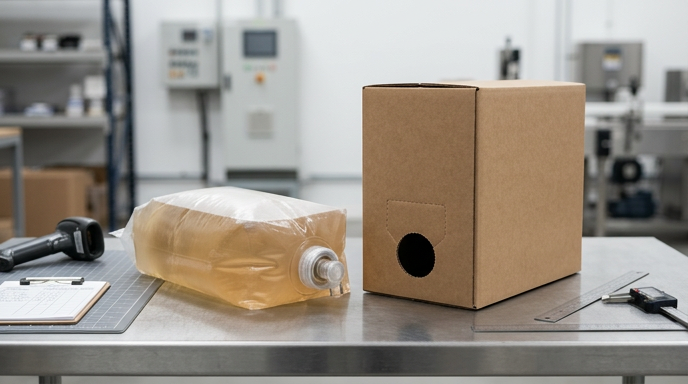
A BIB bag is the flexible inner bag used in a bag-in-box system for liquid products. The bag holds the product, while the outer corrugated box supports handling, stacking, display, and dispensing. To specify a BIB bag correctly, buyers should define the liquid, target fill volume, filling method and temperature, storage conditions, fitment or tap interface, and the box it will run in before selecting a film structure.
BIB bags are commonly used for beverages, syrups, sauces, edible oils, liquid dairy ingredients, water-based products, cleaning liquids, and industrial fluids. A bag-in-box system is not one universal package: the appropriate materials and fitment depend on the product chemistry, oxygen and moisture sensitivity, expected distribution, and dispensing equipment.
For this guide, the assumption is that the buyer is sourcing custom flexible bags for a conventional bag-in-box application rather than a completed boxed retail pack. Where a product will contact food, the buyer should also establish the applicable food-contact requirements for the destination market and request documentation appropriate to the selected materials and use conditions.
Start With the Product and Filling Process
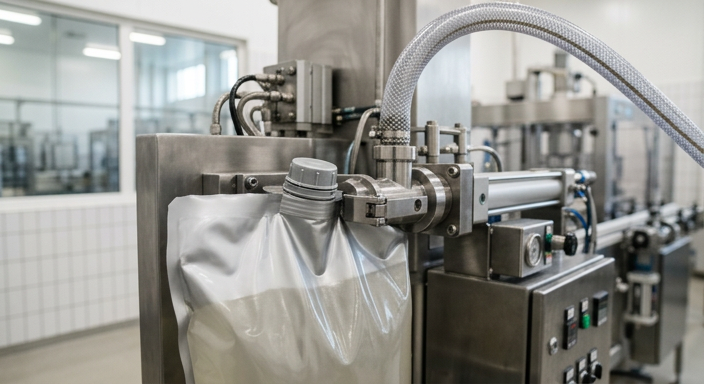
The liquid and the filling process drive most BIB bag specification decisions. Provide a product description rather than only a product category. For example, two sauces may differ substantially in acidity, oil content, particulate size, viscosity, and hot-fill temperature. Those differences can affect seal selection, film compatibility, barrier needs, and fitment design.
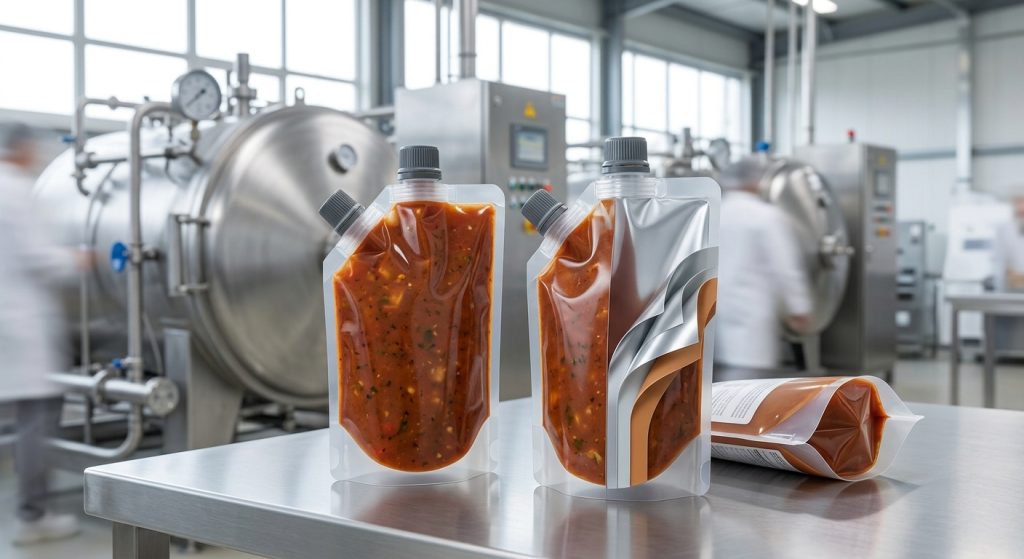
At minimum, document the product’s pH range when relevant, oil or solvent content, viscosity, particle content, target shelf life, fill temperature, filling method, and storage temperature. State whether the pack is filled cold, warm, hot, or through a validated aseptic process. A bag suitable for ordinary ambient filling should not be assumed suitable for hot filling, retort processing, or aseptic filling without process-specific technical review and validation.
- Food and beverage: Identify acidity, fat or oil content, flavor sensitivity, light exposure, shelf-life objective, and food-contact market.
- High-viscosity products: Confirm flow behavior, solids or particulates, desired pour rate, and the dispense equipment’s connector size.
- Household or industrial liquids: Disclose surfactants, alcohols, solvents, oxidizers, fragrances, and other ingredients that may affect the laminate, seals, or fitment.
- Temperature-sensitive products: Specify the full temperature range from filling through transport and end use, including freezing exposure where applicable.
For liquid foods destined for the United States, the compliance review should cover the actual product-contact layer, intended conditions of use, and supporting supplier documentation. See this practical guide to food-contact packaging requirements for U.S. imports when preparing the product and regulatory inputs for a packaging project.
Capacity, Dimensions, and Bag Format
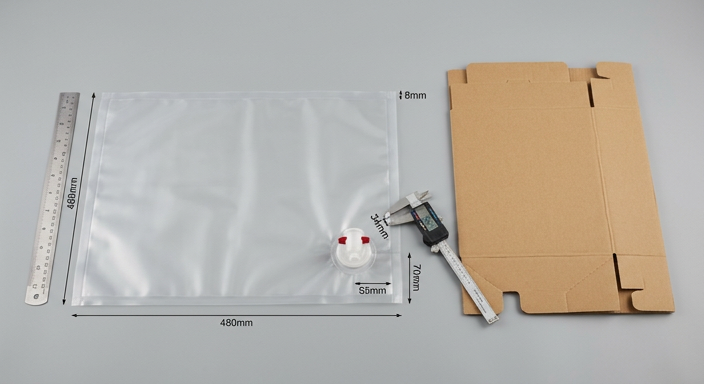
Nominal capacity alone is not a complete BIB bag size specification. A 3-liter, 5-liter, 10-liter, or 20-liter bag must be designed around the selected box dimensions, fitment position, headspace allowance, and the product’s density. Water-based products are often discussed by volume, but denser liquids can change the filled weight and the handling load on the bag, seals, fitment, and carton.
Specify the target net content, acceptable fill tolerance, product density if known, outer carton internal dimensions, and intended bag orientation. The supplier can then propose a flat-bag width, length, gusset arrangement where applicable, and fitment placement. Position the fitment to suit both the filling machine and the dispensing face of the box; a misplaced fitment can create poor drainage, panel stress, or an unusable box opening.
Buyers should also agree on the measurement basis. Flat-bag dimensions, finished dimensions, fitment centerline position, and dimensional tolerances should be recorded on an approved specification or drawing. Request samples that use the proposed bag geometry and fitment where possible, because a change in bag dimensions may alter folding, loading, and box fit.
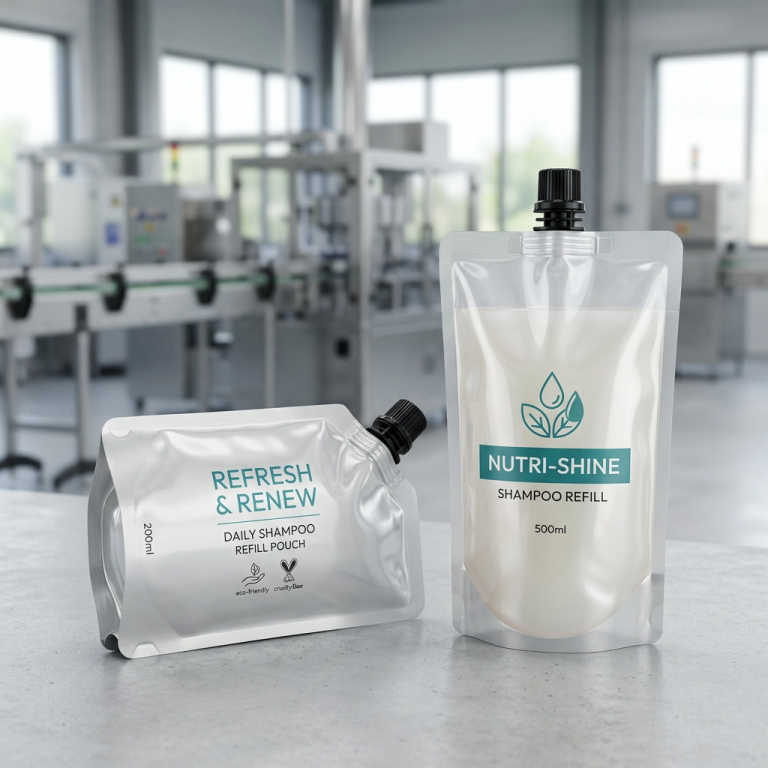
For lower-volume liquid packs or consumer refill formats, a spout pouch may be a better fit than a carton-supported BIB bag. This comparison of bag-in-box versus spout pouch packaging for liquid products can help buyers distinguish the two formats before developing an RFQ.
Film Structure and Barrier Selection

A BIB bag is usually made from a multilayer flexible film. The layers work together: an outer layer can provide mechanical support and print surface where printed film is used; functional layers can provide barrier or bond strength; and the inner sealant layer must be compatible with the product and the sealing process. The exact construction should be selected against the actual application, not copied from another liquid product.
Barrier needs are product-specific. Products that are sensitive to oxygen pickup, aroma loss, moisture exchange, or light exposure may need a more protective structure than products with a short ambient life or lower sensitivity. However, a higher-barrier material does not independently establish shelf life. Product formulation, process control, seal integrity, fitment performance, headspace, storage, and the outer box environment all matter.
- Mechanical requirements: Consider drop handling, carton loading, transport vibration, pallet stacking, puncture risk, and the weight of a full bag.
- Seal requirements: Match the sealant system to fill temperature, contamination risk at the seal area, product ingredients, and the equipment’s heat and pressure window.
- Barrier requirements: Define the product’s sensitivity and shelf-life target, then evaluate suitable structures with the packaging supplier and product owner.
- Appearance requirements: Decide whether opacity, product visibility, metallic appearance, or other visual characteristics are needed for the application.
Do not specify a resin abbreviation alone as a complete material requirement. A usable specification identifies the approved laminate structure or performance requirements, layer orientation, thickness or gauge target where appropriate, and the conditions under which the bag will be used. Final material selection should be confirmed through compatibility and pack validation.
Fitments, Taps, and Dispensing Compatibility
The fitment is a critical interface between the bag, filling equipment, outer box, and user. In a BIB system, it may be a gland, spout, connector, tap, or a proprietary dispensing interface. Select it based on the actual filler and dispenser, not only on its apparent size. Two components with similar dimensions may not provide a compatible connection or operational result.
Provide the fitment supplier and part reference when one has already been selected. If not, define the required dispensing method, target flow rate, product viscosity, whether the pack must be opened or connected by the user, and whether residual product reduction is a priority. For food applications, discuss whether the fitment needs protection during handling and how hygienic control is maintained from bag production through filling.
Fitment placement and weld design require attention. The bag film must form a reliable interface with the fitment under the intended filling, handling, and dispensing conditions. Filling equipment may impose constraints on neck geometry, cap style, orientation, and the way bags are presented to the line. Obtain equipment drawings or connector samples early in development.
Buyers comparing fitments for syrup, beverage base, and other concentrated liquids can also review this guide to spout pouch packaging for beverage concentrates. Although the pack format differs, its discussion of product flow and dispensing interfaces is relevant when evaluating liquid fitments.
Seals, Handling, and Validation
A complete BIB bag specification should state how the finished package will be evaluated. Seal integrity is not limited to the bag perimeter; the fitment weld, closures, folds, and bag-to-carton interaction can also affect package performance. The validation plan should reflect the likely failure modes for the product and supply chain.
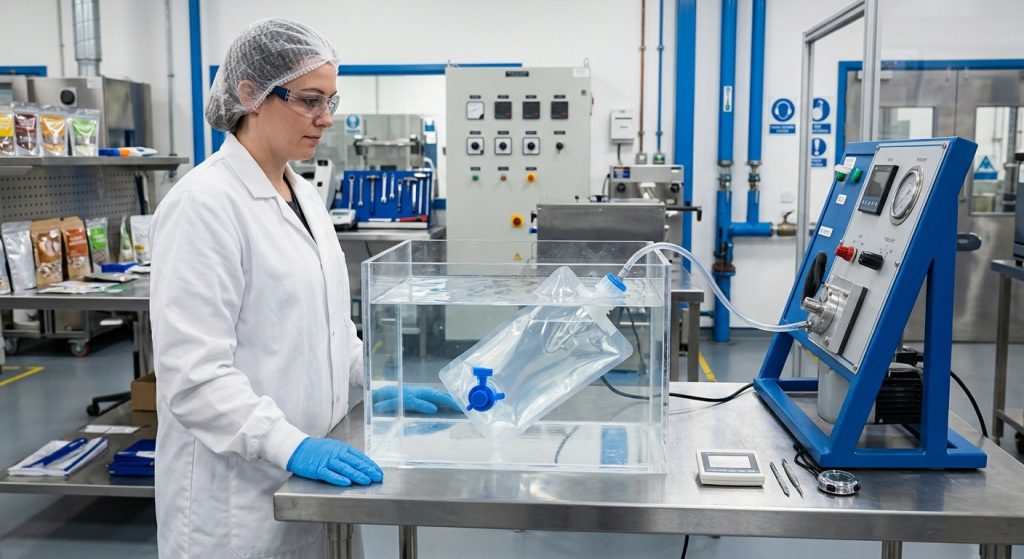
Typical development checks may include visual inspection, dimensional confirmation, seal and fitment integrity assessment, filled-pack handling evaluation, filling-line trials, dispense testing, and transport simulation appropriate to the distribution route. The specific test method, acceptance criteria, sample quantity, and conditioning conditions should be agreed by the responsible parties. A single generic test result should not be treated as proof of performance in every product, box, or filling process.
Assess the system as assembled: a correctly manufactured bag can still fail operationally if the carton is undersized, the box opening interferes with the tap, the filling machine damages the fitment, or the pack is exposed to temperatures outside the design conditions. Retain approved samples, drawings, color standards when applicable, and the final specification revision for production reference.
When a liquid product includes unusual ingredients, a new fitment, a changed fill temperature, or a new distribution route, repeat the relevant validation work. This is especially important after any material, supplier, or process change that may affect the finished pack.
Printing and Artwork Requirements
Some BIB bags are unprinted because the carton carries the consumer-facing information. Others use printed film for product identification, branding, handling marks, or traceability needs. Establish which component carries required text and codes before approving artwork. The outer carton, bag, fitment cap, and applied labels should work as one controlled packaging system.
Provide final artwork in the supplier’s requested format and confirm the dieline, print area, non-print areas around seals and fitments, number of colors, finish, language versions, and artwork approval process. Any legal, nutritional, or product claims remain the buyer’s responsibility to verify for the intended market. Variable lot or date coding requirements should also be assigned to the bag, carton, label, or filling operation.
Color expectations should be documented through approved artwork and, where needed, a press proof or production standard. Buyers ordering their first custom run should allow for preproduction review of the artwork, construction, fitment, and print method. This custom pouch printing and artwork guide explains common artwork inputs that also apply to many flexible packaging projects.
BIB Bag RFQ Checklist

A focused RFQ reduces avoidable revisions and helps a packaging manufacturer assess whether the requested BIB bag is suitable for the intended application. Include the information below, and identify any item that remains under development.
- Product name, ingredients or chemical characteristics relevant to compatibility, viscosity, particulates, and density.
- Intended application, destination market, and required food-contact or other regulatory documentation.
- Target net content, annual or order quantity, expected order frequency, and desired delivery location.
- Filling method, fill temperature, production rate, filler make or interface details, and sanitation or aseptic-process requirements where applicable.
- Storage, transport, and end-use temperature range; target shelf-life objective; and relevant light, oxygen, moisture, or aroma concerns.
- Bag dimensions or carton internal dimensions, bag orientation, required headspace, and fitment position.
- Fitment, tap, cap, or connector drawings, samples, supplier part numbers, and dispensing equipment details.
- Preferred film structure if already validated, printing requirements, artwork status, and validation or sampling requirements.
MOQ is affected by factors such as bag size, film structure, printing, fitment selection, and production setup. Buyers planning an initial custom order can use this minimum order quantity planning guide to organize quantity and specification questions before requesting a quote.