目录
- What Determines Spout Pouch Cost?
- Pouch Format, Dimensions, and Capacity
- Laminated Materials and Barrier Requirements
- Spout, Cap, and Fitment Sealing
- Printing, Artwork, and Finishing
- Order Quantity, Setup, and Production Planning
- Filling Conditions, Testing, and Quality Requirements
- How to Request a Comparable Quote
Custom spout pouch cost depends on the complete specification: pouch dimensions, material structure, spout and cap, printing, order quantity, filling process, and delivery terms. This guide helps B2B buyers prepare a clearer RFQ and compare quotes on like-for-like specifications.
What Determines Spout Pouch Cost?
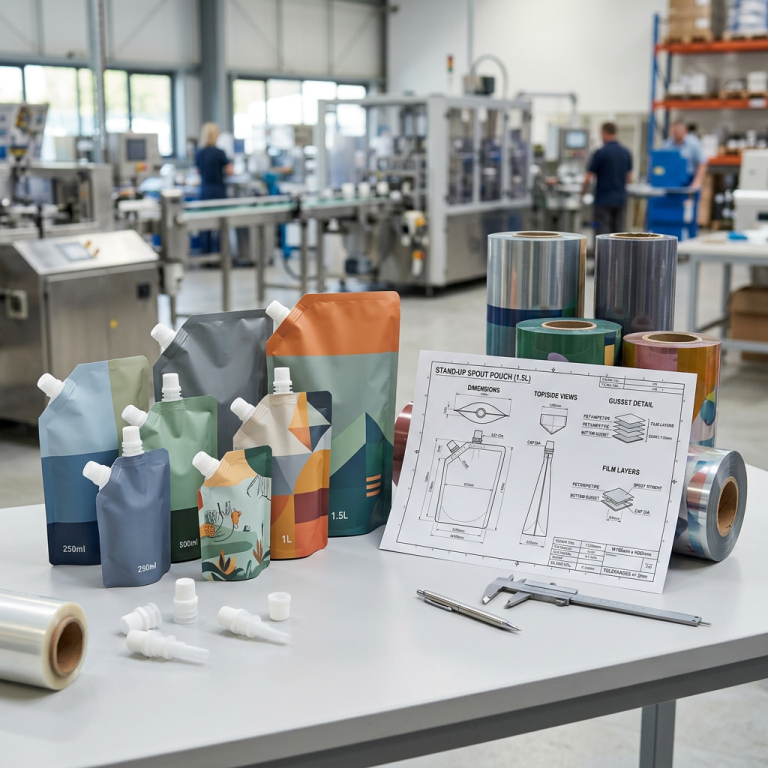
Spout pouch cost is determined by the full custom specification, not by pouch volume alone. The largest cost drivers are usually the pouch format and dimensions, laminate structure, spout-and-cap fitment, printing method and color count, order quantity, and any requirements created by the product filling process. Freight, delivery terms, and destination can also materially affect the landed cost.
For a useful quote comparison, buyers should provide the same technical brief to each supplier. A lower unit price may reflect a thinner structure, a different fitment, a lower print specification, fewer validation steps, or a different shipping basis. Before comparing prices, confirm that each offer covers the same pouch size, usable capacity, seal configuration, material layers, spout diameter and location, artwork, quantity, and Incoterm.
This article assumes a custom-printed laminated spout pouch for a B2B product launch, replenishment order, or contract-packaging program. Exact costs require a reviewed drawing, artwork, material recommendation, filling information, and destination details.
Pouch Format, Dimensions, and Capacity
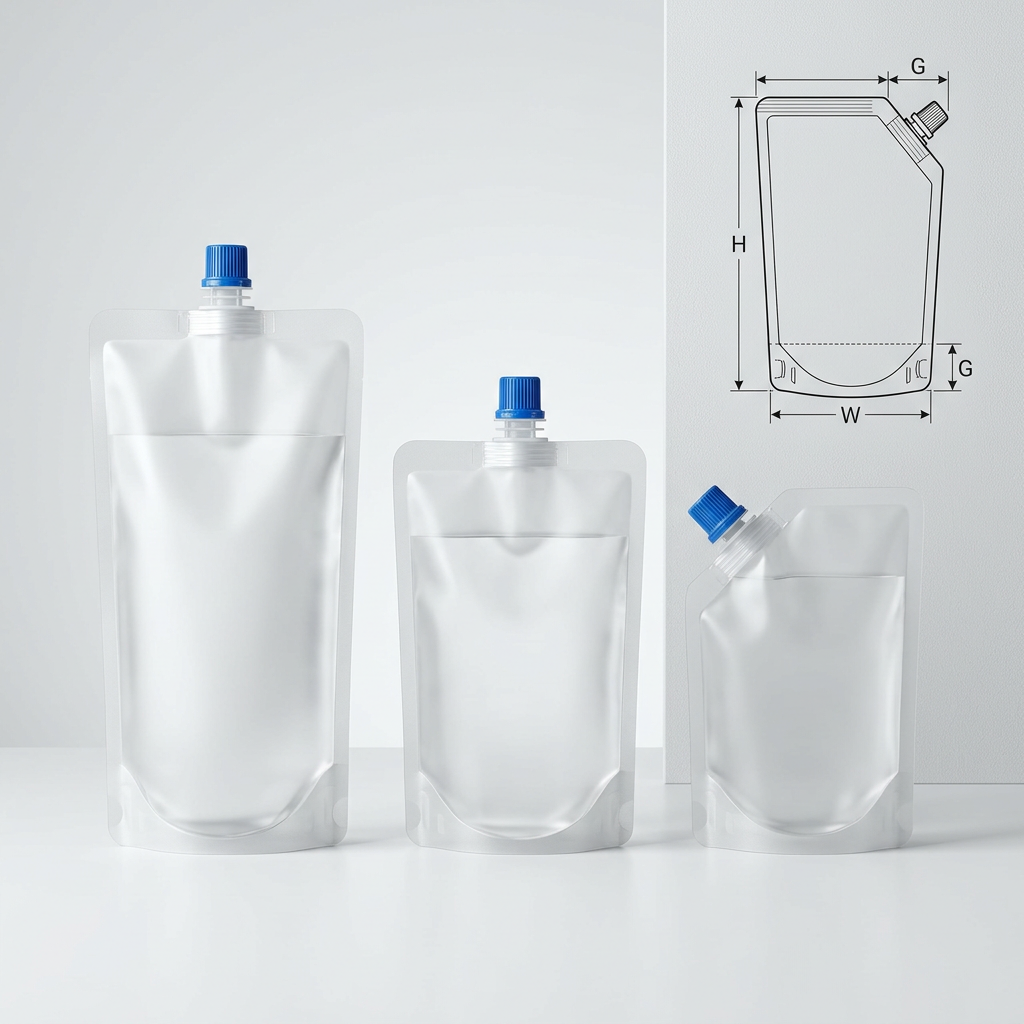
Pouch dimensions influence film consumption, seal length, converting setup, fitment position, carton packing, and freight volume. A larger pouch generally uses more laminate, but capacity is not a sufficient purchasing specification. Product density, target fill weight, headspace, gusset geometry, and the usable space below the spout all affect the final dimensions.
Common formats include stand-up pouches with a bottom gusset, three-side-seal pouches, and shaped pouches. A stand-up pouch may add value for shelf presentation, but its gusset, seal geometry, and forming requirements must be included in the estimate. Custom shapes, handles, hang holes, and unusual shoulder designs can introduce additional converting complexity or material waste.
Spout location matters as well. A top spout can suit upright pouring and certain filling arrangements, while a corner spout changes the top seal layout and panel artwork area. Review the practical differences in this corner spout versus top spout pouch comparison before finalizing a drawing. Buyers selecting capacity and dimensions can also use the spout pouch sizes and capacity guide to account for density, fill level, and gusset design.
To avoid unnecessary revisions, specify nominal fill quantity in both volume and weight where applicable, product density, maximum fill line, pouch width and height, gusset dimensions, and allowable dimensional tolerance. A physical sample filled with the actual product is the most reliable way to validate the selected size.
Laminated Materials and Barrier Requirements

A spout pouch is normally made from a multilayer flexible laminate. Each layer has a function: an outer web supports printing and handling, intermediate layers can provide barrier or stiffness, and the inner sealant layer must seal reliably while remaining compatible with the packed product and filling conditions. The selected structure is a central component of spout pouch cost because resin type, film gauge, barrier layer, lamination process, and total web width affect material and production inputs.
Higher barrier is not automatically the right choice. The required structure depends on what the product needs protection from, such as oxygen, moisture, light, aroma transfer, or contamination, plus expected storage conditions and desired shelf-life target. Liquid detergents, edible oils, fruit purees, sauces, concentrates, and personal-care products can have very different compatibility and barrier needs.
Buyers should state whether the product is acidic, oily, alcohol-containing, abrasive, or chemically active. They should also disclose hot-fill temperature, pasteurization or retort requirements where relevant, storage temperature, and whether the pouch will be exposed to freezing or transport heat. These factors may alter the sealant selection and laminate recommendation.
Do not request a material structure only because it was used for another product. Instead, provide the product category and filling conditions, then evaluate the proposed construction against the intended use. For sauce applications, the spout pouch specification guide for sauces illustrates the relationship among product properties, laminate selection, fitment choice, and filling conditions.
Spout, Cap, and Fitment Sealing
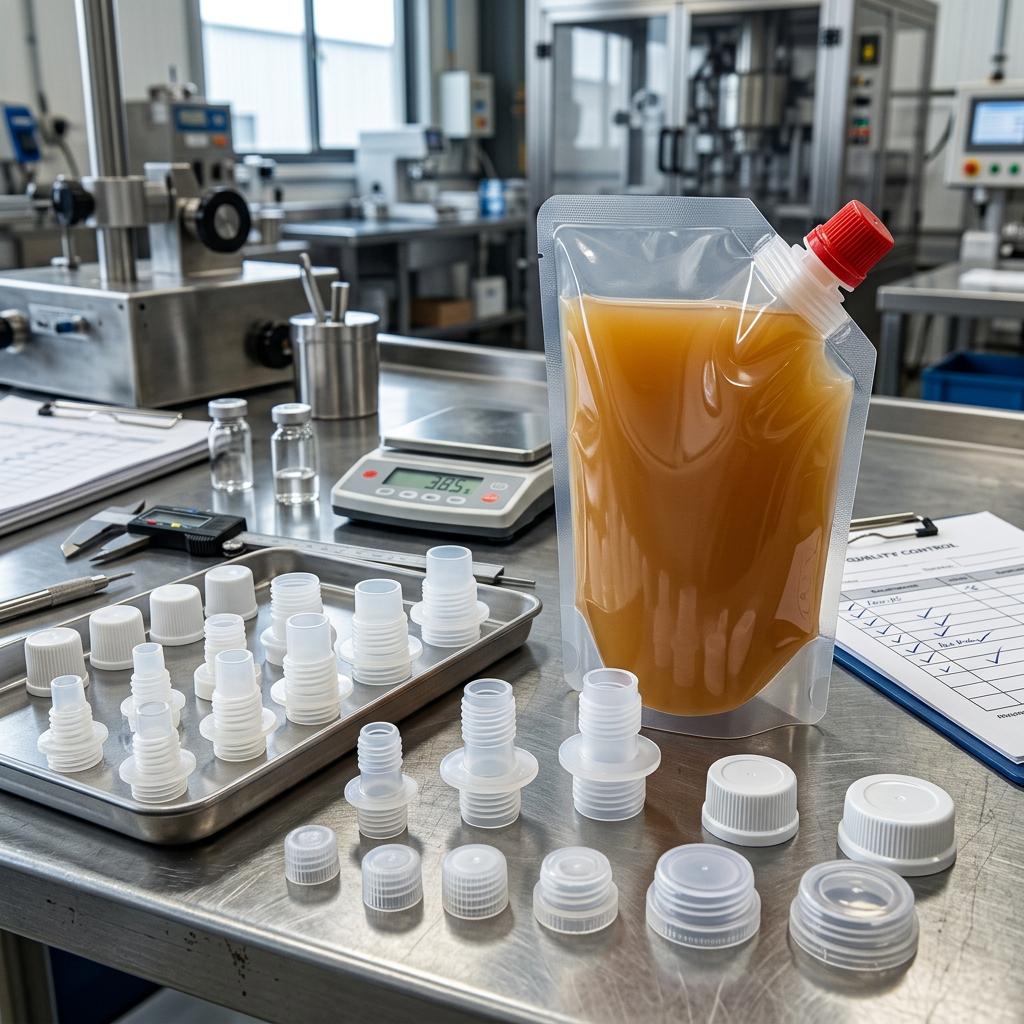
The fitment is both a functional component and a distinct procurement input. Spout pouch cost changes with spout diameter, neck profile, material, cap design, tamper-evident features, sourcing availability, and the method used to weld the fitment into the pouch. The selected opening must work with the product viscosity, consumer dispensing expectations, filling equipment, and closure requirements.
A larger opening may help a viscous product flow but can require a different fitment and filling setup. A smaller opening may be appropriate for controlled dispensing but should be assessed for filling speed and product behavior. Cap style affects handling and reclosure, while the location of the spout affects both pouch conversion and how the pack is presented or filled.
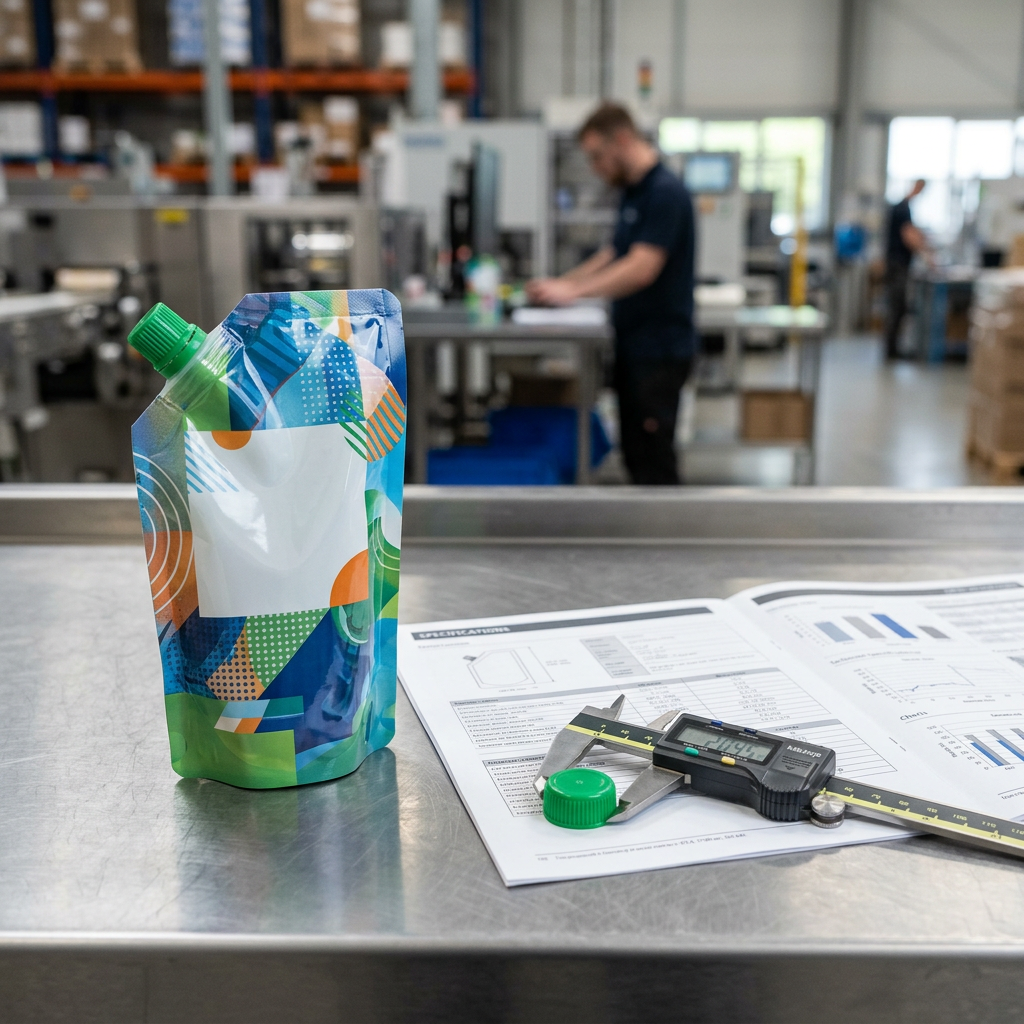
Ask the supplier to identify the fitment by drawing or approved part specification, not only a general description such as “small cap.” Confirm spout outside diameter, internal opening, cap type, color requirement, tamper evidence if required, fitment location, and compatibility with the filling line. This prevents quotes based on visibly similar but technically different components.
Fitment sealing deserves separate attention. The pouch sealant layer, fitment material, sealing parameters, and product-contact area need to work together. Buyers should discuss leak testing, seal-strength evaluation, and filled-pack handling conditions with the manufacturer rather than assuming that a fitment used on one structure will perform identically on every laminate.
Printing, Artwork, and Finishing
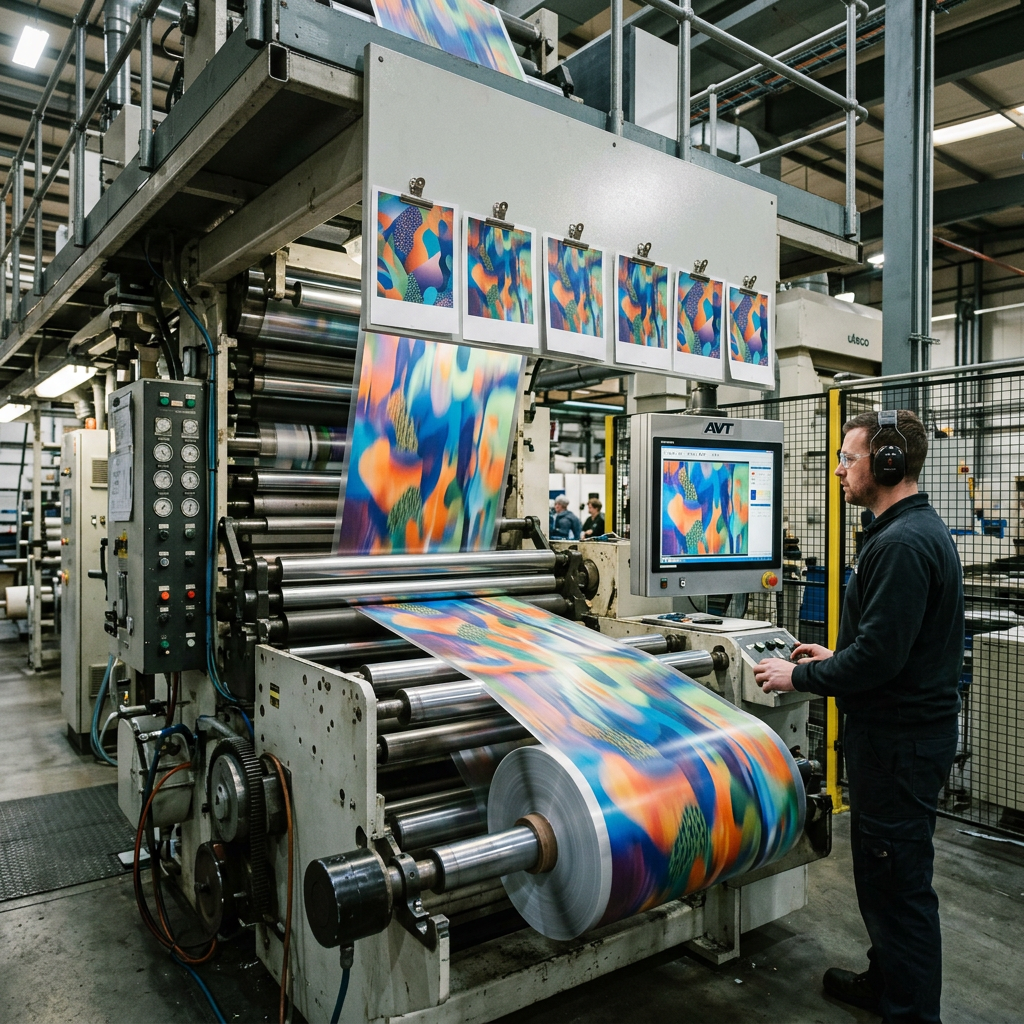
Custom printing cost depends on the print process, number of colors, coverage, repeat length, artwork readiness, and finishing requirements. For repeat production, gravure printing commonly involves cylinder preparation; the number of cylinders is generally connected to the approved color separation. Digital printing may suit certain shorter runs or artwork versions, depending on the supplier’s equipment and technical requirements. The appropriate process should be evaluated by quantity, design, substrate, and required result, not by a presumed lowest unit price.
Artwork changes can create cost or lead-time implications after cylinders, plates, or production files are approved. Provide editable artwork, brand color references where available, copy in final form, barcodes, regulatory text supplied by the brand, and dieline requirements. Confirm whether the quote includes prepress, cylinder or plate charges, proofing, and any future artwork-change handling.
Special finishes and additions can increase complexity. Examples include matte effects, spot gloss, metallic appearance, tactile coatings, registered varnish, transparent windows, or localized white ink. They should be requested only when they support the product’s visual or functional brief. If budget control is important, ask for an alternative quote using a simplified color build or standard finish while maintaining the required material structure.
For food-related products that need a reclosable format rather than a dispensing fitment, compare the intended user experience with the guidance in this zipper pouch buying guide for food packaging. A zipper pouch and a spout pouch are different formats, so their conversion steps and cost basis should not be treated as interchangeable.
Order Quantity, Setup, and Production Planning
Order quantity affects the allocation of fixed production costs across each pouch. Setup activities can include artwork preparation, printing-cylinder or plate work where applicable, material scheduling, machine setup, color matching, and production inspection. When the order quantity is small, these fixed elements are spread across fewer units. As quantity rises, the unit cost may decrease, but buyers should balance that against inventory holding, artwork obsolescence, and forecast uncertainty.
MOQ is not a universal number. It can depend on the print process, film web width, number of stock-keeping units, material combination, fitment availability, and the manufacturer’s production planning. An MOQ for one pouch size or design should not be assumed to apply to another. If several flavors or languages share a base structure, ask whether design versions can be planned efficiently, but do not assume that separate artworks carry no setup impact.
Production planning also affects commercial terms. A standard pouch format with an available fitment and finalized artwork may be simpler to schedule than a pouch requiring a newly sourced component or an unvalidated construction. Give the required delivery date, forecast quantity, destination, and whether the need is a trial order or recurring program. This lets the supplier distinguish one-time setup costs from recurring manufacturing costs.
Filling Conditions, Testing, and Quality Requirements
The pouch cannot be specified independently of the filling process. Information such as fill temperature, product viscosity, filling speed, fill method, cleaning process, headspace, and transport orientation can affect the recommended pouch construction and fitment. A structure selected for ambient filling may not be appropriate for a different thermal process or handling environment.
Testing requirements can add time and cost, but they reduce uncertainty when the product, structure, or process is new. The appropriate scope depends on the application and buyer requirements. It may include dimensional checks, visual inspection, seal evaluation, leak testing, fitment checks, or filled-pack trials. If the brand requires specific test methods, acceptance criteria, documentation, or third-party testing, include them in the RFQ so they can be quoted and scheduled correctly.
Be precise about the difference between a pouch sample and a production-representative sample. An unprinted or digitally printed sample can help assess size, appearance, and product filling. It may not represent every aspect of a final large-scale gravure-printed production run. Define the purpose of each sample: dimensional approval, artwork approval, filling-line trial, consumer evaluation, or final production reference.
Buyers should avoid making unverified claims about shelf life, product safety, recyclability, or regulatory suitability based solely on pouch appearance or a generic material name. These matters depend on the complete product-package system, applicable market rules, test evidence, and the buyer’s own product responsibilities.
How to Request a Comparable Quote
A complete RFQ makes pricing more transparent and shortens clarification cycles. Use the checklist below to give manufacturers the information needed to recommend a technically appropriate construction and quote it consistently.
- Product name, category, viscosity or density, and any relevant chemical or thermal characteristics.
- Target fill quantity, maximum fill temperature, filling method, storage conditions, and intended markets.
- Pouch format, dimensions, gusset, spout location, fitment drawing or dimensions, cap requirement, and target orientation.
- Requested laminate or performance requirement, if known; otherwise, state the protection and handling needs rather than prescribing an unverified structure.
- Artwork files, number of designs, colors, finish requirements, barcode and copy status, and whether a proof is required.
- Order quantity per design, annual forecast, sample requirement, requested delivery date, delivery location, and preferred Incoterm.
- Inspection, testing, documentation, packing, palletization, and shipping requirements.
When reviewing replies, separate one-time charges from recurring unit costs. Ask whether pricing includes fitments, printing setup, sampling, testing, export packing, and freight. Also confirm the quoted currency, payment terms, lead-time assumption, tolerance, and validity period. This approach helps procurement teams evaluate the true commercial basis of a custom spout pouch order rather than selecting on a headline unit price alone.