Table of Contents
- What Are Bag-in-Box and Spout Pouch Formats?
- The Main Differences Between the Two Formats
- How Product and End Use Affect the Choice
- Barrier, Seal, and Closure Considerations
- Filling Equipment, Handling, and Logistics
- A Practical Selection Checklist
- Which Format Should You Choose?
Bag-in-box and spout pouches both package liquids in flexible materials, but they serve different filling, dispensing, distribution, and presentation requirements. This guide explains the practical differences so B2B buyers can select the more suitable format for their product and process.
What Are Bag-in-Box and Spout Pouch Formats?
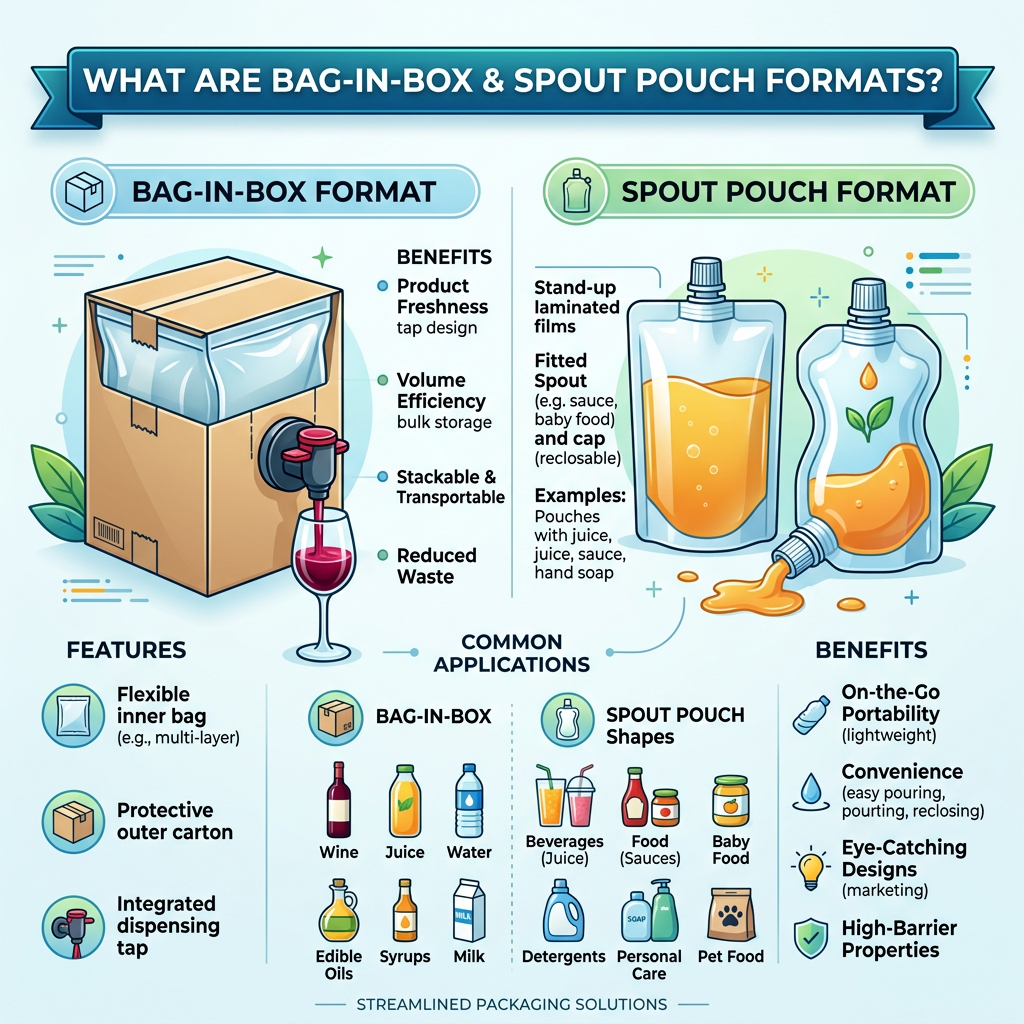
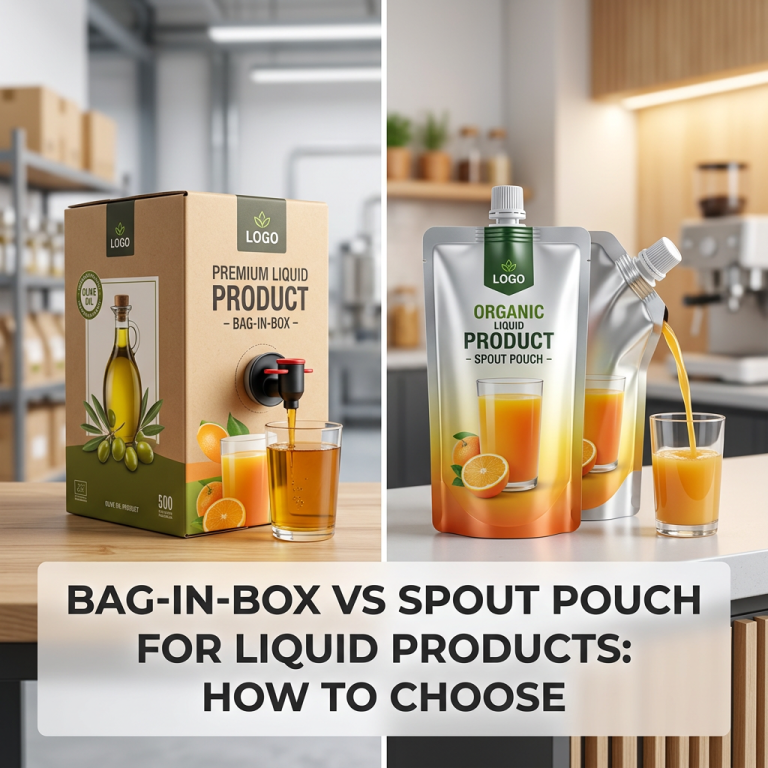
When comparing bag-in-box vs spout pouch packaging for liquid products, start with the package architecture. A bag-in-box consists of a flexible inner bag placed inside a rigid outer box, usually with a fitment, valve, or tap for dispensing. A spout pouch is a flexible laminated pouch with a welded spout and cap or other closure. The better format depends on fill volume, product sensitivity, dispensing method, filling equipment, transport needs, and how the package will be used after opening.
Neither format is automatically suitable for every liquid. A packaging specification should connect the product, process, package structure, and distribution conditions before a supplier recommends a laminate or fitment.
Bag-in-box definition
Bag-in-box packaging separates the functions of the inner bag and the outer box. The bag provides the product-contact layer, seals, and barrier structure, while the box provides support, protection, and a surface for branding or handling information. The format is commonly considered for larger-volume liquids, institutional supply, foodservice, dispensing applications, and products that need a stable outer container during storage or use.
Spout pouch definition
A spout pouch uses a flexible film construction to form the pouch body. A plastic spout is heat-sealed into the pouch and paired with a cap or compatible closure. The format can be produced in different shapes, sizes, and spout positions, including top-spout and corner-spout designs. It is often evaluated for consumer liquids, sauces, purees, beverages, household products, and other pourable or semi-liquid products.
The Main Differences Between the Two Formats
The practical difference between the formats is not simply flexible packaging versus flexible packaging. Bag-in-box uses an inner bag plus an outer support system, while a spout pouch combines product containment, graphics, and handling into one flexible pack. This affects how the package is filled, shipped, displayed, opened, and emptied.
- Package support: The box gives bag-in-box packs external structure. A spout pouch relies on its seals, pouch geometry, and the selected film for support.
- Typical handling: Bag-in-box is often suited to cases where a box, tap, or valve supports controlled dispensing. Spout pouches are generally handled by gripping the pouch and pouring or squeezing through the spout.
- Format flexibility: Spout pouches can be customized by size, shape, gusset, spout location, cap, and print design. Bag-in-box customization also involves the outer box dimensions, bag size, fitment position, and dispensing hardware.
- Product presentation: A pouch can present a large printed flexible surface and distinctive shelf geometry. A bag-in-box pack provides a broad carton surface and may be easier to stack or identify in institutional environments.
- Emptying behavior: Performance depends on product viscosity, bag or pouch geometry, fitment design, and dispensing orientation. Packaging trials are needed for products that are thick, particulate, foamy, or difficult to pour.
These are format-level observations rather than universal performance claims. The final result depends on the material structure, seal design, fitment, filling process, and distribution environment.
How Product and End Use Affect the Choice
Product behavior is one of the first technical filters in a bag-in-box vs spout pouch decision. Identify whether the product is free-flowing, viscous, particulate, acidic, oily, oxygen-sensitive, light-sensitive, hot-filled, retorted, frozen, or intended for ambient distribution. These characteristics influence the film, sealant, fitment, cap, and filling process.
Consumer and retail use
Spout pouches are often considered when the package must be easy to carry, pour, squeeze, or reseal. The spout and cap can be selected according to opening torque, dispensing rate, product viscosity, and the intended user. Pouch shape and spout placement also influence pouring direction and shelf presentation. Buyers comparing top and corner configurations can review the corner spout versus top spout pouch comparison.
For purees and semi-liquid foods, the product texture and feeding behavior should be checked alongside the pouch dimensions and fitment. A dedicated baby food spout pouch specification guide can help organize these requirements, although the final design still requires product and process validation.
Foodservice and institutional use
Bag-in-box may be considered when the buyer needs a larger pack, a stable outer container, or a dispensing system that remains connected to equipment or a service counter. The outer box can support handling instructions and secondary identification. The bag and fitment still need to be specified.