Table of Contents
- What Cold Brew Coffee Pouches Must Do
- What Is a Cold Brew Coffee Pouch?
- Key Specification Takeaways
- Selecting the Barrier Structure
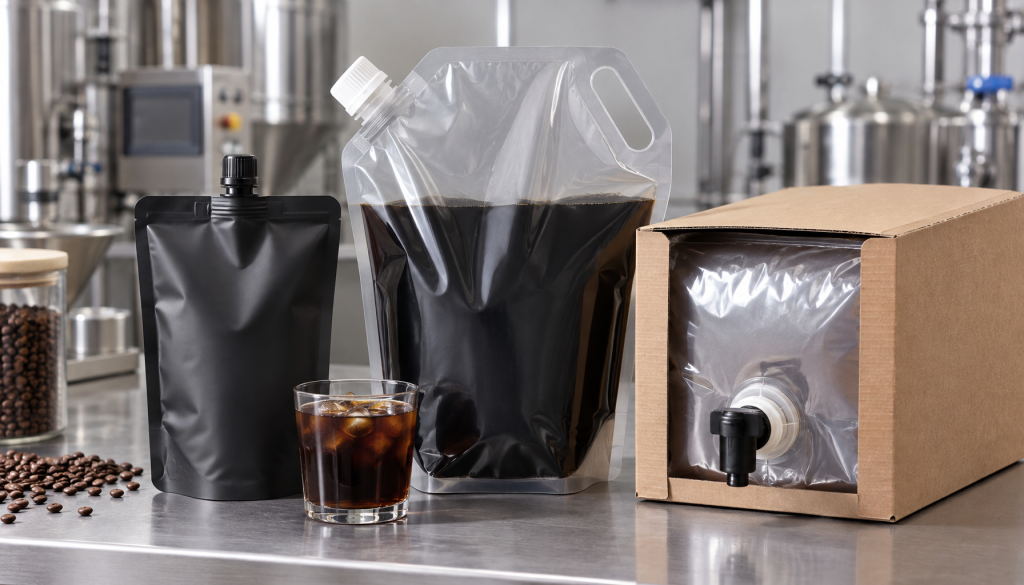
- Comparing Pouch and Bag-in-Box Formats
- Spout and Dispensing Selection
- Filling Process and Storage Conditions
- Cold Brew Packaging Specification Table
- Information to Include in an RFQ
- Testing Before Commercial Production
- Conclusion
A practical guide to selecting barrier structures, spouts, dispensing formats, filling methods, and pack sizes for cold brew coffee and coffee concentrate.
What Cold Brew Coffee Pouches Must Do
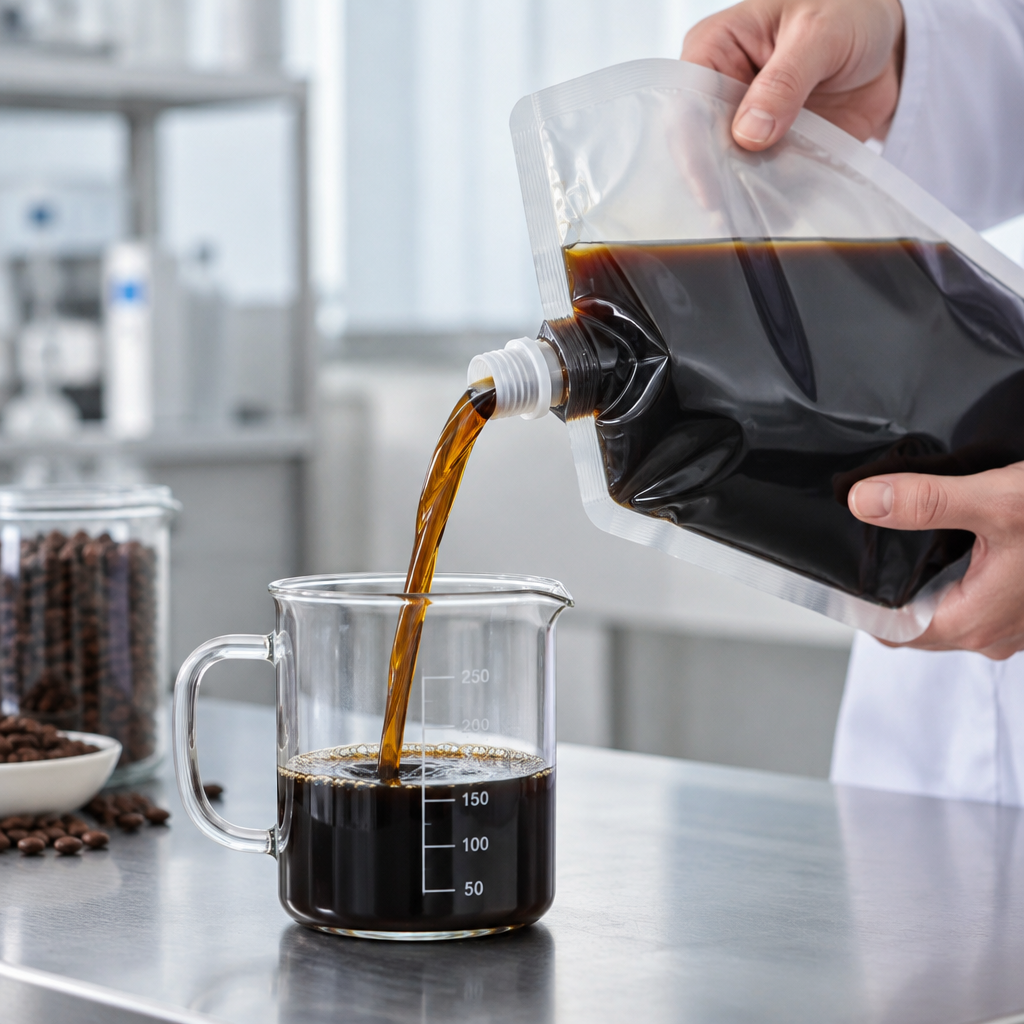
Cold brew coffee pouches should protect the beverage from oxygen and light, retain aroma, remain sealed through filling and distribution, and dispense cleanly at the intended serving rate. The correct specification depends on whether the product is ready to drink or concentrated, how it is processed, whether it remains refrigerated, the expected shelf life, and how the customer will pour or dispense it.
Packaging alone does not make cold brew shelf stable. Coffee composition, water quality, sanitation, thermal or other processing, filling conditions, closure integrity, and storage temperature all influence product safety and quality. Buyers should establish the product process and shelf-life target before asking a pouch manufacturer to recommend a laminate or fitment.
For a typical project, the packaging decision should cover five connected elements: the film structure, pouch format, spout or dispensing fitment, filling method, and validation plan. Changing one element can affect the others. For example, a wider spout may improve filling speed but require different equipment guides, cap handling, or pouch dimensions.
What Is a Cold Brew Coffee Pouch?
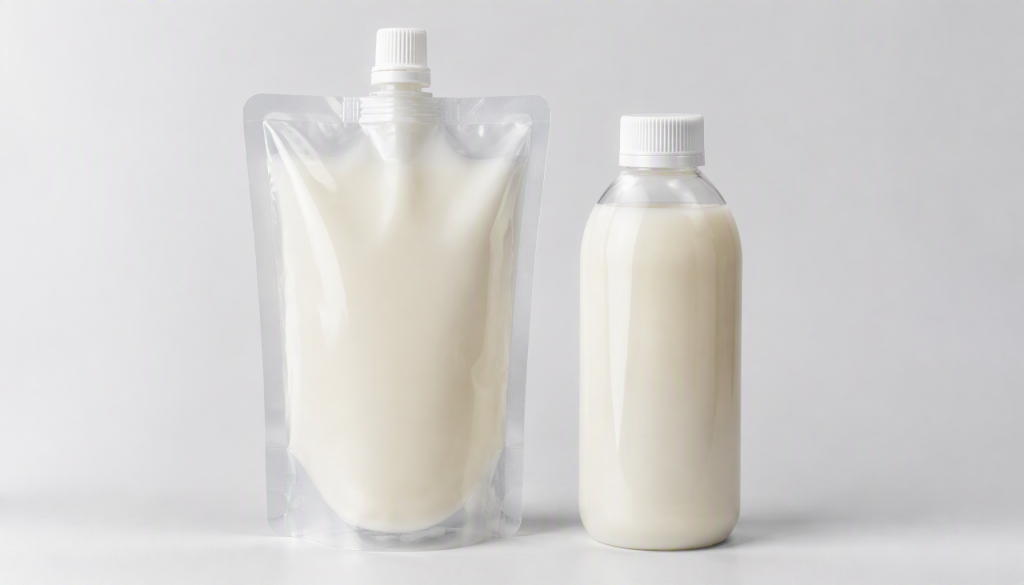
Definition: A cold brew coffee pouch is a flexible, laminated package designed to contain ready-to-drink cold brew or coffee concentrate. It may use a capped spout for pouring, a tap or connector for controlled dispensing, or an open top that is sealed after filling. Common configurations include stand-up spouted pouches, larger handled pouches, and bag-in-box inner bags.
A coffee concentrate pouch normally holds a product that will be diluted before serving. Because each pack can produce multiple servings, dispensing control and reclosure may be more important than for a single-use drink. Ready-to-drink coffee may prioritize convenient pouring, portability, and a pack size aligned with one or several servings.
Cold brew pouch construction should be distinguished from packaging for dry roasted coffee. Dry coffee bags may incorporate a degassing valve to release gas from roasted beans. Liquid coffee packaging instead requires liquid-tight seals, a fitment compatible with the beverage and filling process, and barrier performance appropriate to the filled product.
Key Specification Takeaways
- Define the product first: State whether it is ready to drink or concentrated, along with ingredients, acidity, viscosity, particulates, and sensitivity to oxygen or light.
- Set real storage conditions: Specify refrigerated, frozen, ambient, or mixed distribution rather than using a general shelf-life request.
- Match barrier to evidence: Select the laminate using shelf-life trials and relevant oxygen and water-vapor transmission data for the complete structure.
- Match the fitment to the workflow: Confirm the spout bore, cap, tamper-evidence requirement, filling interface, dispensing rate, and reclosure behavior.
- Test the complete pack: Film, seals, fitment welds, cap application, filled weight, headspace, cartons, and distribution conditions should be evaluated together.
Selecting the Barrier Structure
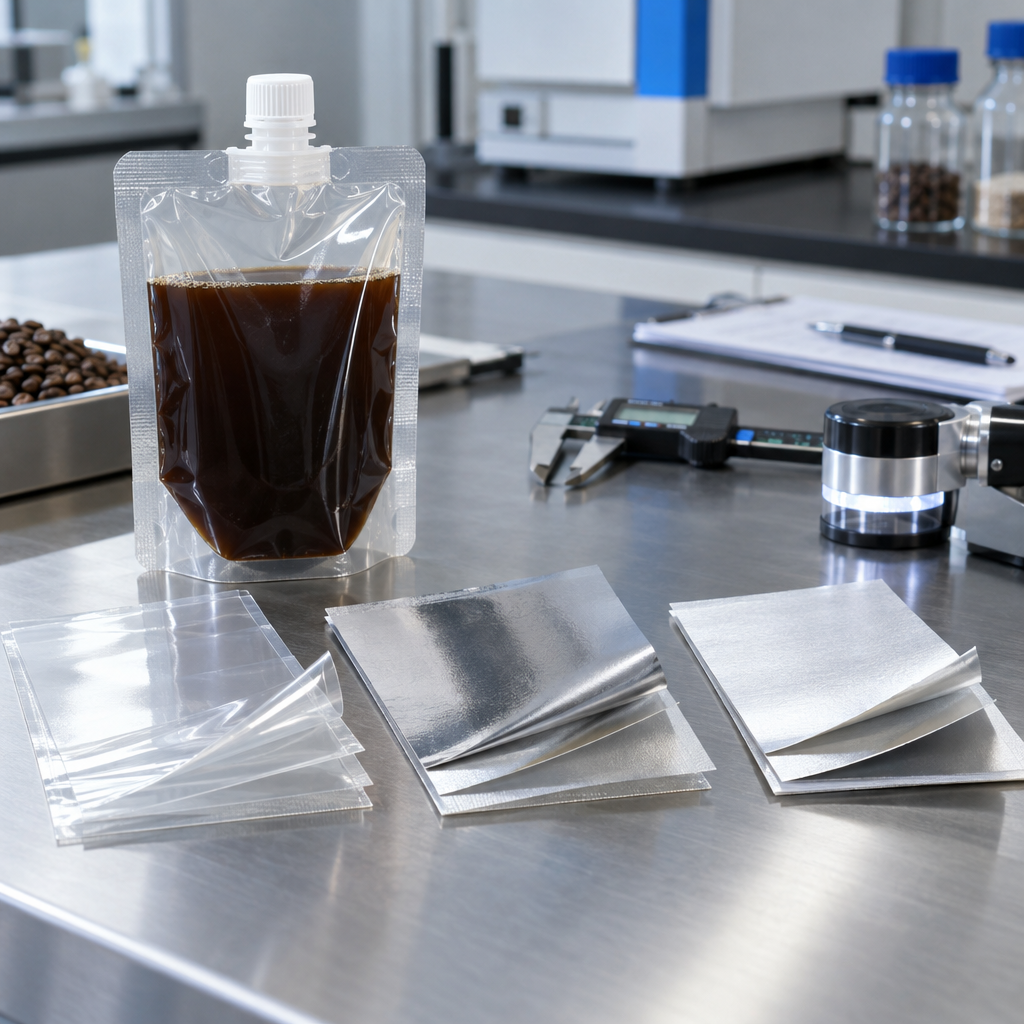
Oxygen can affect coffee aroma and flavor, while light exposure can contribute to quality changes in sensitive formulations. A buyer should therefore evaluate the complete laminate rather than choosing a pouch from material names alone. The same nominal material can perform differently depending on thickness, coating, adhesive, converting quality, and test conditions.
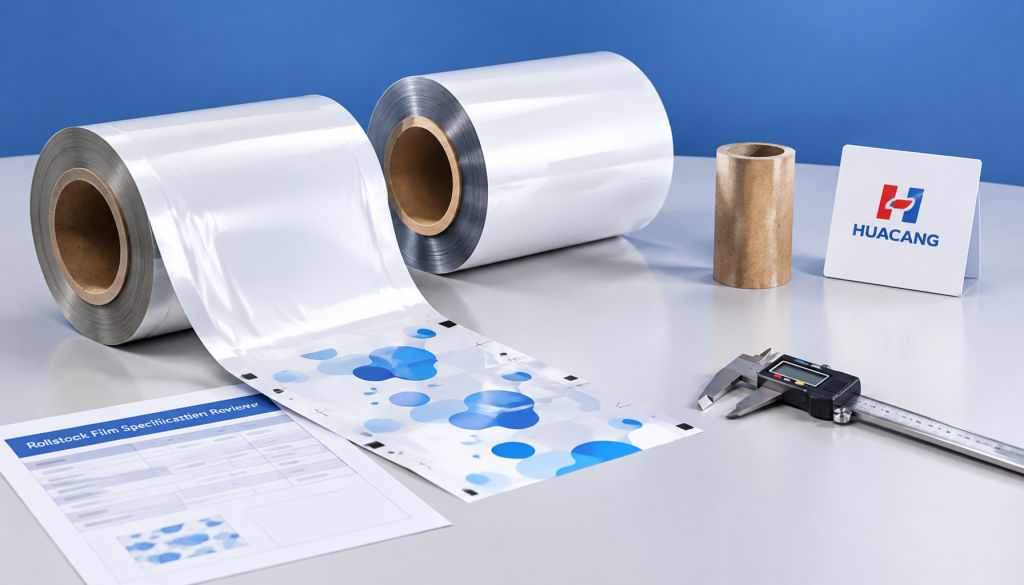
A multilayer liquid pouch generally assigns separate functions to different layers. The outer layer supports printing and handling resistance. A middle layer may contribute oxygen barrier, light barrier, or puncture resistance. The inner sealant contacts the beverage and forms the pouch seals and fitment weld. The sealant also needs to suit the filling temperature and approved food-contact use for the destination market.
Common structural options include clear high-barrier laminates, metallized laminates, aluminum-foil laminates, and structures using polymers such as EVOH. A clear structure allows the product to remain visible but may provide limited light protection. Metallized or foil layers provide opacity, but foil can be sensitive to flex cracking if the pack is repeatedly folded or sharply creased. EVOH-based performance can depend on structure design and exposure conditions. No single option should be treated as universally best.
Ask the supplier to identify the proposed layer sequence, total thickness, sealant, opacity, and available transmission test data. Compare those values only when test methods and conditions are equivalent. Final suitability should be established through filled-product shelf-life testing, including flavor, aroma, appearance, package integrity, and any safety criteria defined by the product manufacturer.
Comparing Pouch and Bag-in-Box Formats
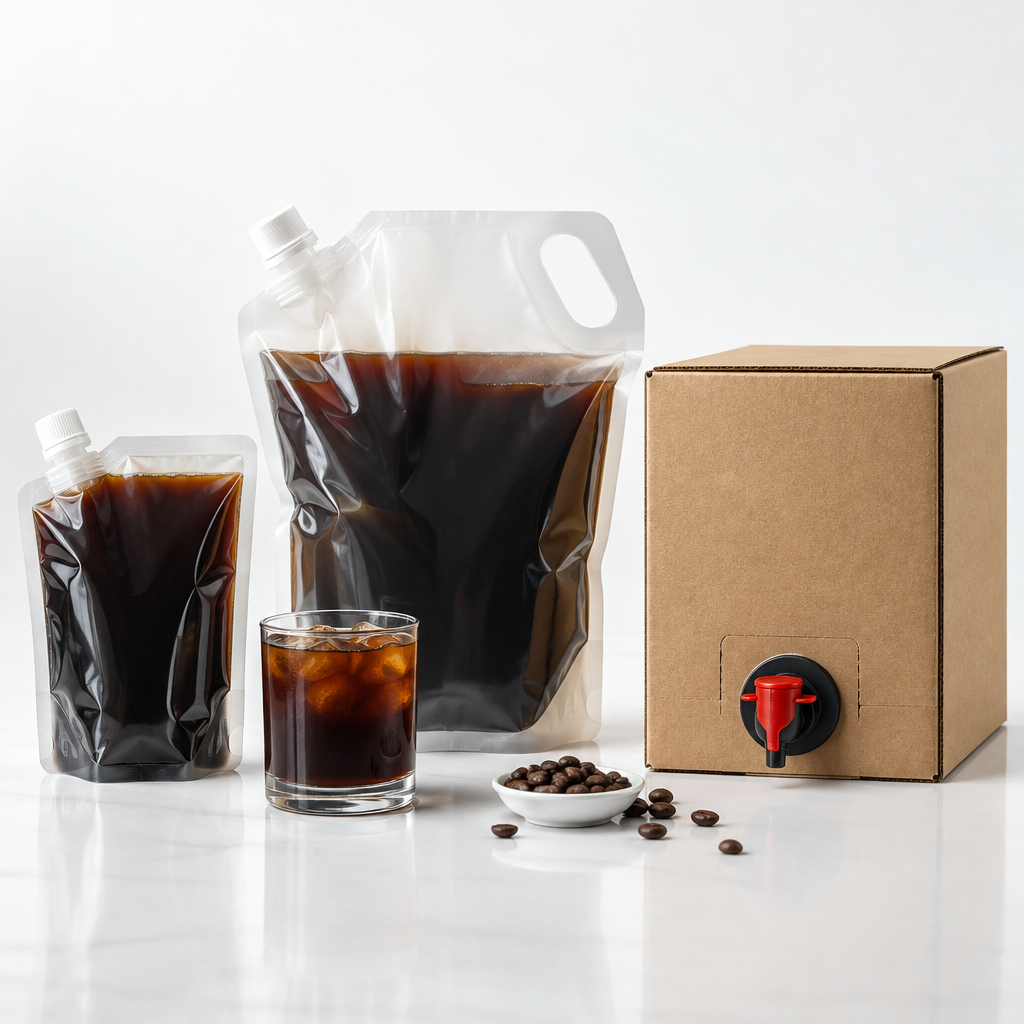
The preferred format depends on serving context, filled weight, distribution, and dispensing frequency. The following comparison is a starting point; actual volume limits and performance depend on pouch dimensions, laminate, seals, fitment, equipment, and secondary packaging.
| Format | Typical application | Dispensing approach | Primary buying considerations |
|---|---|---|---|
| Stand-up spouted pouch | Retail cold brew or smaller coffee concentrate packs | Capped corner or top spout | Shelf presentation, controlled pouring, reclosure, filling-line compatibility |
| Handled spout pouch | Larger refill or foodservice packs | Capped spout with a carry feature | Filled-weight handling, pour control, handle strength, carton support |
| Cold brew bag in box | Foodservice, office, cafe, or higher-volume dispensing | Tap, gland, connector, or dispensing-system fitment | Fitment compatibility, box dimensions, oxygen exposure during use, dispensing orientation |
| Open-top pouch | Applications filled and heat-sealed through the top | Cut-open or separately fitted dispensing method | Top-seal window, seal contamination control, limited reclosure unless another feature is added |
A larger pouch should be designed around lifting and pouring behavior, not capacity alone. HUACANG’s handled spout pouch options for larger liquid packs are relevant when buyers need a carry feature and more controlled pouring. The handle, spout position, gusset, and carton should be evaluated using the intended filled weight.
Spout and Dispensing Selection
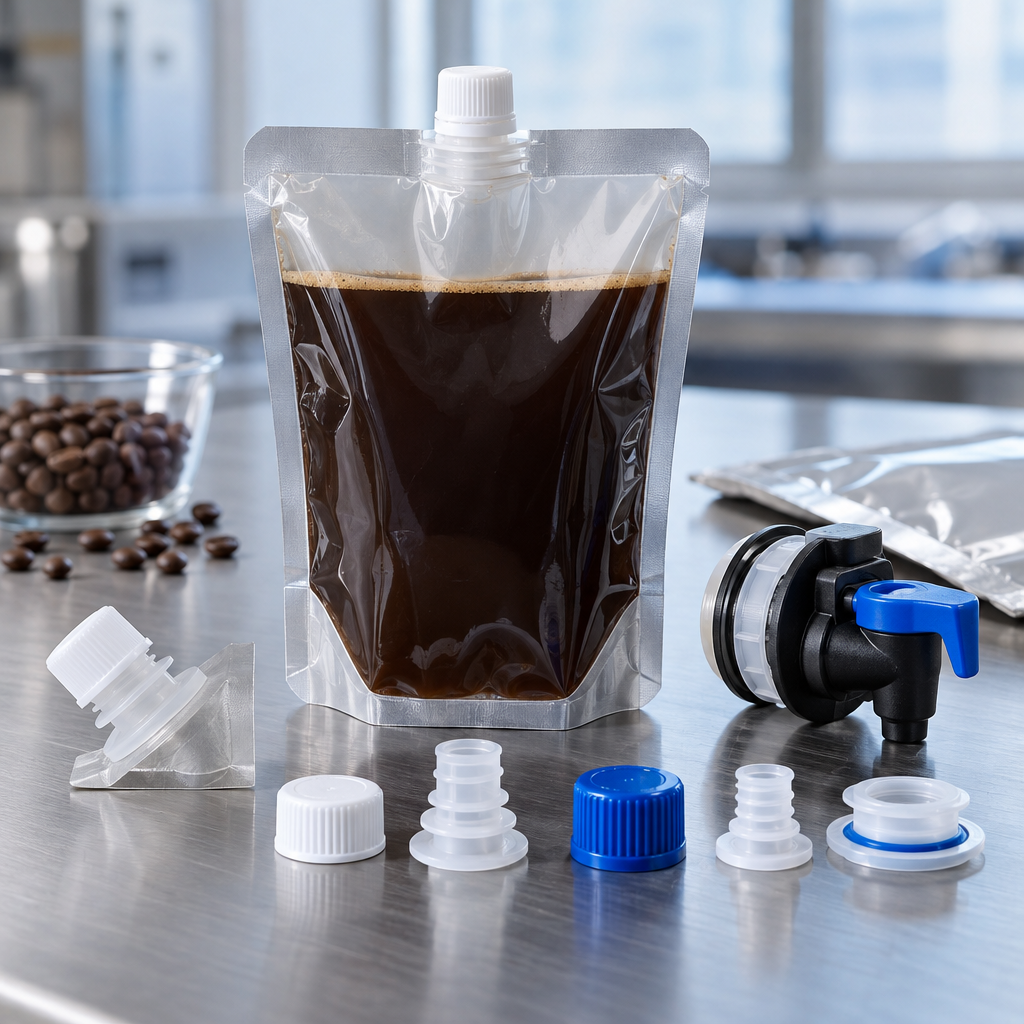
A spouted pouch for coffee should be specified around both filling and end-use dispensing. Start with the beverage’s viscosity and any suspended coffee solids. A bore that is too narrow may restrict flow or increase filling time, while an unnecessarily large fitment can add material, alter pouch geometry, and require different handling equipment.
Review the spout outer profile, internal bore, flange design, cap thread, cap style, tamper-evidence feature, and fitment resin. The fitment flange must weld consistently to the pouch sealant. The capped assembly should also withstand expected closure application, transport vibration, storage, opening, and repeated reclosure without leaking.
Spout position affects usability. A corner spout can support directional pouring and may reduce glugging in some pouch configurations. A centered top spout can provide a symmetrical appearance and may align better with certain filling systems. The decision should be tested with the actual pouch size, headspace, and fill volume rather than based only on a drawing.
Foodservice packs may need a tap, gland, tube, or machine-specific connector instead of a simple cap. For bag-in-box systems, buyers should provide the dispenser brand or connector drawing, installation method, required flow behavior, and box orientation. Fitment compatibility should be confirmed by dimensional samples and filling or dispensing trials.
Custom shape can support brand differentiation, but it must not compromise filling stability, usable volume, sealing access, or discharge. Buyers considering premium retail presentation can review custom-shaped spout pouch configurations while keeping the functional area around the fitment and seals suitable for production.
Filling Process and Storage Conditions
The pouch must be designed for the validated production process. Cold filling, hot filling, aseptic processing, and post-fill treatment place different demands on films, seals, fitments, and equipment. A laminate developed for refrigerated cold filling should not be assumed suitable for elevated filling temperatures or thermal processing.
- Document the product: Provide formulation characteristics relevant to packaging, including fill temperature, viscosity, acidity, oils, flavor components, and particulates.
- Define the filling route: State whether filling occurs through the spout or through an open top. Through-spout filling requires nozzle and fitment compatibility. Open-top filling requires enough clean seal area for final heat sealing.
- Set headspace and fill tolerance: Nominal capacity is not the same as target fill volume. Allowance may be required for sealing, handling, product expansion, and clean closure application.
- Control the seal area: Coffee or foam in a heat-seal region can interfere with seal formation. The filler, pouch support, dosing settings, and seal-jaw maintenance should limit contamination.
- Confirm the cold chain: If refrigeration is required, define temperature limits and handling from filling through delivery and use. The package should be assessed at those temperatures.
Any ambient shelf-life objective should be reviewed by qualified food-safety and process authorities. A high-barrier film can slow gas or moisture transmission, but it cannot replace an appropriate process, hygienic filling, closure control, or validated storage program.
Cold Brew Packaging Specification Table
Use this table to organize the initial packaging brief. It identifies what the supplier needs to know without prescribing an unverified laminate or fitment.
| Specification area | Information to provide | Why it matters |
|---|---|---|
| Product type | Ready-to-drink cold brew or concentrate | Influences serving size, pouring frequency, and reclosure needs |
| Formula characteristics | Acidity, viscosity, oils, dairy or plant ingredients, particulates | Supports compatibility review and filling setup |
| Process | Fill temperature, filling route, sanitation method, post-fill treatment | Determines thermal and sealing requirements |
| Storage | Refrigerated, frozen, ambient, or mixed; target shelf life | Guides barrier evaluation and test conditions |
| Pack format | Stand-up pouch, handled pouch, or bag-in-box inner bag | Affects converting, handling, secondary packaging, and dispensing |
| Fitment | Spout bore, cap, tap, gland, connector, tamper evidence | Controls filling interface, flow, opening, and reclosure |
| Nominal fill | Target volume or weight, density, headspace requirement | Supports pouch sizing and fill control |
| Artwork | Print colors, finish, coding area, registration needs | Defines prepress and print requirements |
| Logistics | Units per carton, pallet pattern, shipping mode, destination | Supports distribution testing and packing design |
| Commercial needs | Forecast, order quantity, number of SKUs, sample needs, launch date | Supports MOQ, pricing, production, and inventory planning |
Information to Include in an RFQ
A useful RFQ enables the packaging manufacturer to review technical and commercial feasibility before quoting. Send the target fill volume, product description, fill and storage temperatures, required shelf life, filling-line details, preferred pouch style, fitment drawing if available, artwork status, destination market, annual forecast, and initial order quantity.
Also request a proposed material structure, dimensional drawing, print method, fitment specification, packing method, sample route, tooling or plate charges, MOQ, lead time, and quote validity. HUACANG Packaging supports custom printing, lamination, pouch converting, spout integration, and bag-in-box development. Available project parameters include up to 9-color printing, MOQ from 5,000 pieces, and a typical production lead time of 10-15 days after artwork approval and deposit. Actual requirements, timing, and pricing depend on pouch specifications and production scheduling.
Before requesting production samples, separate the approval stages. A stock sample can demonstrate general film feel or fitment function but may not represent the final structure. A digitally printed mockup can help review artwork and dimensions but may not reproduce production print exactly. A production-representative sample is more suitable for filling, sealing, transit, and shelf-life trials.
Buyers can contact HUACANG Packaging about a cold brew pouch specification after preparing product, filling, artwork, quantity, and fitment details.
Testing Before Commercial Production
Validation should use the actual beverage, target fill, closure process, cartons, and distribution route. Begin with dimensional and equipment checks, then conduct filling trials before committing to full production quantities.
- Confirm pouch dimensions, fitment orientation, nozzle clearance, gripper or guide compatibility, and coding position.
- Measure fill accuracy and observe foaming, dripping, seal-area contamination, cap application, and line speed.
- Check seals and fitment welds using documented leak or integrity methods appropriate to the pack.
- Evaluate opening force, pouring control, dispensing rate, reclosure, and residual product under intended use conditions.
- Run packed-product handling and distribution tests using the planned cartons and pallet configuration.
- Complete shelf-life studies under defined storage conditions and evaluate the beverage and package at planned intervals.
Acceptance criteria should be agreed before testing. Useful criteria may include dimensional tolerances, visual print standards, seal integrity, leak acceptance, cap application limits, filled-pack handling, and functional dispensing. Food safety, sensory limits, and shelf-life acceptance should be established by the beverage producer and appropriately qualified specialists.
Conclusion
Effective cold brew coffee pouches combine a product-appropriate barrier with dependable seals, a compatible fitment, controlled dispensing, and a validated filling process. Buyers should define the beverage, processing conditions, storage temperature, shelf-life objective, pack size, and dispensing method before selecting a laminate. Samples and filled-product trials then provide the evidence needed to approve the final pouch, spout, and secondary packaging.
FAQ
What barrier is appropriate for cold brew coffee pouches?
The appropriate barrier depends on the coffee formulation, process, storage temperature, light exposure, distribution period, and shelf-life target. Clear high-barrier, metallized, foil, and EVOH-containing laminates are possible options, but material names alone do not establish suitability. Review the complete layer structure and comparable transmission data, then verify performance through filled-product shelf-life testing.
Can a cold brew pouch make coffee shelf stable?
No pouch by itself makes cold brew shelf stable. Shelf stability depends on the formulation, microbial controls, validated processing, hygienic filling, package integrity, and storage conditions. Any ambient-distribution plan should be developed with qualified food-safety and process specialists.
Which spout size should be used for coffee concentrate?
Spout size should be selected using the concentrate’s viscosity, particulates, desired dispensing rate, filling nozzle, capping system, and user requirements. Test more than one fitment when necessary. A larger bore can improve flow, but it can also affect cap size, pouch geometry, cost, and equipment compatibility.
When should buyers choose cold brew bag in box instead of a stand-up pouch?
Bag-in-box is often considered for foodservice or repeated dispensing where the inner bag will operate with a box and a tap, gland, connector, or dispensing system. A stand-up spouted pouch may be more suitable for smaller retail or refill packs. The decision should consider serving volume, dispenser compatibility, oxygen exposure during use, handling, box design, and distribution.
What samples are needed before ordering printed liquid coffee packaging?
Use stock samples for an initial review of pouch style or fitment, artwork mockups for layout and dimensions, and production-representative samples for filling and performance trials. Final approval should cover material structure, pouch drawing, print proof, fitment, filling compatibility, seal integrity, dispensing, cartons, distribution, and shelf-life testing.
Need Custom Spout Pouch Packaging?
Share your product, fill volume, packaging requirements, artwork, and estimated order quantity. Our packaging team can recommend a suitable pouch structure, spout option, and quotation. Include your filling process, storage conditions, desired samples, and any fitment or dispensing requirements.