Table of Contents
- What Packaging Compatibility Testing Evaluates
- Map the Product–Package Interactions
- Build a Flexible Packaging Compatibility Testing Plan
- Compare the Main Test Methods
- Check Film, Adhesive, Ink, and Seal Performance
- Include Spouts, Closures, and Dispensing Components
- Match Testing to the Packaging Format
- Separate Migration Testing from Stability Testing
- Set Acceptance Criteria and Investigate Failures
- Prepare the Supplier Handoff
- Key Takeaways Before Production
Learn how to evaluate long-term interactions between your product, packaging film, adhesive, ink, seals, and fitments before approving a flexible packaging specification.
What Packaging Compatibility Testing Evaluates
Flexible packaging compatibility testing evaluates whether a product and its complete package remain suitable together throughout filling, storage, distribution, and use. It examines chemical interaction, package integrity, and product quality over time. Buyers should test the actual formulation in representative finished packaging, including the laminate, adhesive, printing, seals, and any spout or closure, before approving commercial production.
Definition: A product packaging compatibility test is a planned evaluation of changes caused by contact between a formulation and its packaging under defined conditions.
This guide assumes a flexible pack containing a liquid, paste, or similar formulation. Dry products may need a different emphasis, particularly for moisture uptake, aroma retention, and powder contamination of seals. No single material chart or short immersion test establishes suitability for every formulation or shelf life.
Map the Product–Package Interactions
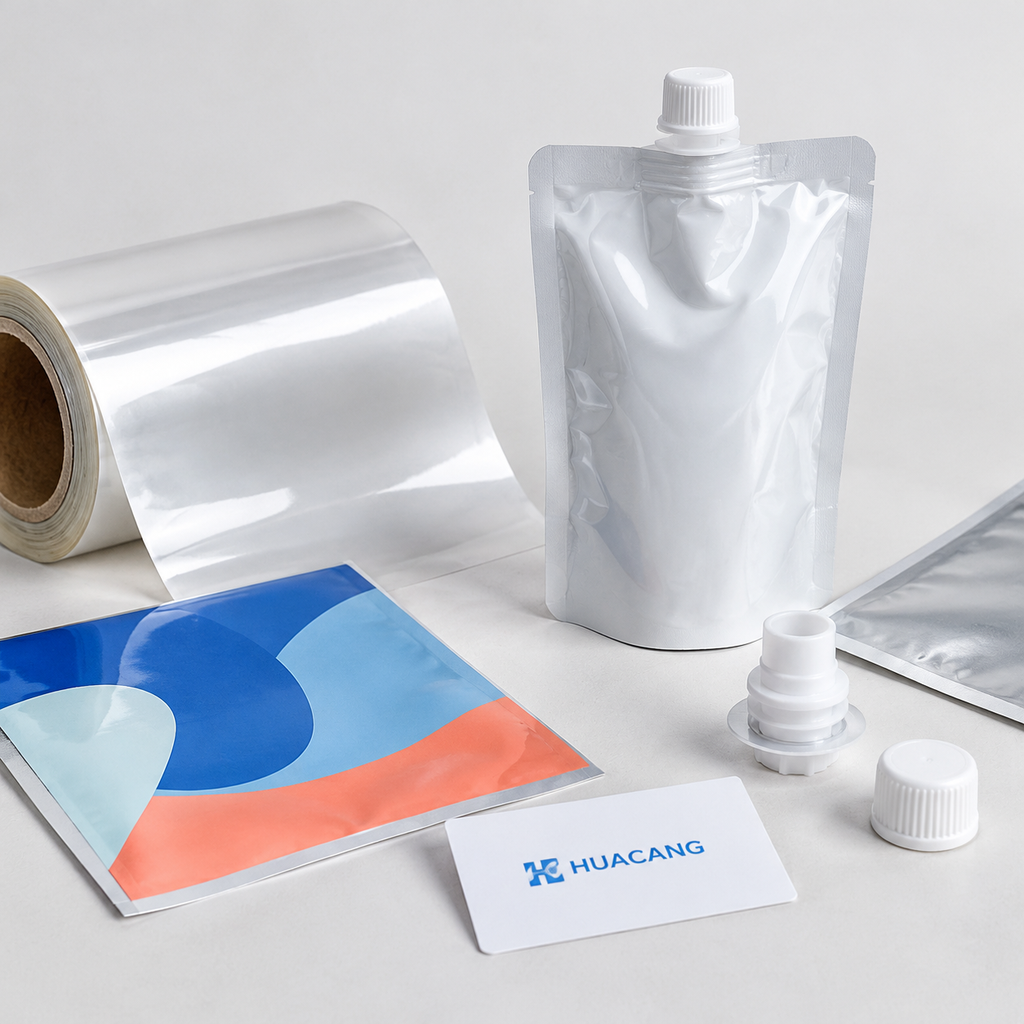
Start with formulation chemistry because products with similar names can behave differently in the same package. pH alone does not predict compatibility: oils, solvents, surfactants, fragrances, salts, and active ingredients also matter.
- Sealant: Direct contact can cause absorption, swelling, softening, or stress cracking.
- Adhesive and laminate interfaces: Permeating ingredients can weaken bonds or contribute to blistering and delamination.
- Printing: Evaluate ink adhesion and rub resistance. Assess possible transfer through diffusion or set-off where relevant to the construction and manufacturing process.
- Barrier layers: Flexing, chemical exposure, and moisture can affect barrier performance, depending on the structure.
- Fitments: Spouts, caps, liners, and valves introduce additional materials and contact surfaces.
The interaction also runs in the opposite direction. Packaging can absorb aroma compounds or active ingredients, while substances from packaging can transfer into the product. Both directions belong in the assessment.
Build a Flexible Packaging Compatibility Testing Plan

A useful plan connects the intended shelf life to the formulation, filling process, storage conditions, and measurable acceptance criteria.
- Define the product: Record formulation version, ingredient ranges, pH where relevant, viscosity, and known sensitivity to oxygen, light, or moisture.
- Freeze the packaging specification: Identify layer sequence, thicknesses, adhesive system, cure requirements, printing configuration, seal geometry, and fitment materials.
- Replicate filling: Use representative fill temperature, volume, headspace, closure application, and any thermal treatment.
- Choose exposure conditions: Include expected storage and justified distribution extremes. Place packs upright, horizontal, or inverted where those orientations create relevant contact.
- Schedule inspections: Collect baseline results and several checkpoints through the intended storage period.
- Assign controls and sample quantities: Include unexposed packaging and product in a suitable reference container. Reserve separate units for destructive tests.
An illustrative schedule might include baseline, two weeks, one month, and later shelf-life checkpoints. These are planning examples, not universal requirements. Sample quantities should reflect formulation variability, test variability, and the consequences of failure.
Compare the Main Test Methods
Different methods answer different questions. Combine screening tests with finished-package evaluations rather than relying on one result.
| Method | Main purpose | Practical limitation |
|---|---|---|
| Material coupon exposure | Screen film chemical resistance through appearance, mass, dimensions, or mechanical changes | Cut edges and immersion may expose layers differently from a finished pack |
| Filled-package aging | Evaluate the complete package and product together | Requires representative filling and sufficient storage time |
| Seal and laminate peel testing | Measure changes in seal strength and interlayer adhesion | Results depend on specimen preparation and test conditions |
| Leak and closure testing | Assess containment after aging or handling | A passing result does not establish chemical or sensory suitability |
| Migration analysis | Measure relevant substance transfer under specified conditions | Requires a market-specific analytical and regulatory scope |
| Product stability analysis | Track formulation quality and performance | Controls are needed to distinguish packaging effects from normal product aging |
Accelerated aging can help compare candidates and identify failure mechanisms. Elevated temperature may introduce mechanisms absent in normal storage, so it does not automatically translate into a shelf-life claim.
Check Film, Adhesive, Ink, and Seal Performance
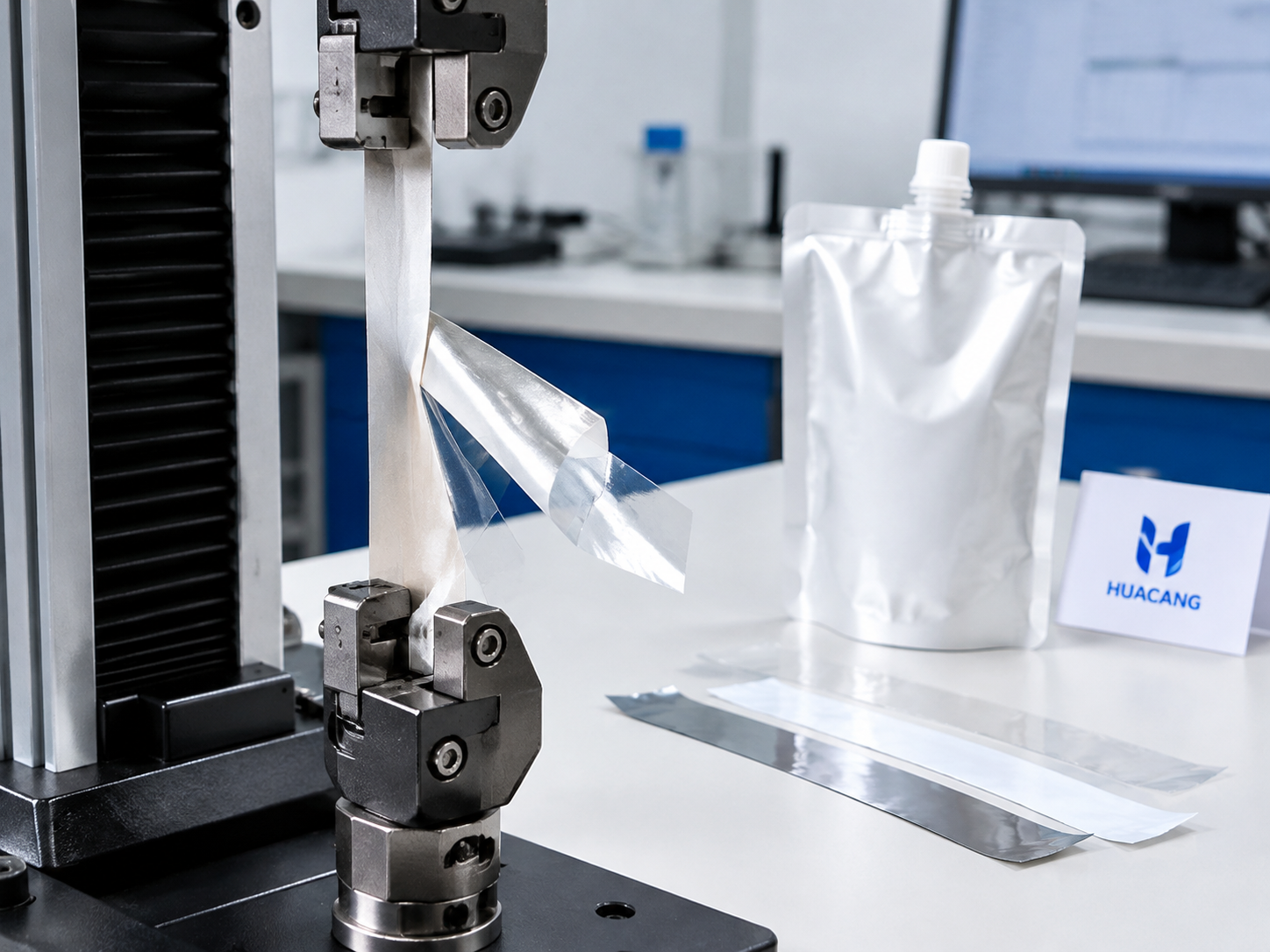
Inspect the laminate as a system because apparently intact film can conceal weakening interfaces or declining seal performance.
For film chemical resistance, compare exposed specimens with baseline controls for tackiness, whitening, swelling, brittleness, dimensional change, and mass change. Explain the exposure method: complete immersion, one-sided contact, and filled-pack storage are not interchangeable.
Pouch delamination testing should combine visual inspection with interlayer peel measurements where suitable. Record the failure location and mode, such as adhesive separation, cohesive failure, or film tearing. Keep specimen width, peel speed, conditioning, and test direction consistent.
Evaluate seals after exposure using an agreed strength method and an appropriate leak test. Product contamination during filling can weaken seals independently of chemical attack. For printed structures, include rub resistance and visible changes after storage or product spills. Confirm that test samples have completed the specified adhesive cure before establishing baseline results.
Include Spouts, Closures, and Dispensing Components
A compatible laminate does not establish that a spout, cap, or valve will perform with the same formulation.
Check fitment surfaces for swelling, cracking, distortion, and changes in sealing contact. Record cap application and removal torque where relevant, and inspect the spout-to-pouch weld after aging. Inverted storage can expose closure areas that upright storage leaves mostly untouched.
For pumps and dispensers, evaluate repeated actuation, flow consistency, shutoff, and leakage using the intended product viscosity. Include repeated opening and reclosing when the package is intended for multiple uses. These checks should reproduce expected use rather than impose an unrelated cycle count.
Match Testing to the Packaging Format
Package geometry changes exposure and mechanical loading. The following format comparison identifies additional checks; it does not establish suitability for a particular formulation.
| Packaging format | Buyer application | Additional compatibility checks |
|---|---|---|
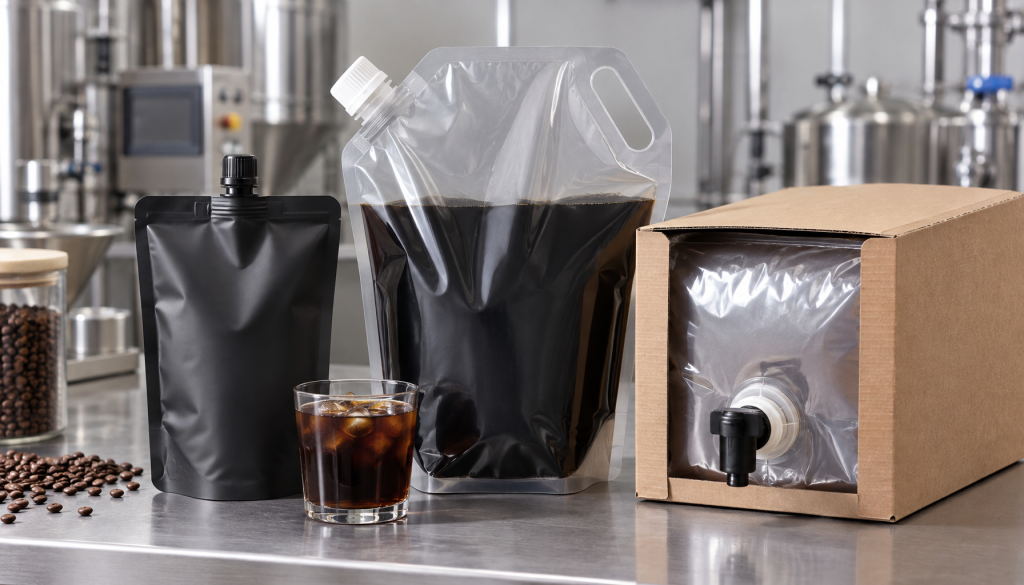
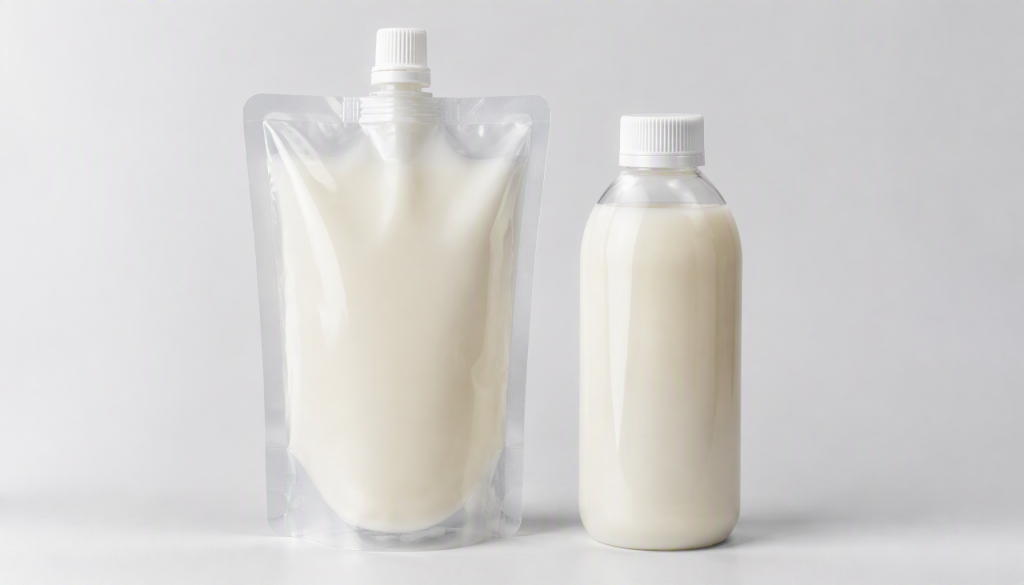
| Transparent spout pouches | Products displayed through a clear package | Haze, discoloration, product appearance, and light exposure where relevant |
| Spout pouches with carry handles | Larger liquid refill or family-size packs | Handle-area loading, creep, and seal integrity after aging at intended fill weight |
| Custom-shaped spout pouches | Distinctive retail or promotional silhouettes | Seal behavior around contours and stress at narrow or sharply changing sections |
| Bag-in-box inner bags | Liquid packs supported by an outer carton | Valve compatibility, folded-film exposure, and dispensing through the expected use period |
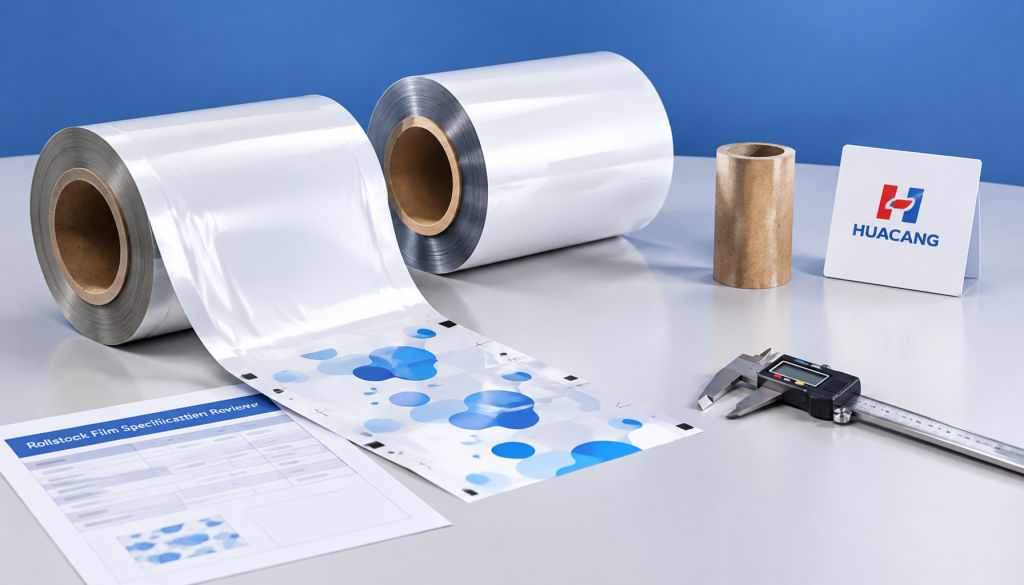
| Rollstock converted on the filling line | Form-fill-seal production | Compatibility of packs made with actual line settings, seals, and forming stresses |
Test the final dimensions and fill volume. A small prototype may not reproduce the loading, folds, or contact pattern of a larger commercial pack.
Separate Migration Testing from Stability Testing
Packaging migration testing measures substance transfer; a packaging stability study evaluates changes in the packaged product and package over time. They provide complementary evidence.
For food-contact applications, a qualified laboratory should define applicable migration requirements based on the destination market, materials, food type, and contact conditions. Testing may use prescribed simulants or other justified media. Where applicable, the assessment should consider non-intentionally added substances, including reaction or degradation products. A general material declaration does not establish compliance for every finished structure and use.
Stability work can track color, odor, viscosity, pH, active content, oxidation, and microbiological quality where relevant. Compare results with suitable controls. Odor change alone cannot identify the substance responsible or establish migration compliance. Likewise, a package that passes migration testing may still lose aroma or develop leakage during storage.
Set Acceptance Criteria and Investigate Failures
Define pass/fail criteria before testing so results support a purchasing decision. There is no universal acceptable percentage of swelling, peel-strength loss, or odor change for all flexible packs.
Specify required containment, minimum seal and bond performance, closure function, permitted appearance changes, and product quality limits. Record both absolute results and changes from baseline. A strength reduction matters differently when the remaining value is comfortably above, or close to, the agreed minimum.
If samples fail, compare affected and unaffected locations, storage orientations, exposure conditions, and production lots. Review formulation changes, adhesive cure, seal settings, fitment materials, and handling. Repeat the relevant evaluation after a corrective change; document why any earlier evidence still applies.
Prepare the Supplier Handoff
Give the packaging supplier enough information to produce representative samples and keep the tested specification traceable.
- Formulation identity, relevant ingredient ranges, and intended markets.
- Fill volume, filling temperature, processing conditions, and shelf-life target.
- Laminate specification, printing configuration, pouch dimensions, and fitment details.
- Sample lot references, cure status, test methods, and acceptance limits.
- Responsibility for aging, laboratory analysis, reporting, and final approval.
HUACANG Packaging, established in Guangzhou in 1998, manufactures custom spout pouches, laminated bags, roll film, and bag-in-box packaging. For a sourcing project, connect material selection and sample preparation with the buyer’s filling and testing program. Keep commercial lead-time planning separate from the time needed to generate compatibility evidence.
Key Takeaways Before Production
- Test the actual formulation in representative finished packs.
- Evaluate laminate interfaces, seals, printing, and fitments alongside the contact film.
- Use defined controls, storage conditions, checkpoints, and acceptance criteria.
- Combine package integrity, product stability, and applicable migration evidence.
- Review changes to formulation, materials, geometry, or filling before relying on previous approval.
Flexible packaging compatibility testing gives buyers a documented basis for approving a specific product–package combination. The strongest decision connects observed performance to the intended filling process, storage period, and use conditions.
FAQ
How long should a packaging compatibility study run?
The duration should support the intended shelf life and use conditions. Early screening can identify unsuitable candidates, but real-time storage evidence remains important. Accelerated results require a justified relationship to normal storage before they support a shelf-life claim.
Can a chemical resistance chart replace finished-pouch testing?
No. Charts can help screen individual materials, but they do not capture the complete formulation, laminate bonds, seals, printing, fitments, and filling stresses. Test representative finished packs before approving the combination.
Does a successful leak test prove compatibility?
No. It demonstrates containment under the test conditions. A leak-free package can still develop delamination, absorb fragrance, alter product quality, or present migration concerns. Combine leak testing with the other evaluations relevant to the application.
When is packaging migration testing needed?
Determine the need through the applicable market requirements and intended use, particularly for food-contact packaging. A qualified laboratory or regulatory specialist should define the scope, conditions, and analytes. Physical compatibility testing alone cannot establish migration compliance.
Which changes should trigger a compatibility review?
Review changes to formulation, contact materials, adhesive, ink system, thickness, fitments, pouch geometry, filling temperature, or processing. The review should determine which tests need repeating and whether existing evidence still covers the revised product–package combination.
Need Custom Spout Pouch Packaging?
Share your product, fill volume, packaging requirements, artwork, and estimated order quantity with HUACANG Packaging. Discuss pouch structure, spout fitment, MOQ, samples for compatibility evaluation, and the details needed for a quotation.