Table of Contents
- What Is Dairy Pouch Packaging?
- Pouch Format Options by Beverage Application
- Film and Barrier Selection
- Processing, Distribution, and Shelf Life
- Spout, Cap, and Filling-Line Considerations
- Design, Printing, and Consumer Handling
- Buyer Specification Checklist
Dairy pouch packaging must match the drink formulation, processing method, distribution temperature, required shelf life, filling equipment, and dispensing experience. This guide explains how buyers can specify spout pouches for dairy and plant-based beverages.
What Is Dairy Pouch Packaging?
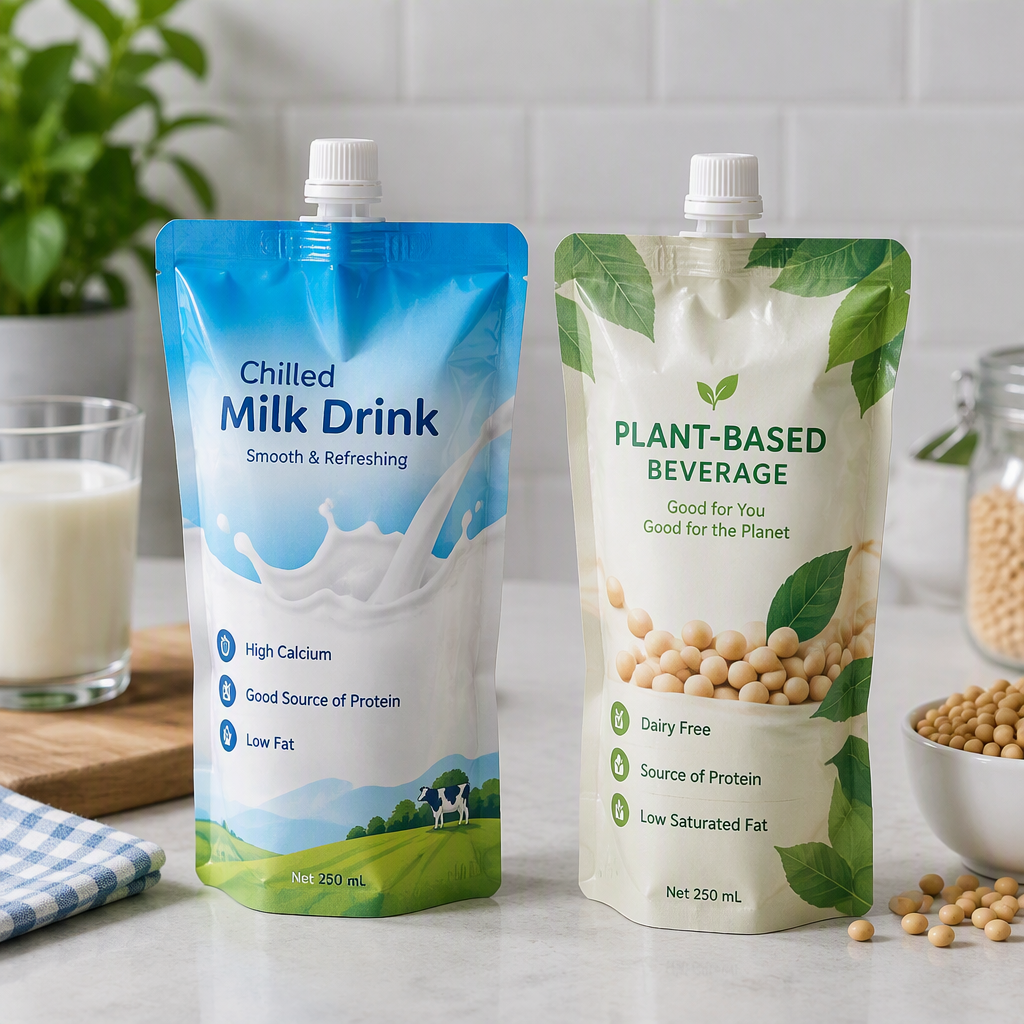
Dairy pouch packaging is flexible packaging designed to hold liquid or semi-liquid dairy beverages such as milk drinks, flavored milk, yogurt drinks, and cultured beverages. Similar pouch formats can also be specified for plant-based drinks made from oats, soy, almonds, peas, coconut, or other ingredients.
The correct pouch depends on more than beverage category. Buyers should define the formulation, acidity, fat and protein content, oxygen and light sensitivity, filling temperature, sterilization process, distribution conditions, target shelf life, pouch volume, and dispensing requirements before approving a structure. A refrigerated pouch for short distribution is not specified the same way as a shelf-stable pouch filled through a validated aseptic process.
For U.S.-bound products, review the material and documentation requirements in this food-contact spout pouch buyer guide. Food-contact suitability must be evaluated for the complete packaging system and intended use, not only for an individual film layer.
Pouch Format Options by Beverage Application
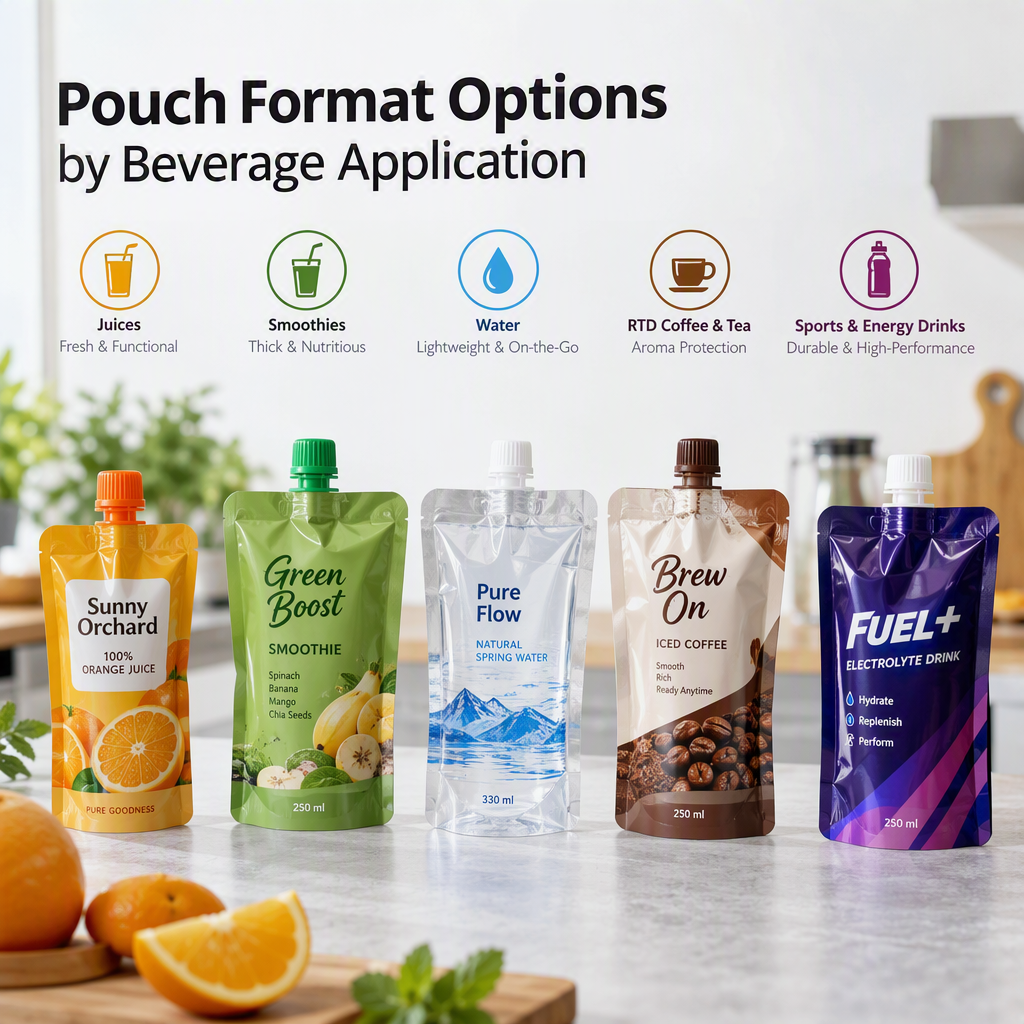
Start the design process by separating the beverage application from the pouch shape. A compact pouch may be suitable for a single serving, while a larger pouch may need a wider base, stronger seals, a handle, or a different spout position for controlled pouring. The following table is a planning framework rather than a finished specification.
| Application | Format to evaluate | Key specifications to confirm | Primary operating concern |
|---|---|---|---|
| Refrigerated milk or flavored milk | Small or medium spout pouch | Volume, cold-chain conditions, light barrier, cap, seal strength | Leak resistance during chilled storage and distribution |
| Yogurt or cultured drink | Spout pouch with a suitable opening | Viscosity, particulates, spout bore, dispensing angle, fill temperature | Consistent flow without clogging or excessive product retention |
| Plant-based beverage | Spout pouch or larger pourable pouch | Oil and emulsion behavior, oxygen barrier, light protection, volume | Maintaining product quality through the defined distribution period |
| Shelf-stable or aseptic beverage | High-barrier spout pouch system | Aseptic process, sterilization exposure, barrier, fitment, seal validation | Packaging compatibility with the validated filling process |
| Foodservice or family-size drink | Larger pouch with pour spout or handle option | Grip, top-load or through-spout filling, carton fit, dispensing control | Handling, transport stability, and repeated opening |
Nominal volume alone does not determine finished dimensions. Pouch width, height, gusset design, headspace, spout location, and filling method all affect usable capacity. Use a spout pouch sizes and capacity guide when preparing dimensional requirements.
Film and Barrier Selection
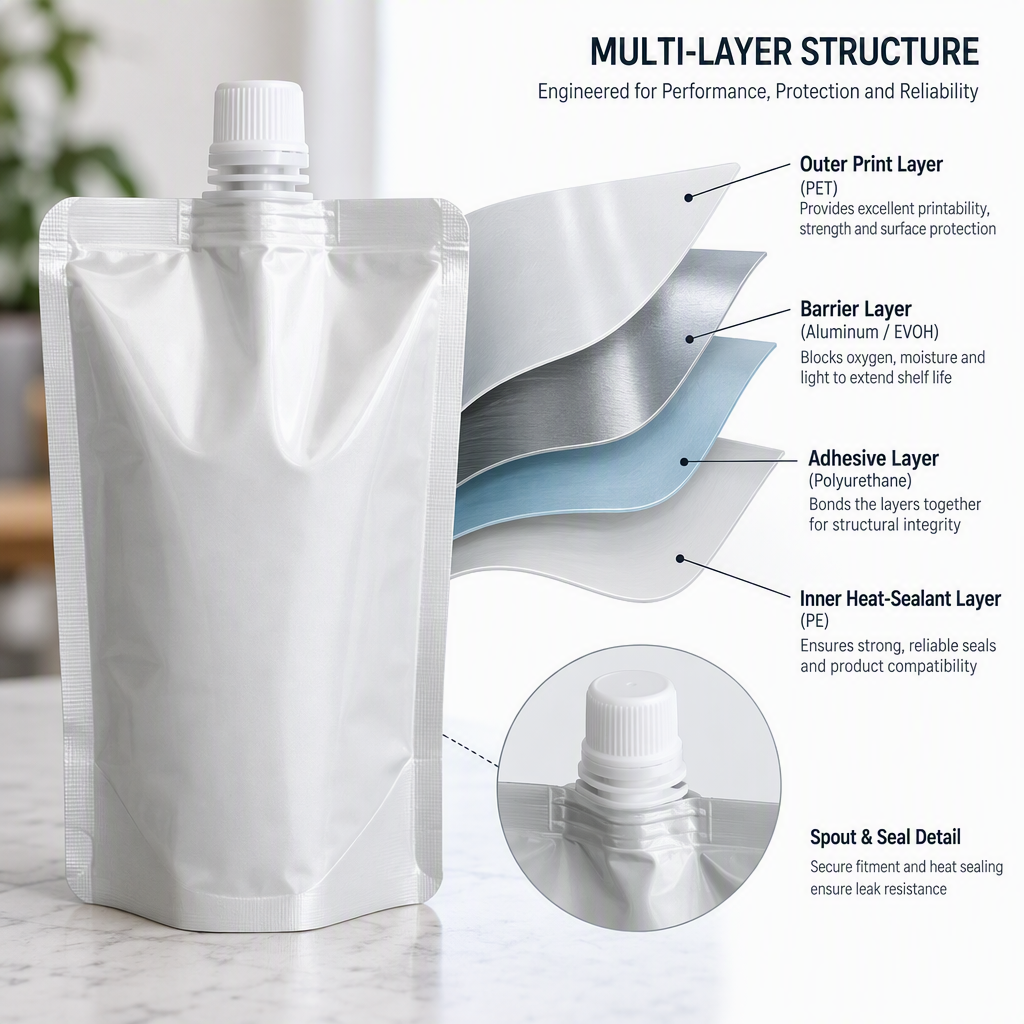
A dairy or plant-based drink pouch is usually a multilayer laminate. Each layer has a role: the outer layer supports printing and handling, the barrier layer limits transmission of oxygen, moisture, aroma, or light, and the sealant layer creates the heat seal that contacts the product or interfaces with the inner package surface.
Common structures may include polyester-based printable laminates, nylon for added toughness, EVOH for oxygen-barrier performance, or aluminum foil when strong light and gas protection is required. These are examples of material approaches, not universal recipes. The final structure must be selected against the beverage formulation, process temperature, sterilization exposure, seal requirements, storage conditions, and recycling objectives.
| Structure approach | Potential reason to evaluate it | Questions for the buyer |
|---|---|---|
| Clear laminate | Product visibility and conventional flexible packaging construction | Is the beverage sensitive to light or oxygen? |
| Toughened laminate with nylon | Additional puncture and handling resistance may be needed | What drop, compression, and transport tests apply? |
| EVOH-containing structure | Oxygen barrier may be required for the defined application | Will humidity, processing, and seal design affect the intended performance? |
| Foil laminate | High light and gas barrier for selected shelf-stable applications | Does the filling and distribution plan justify an opaque structure? |
| Mono-material PE or PP approach | May support a defined recyclability strategy where accepted | What local collection, sorting, and recycling criteria apply? |
Do not specify a film only by total thickness. Request the layer construction, nominal gauge, sealant type, barrier targets where relevant, print side, finish, and intended filling conditions. Seal performance should be confirmed on the finished pouch, including the spout seal area.
Processing, Distribution, and Shelf Life
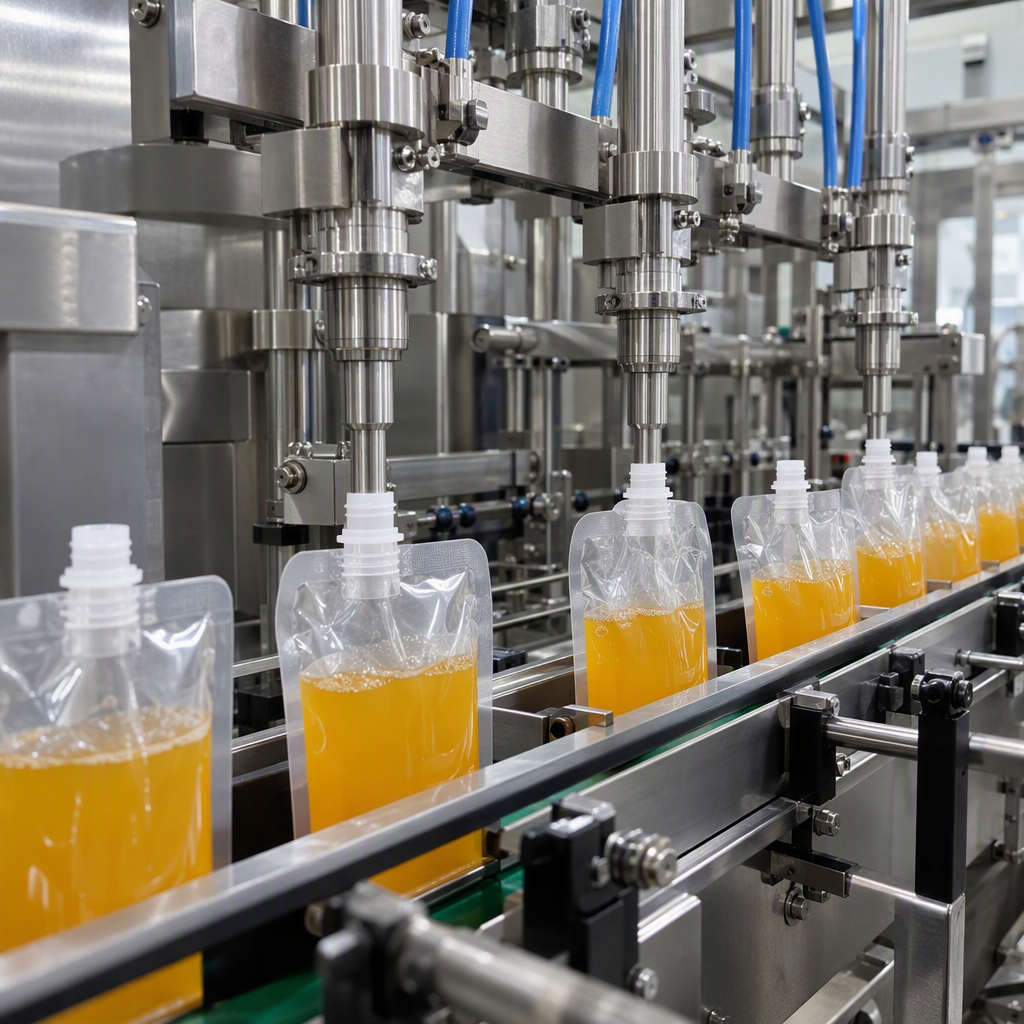
Processing determines the packaging design window. Refrigerated drinks, hot-filled products, retort products, and aseptically filled beverages expose the pouch to different temperatures, residence times, pressure changes, and handling conditions. A pouch that works for one process should not be transferred to another without technical review and validation.
For shelf-stable dairy or plant-based beverages, an aseptic spout pouch is part of a complete system that includes product treatment, packaging sterilization, sterile filling, fitment design, and controlled sealing. Read the aseptic spout pouch packaging buyer guide before requesting samples for this application. Packaging selection alone does not make a product aseptic.
For refrigerated products, define the expected temperature range, maximum distribution time, storage position, and whether the pouch will be sold upright or laid flat. For every process, establish a validation plan covering seal integrity, fitment attachment, leakage, appearance, and product-specific shelf-life testing. Shelf life should be confirmed by the brand, filling partner, and relevant technical laboratories using the final product and final package.
Spout, Cap, and Filling-Line Considerations
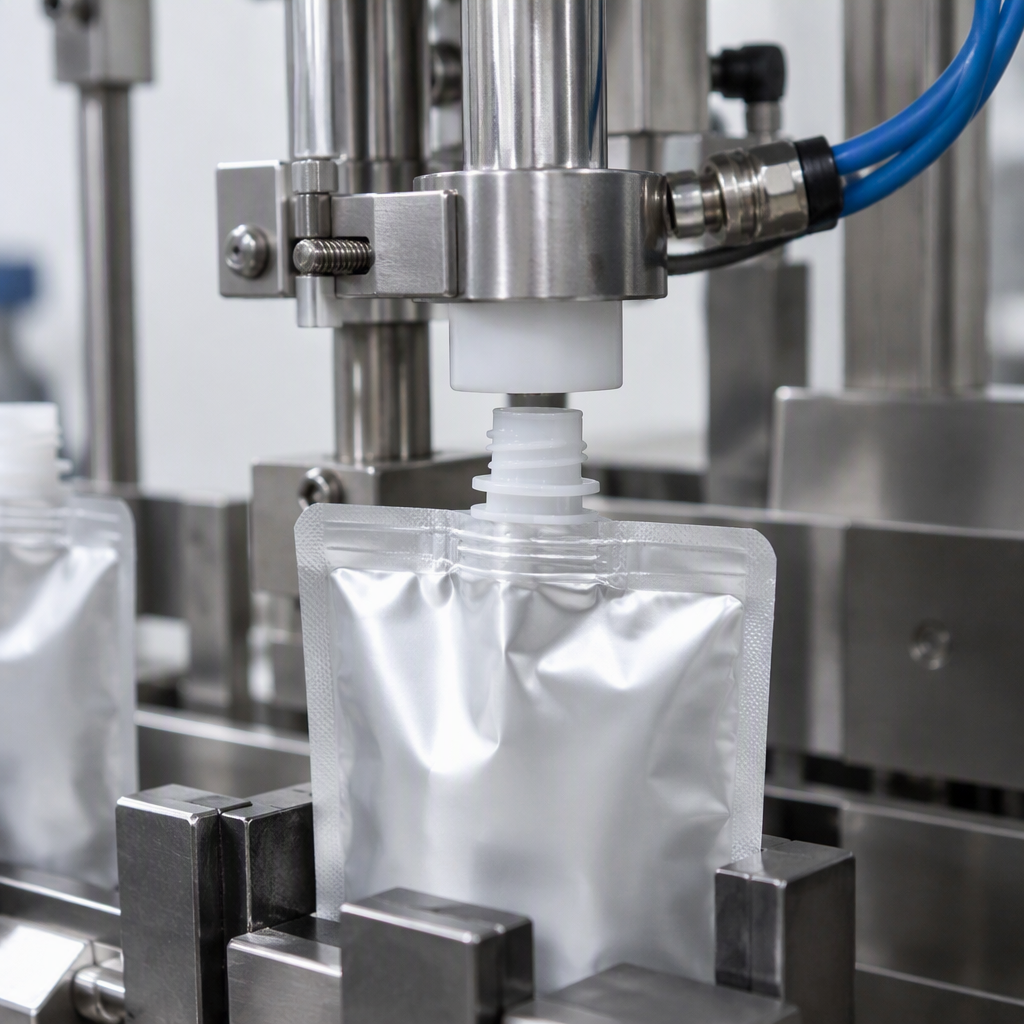
The spout controls filling access and consumer dispensing. Specify the spout diameter, location, neck and cap interface, tamper-evident feature if required, cap application method, and product flow behavior. Thicker yogurt drinks may need a larger opening than a low-viscosity milk beverage. Final selection should be based on actual flow trials rather than category assumptions.
Filling-line compatibility is equally important. Confirm whether the pouch is filled through the spout or through an open top, how the fitment is inserted or sealed, the sealing temperature and dwell time, cap torque requirements, machine registration, and acceptable pouch dimensions. The spout pouch filling-line compatibility guide can help organize the information required from the equipment supplier and packaging converter.
Ask for fitment drawings and tolerances before finalizing the dieline. The line team should evaluate cap feeding, spout orientation, pouch presentation, fill accuracy, seal contamination risk, and downstream case packing. A fitment that is comfortable for consumers may still need machine changes, so the package and equipment should be developed together.
Design, Printing, and Consumer Handling
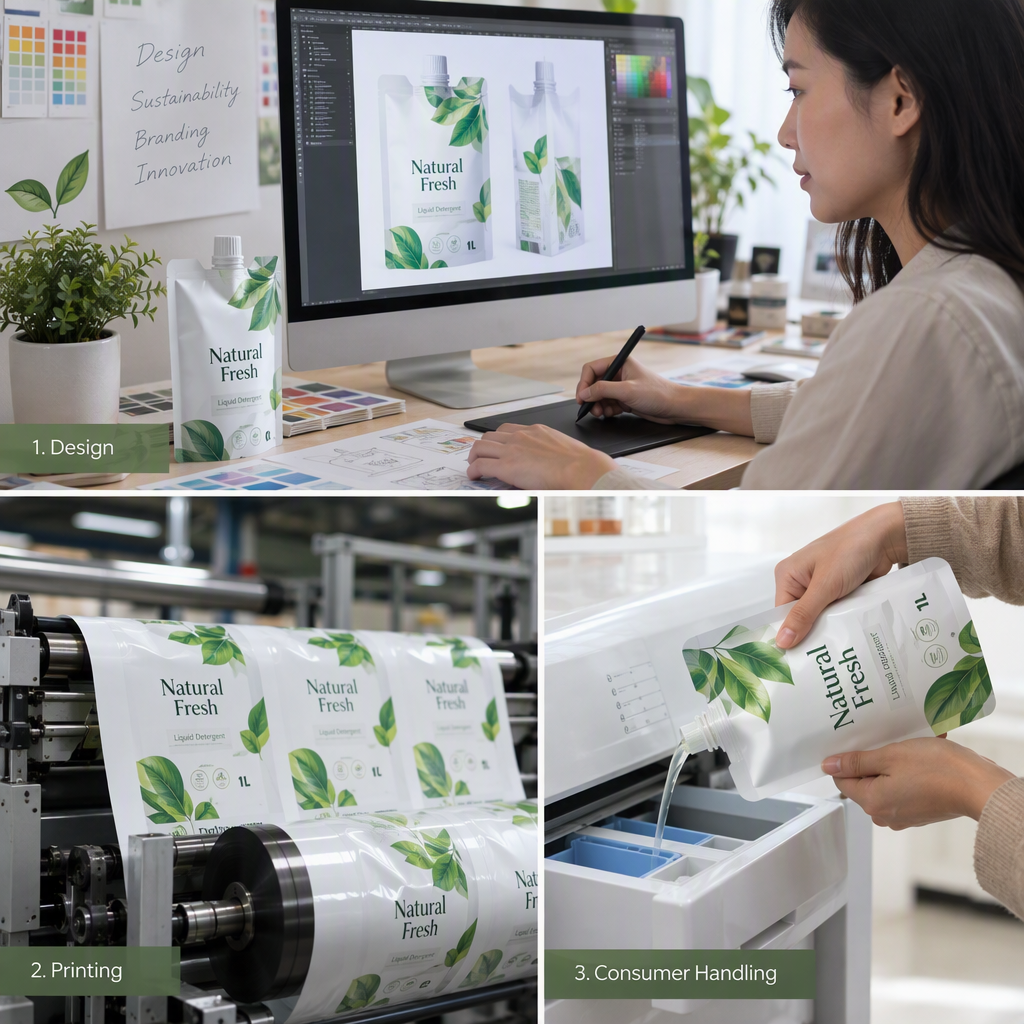
Drink pouches have a flexible front and back panel, so artwork should be designed around the actual filled shape rather than a flat rectangle alone. Reserve clear areas for seals, the spout and cap, registration marks, tear features, and any required coding zone. Confirm whether printing is reverse printed on the film or applied through another approved construction.
Important consumer-facing decisions include pouch grip, opening force, cap retention, pour direction, product visibility, and whether the package is intended for single use or repeated opening. A matte or glossy finish can affect appearance and scuff visibility, while opaque structures change how the beverage is presented. These choices should be tested on filled samples under expected handling conditions.
Artwork files should identify the trim line, seal zones, spout position, safe text area, color references, barcode placement, and variable-data area. Keep regulatory copy and nutrition information legible at the intended pouch size. A sample approval should include both an unfilled visual proof and filled pouches produced with the proposed structure and fitment.
Buyer Specification Checklist
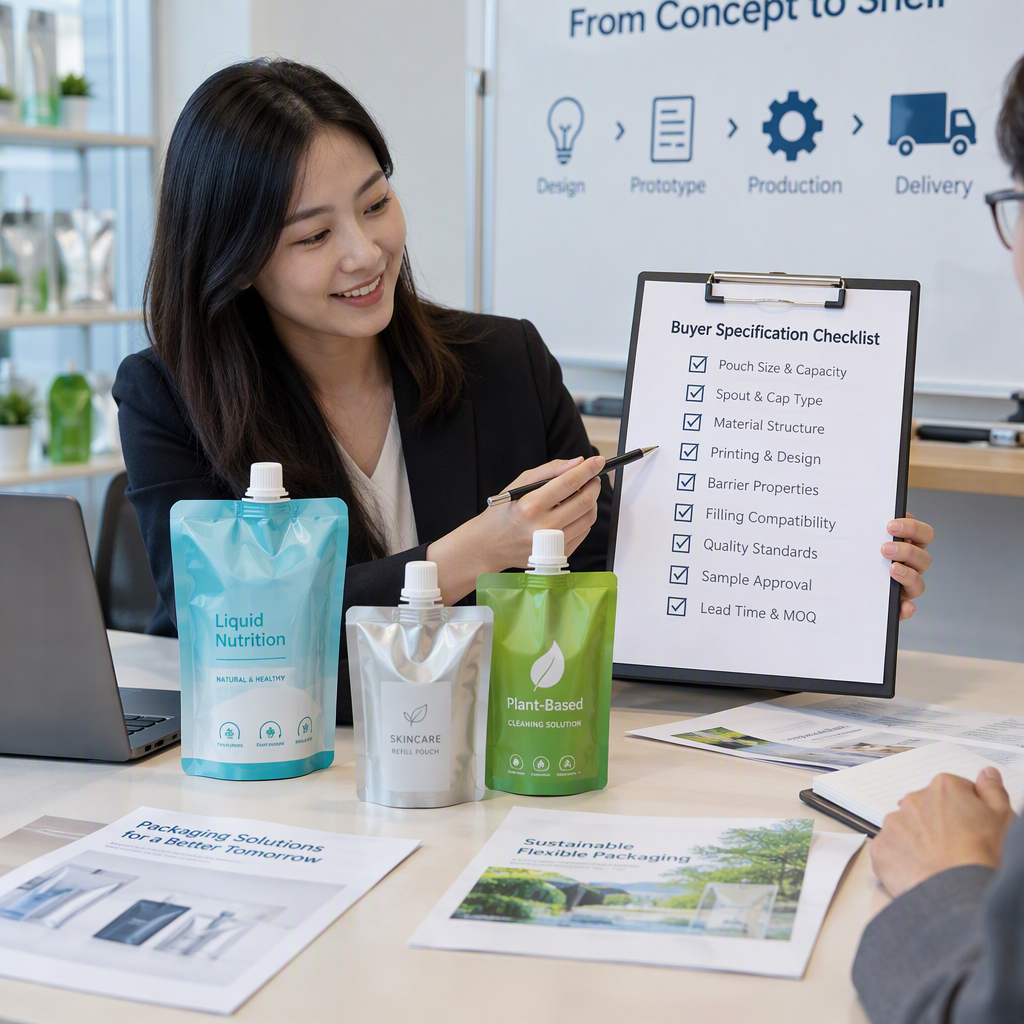
A clear RFQ helps a packaging supplier recommend a manufacturable design and quote it accurately. Include the following information:
- Product: dairy or plant-based formulation, viscosity, particulates, acidity, fat or oil content, and sensitivity to oxygen or light.
- Process: refrigerated, hot fill, retort, or aseptic; filling temperature; sterilization conditions; and filling equipment.
- Package: nominal volume, target dimensions, gusset or handle needs, spout location, cap type, and opening requirements.
- Performance: distribution temperature, expected shelf life, storage orientation, drop and compression requirements, leakage criteria, and sample test plan.
- Artwork: number of SKUs, print colors, finish, barcode requirements, coding area, and approved file format.
- Commercial: forecast volume, order quantity, delivery destination, carton and pallet preferences, sample quantity, and required documentation.
When comparing suppliers, request a construction drawing, fitment specification, food-contact documentation for the target market, production tolerances, sample lead time, and a clear description of validation responsibilities. If a larger liquid format is under consideration, compare it with bag-in-box specifications for liquid products before locking in the pouch format.
FAQ
Can spout pouches be used for milk and plant-based drinks?
Yes, spout pouches can be designed for milk drinks, yogurt beverages, and plant-based drinks when the film, sealant, fitment, closure, and filling process are matched to the product. The final package requires product and process validation.
Are dairy drink pouches automatically suitable for aseptic filling?
No. Aseptic use requires a packaging system compatible with the product treatment, sterilization method, fitment, filling equipment, and sealing process. An ordinary refrigerated pouch should not be assumed to be aseptic.
What film barrier is best for dairy pouch packaging?
There is no single best structure for every dairy beverage. Clear, EVOH-containing, foil, and other laminate approaches may be evaluated depending on oxygen and light sensitivity, processing conditions, distribution, target shelf life, and recycling requirements.
How do I choose a spout size for a yogurt drink?
Use product flow trials to evaluate viscosity, particulates, dispensing speed, product retention, and consumer opening behavior. Confirm the selected spout with the filling line and cap application equipment before production approval.
What should be tested before approving a drink pouch?
Typical evaluations include dimensional inspection, seal integrity, fitment attachment, cap application, leakage, drop or transport handling, filling-line performance, artwork appearance, and product-specific shelf-life studies. The exact test plan should reflect the process and distribution conditions.
Can dairy and plant-based drinks use the same pouch design?
They may use a similar format, but the same structure should not be assumed suitable. Differences in formulation, viscosity, oil content, oxygen sensitivity, processing, and storage can change the required laminate, fitment, and validation plan.
Plan Your Drink Pouch Specification
Share your dairy or plant-based drink type, pouch volume, filling process, distribution conditions, and artwork status with HUACANG Packaging. Our team can discuss the pouch structure, spout fitment, artwork requirements, MOQ, samples, and quote information needed for the next step.