Table of Contents
- What Food-Contact Packaging Requirements Apply to U.S. Imports?
- How FDA Food-Contact Compliance Is Established
- Review Every Packaging Component, Not Just the Main Film
- Documents U.S. Buyers Should Request
- Match Testing and Validation to the Intended Use
- Special Considerations for Flexible Pouches and Spouts
- A Practical Import Compliance Workflow
- Common Mistakes and a Buyer Checklist
Imported packaging intended to contact food must be supported by a suitable U.S. food-contact compliance basis, accurate material documentation, and testing or technical evidence appropriate for the product and process. This guide explains what B2B buyers should verify before ordering flexible pouches, laminated bags, roll film, or bag-in-box packaging for the U.S. market.
What Food-Contact Packaging Requirements Apply to U.S. Imports?
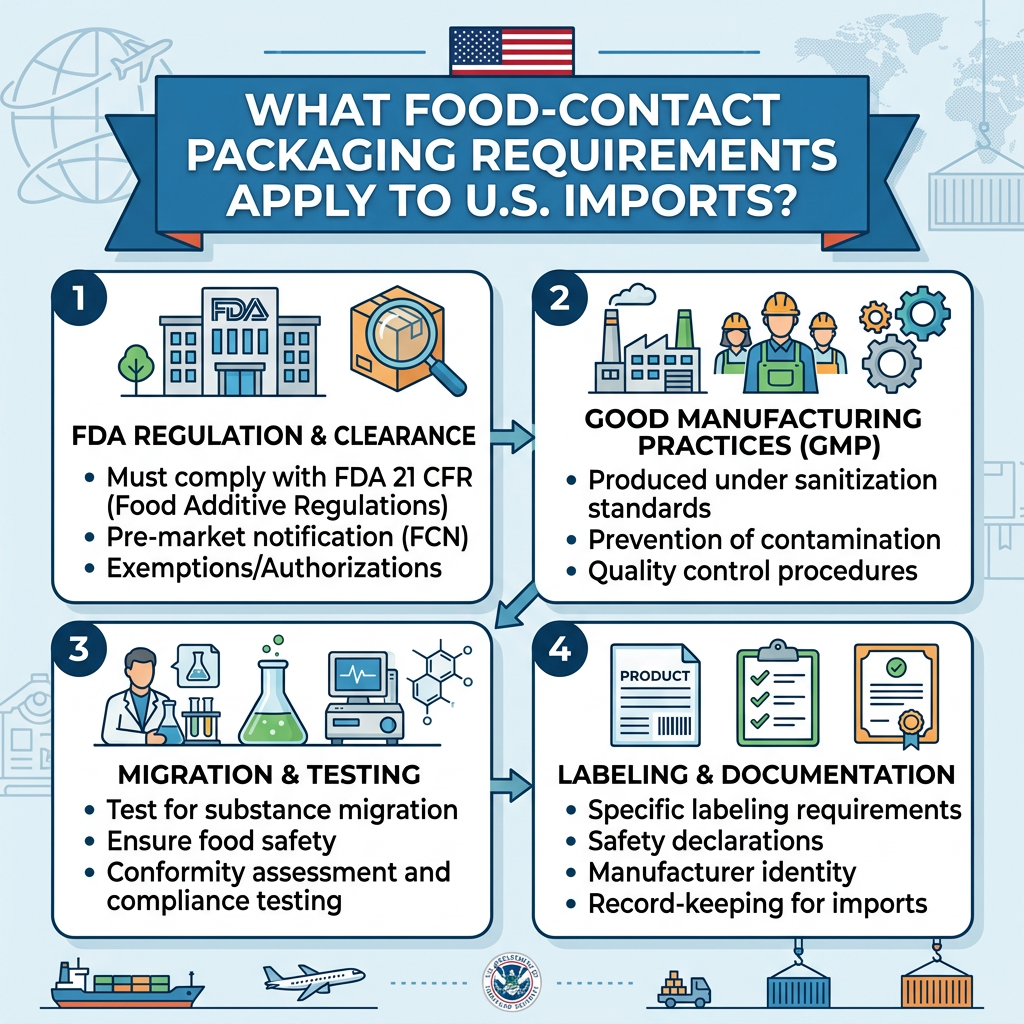
For packaging imported into the United States and intended to contact food, the primary requirement is that each food-contact substance and finished packaging component has an appropriate basis for lawful use under U.S. Food and Drug Administration requirements. The basis may include an applicable regulation in Title 21 of the Code of Federal Regulations, an effective Food Contact Notification, a prior sanction, a Threshold of Regulation exemption, or another recognized regulatory basis that covers the substance, food type, temperature, and conditions of use.
Buyers should not rely on a general statement that packaging is food grade. They should review the complete construction, intended food application, processing conditions, and supporting supplier documentation. This includes the film layers, adhesives, coatings, printing inks, sealants, spouts, caps, valves, and other components that could migrate into food or contact the product during normal use.
This article assumes the buyer is importing empty flexible packaging for food use in the U.S. It is a technical purchasing guide rather than a legal opinion. Requirements can change, and the U.S. importer, brand owner, or regulatory adviser should confirm the current requirements for the specific product and supply chain.
How FDA Food-Contact Compliance Is Established
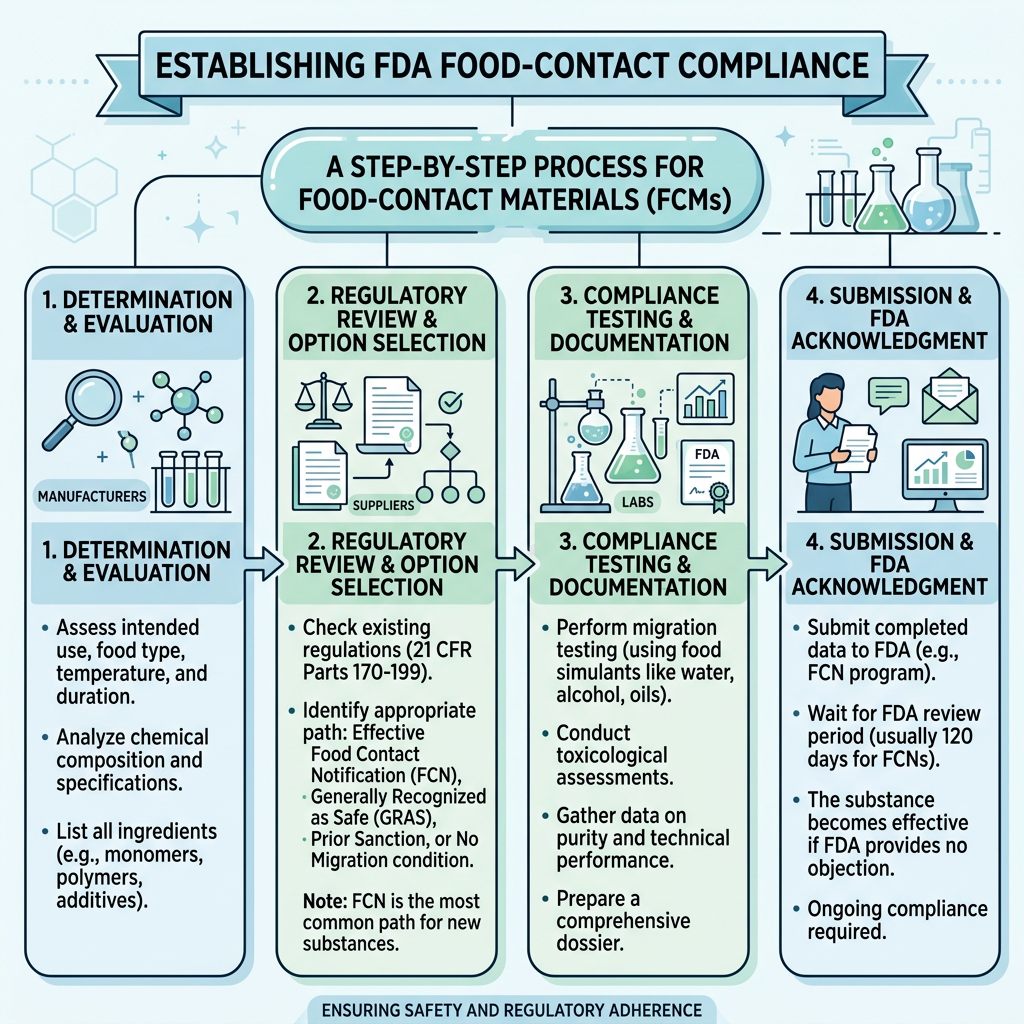
U.S. food-contact compliance is generally assessed substance by substance and use by use. There is usually no single FDA certificate that automatically approves every finished pouch, bag, or roll of film. The supplier and buyer need to identify the regulatory basis for the materials used in the finished article.
Common regulatory routes
- Applicable FDA regulations: Many packaging substances are addressed in relevant sections of 21 CFR Parts 175 through 178. These parts may cover adhesives and coatings, paper and paperboard components, polymers, and substances used in manufacturing or processing.
- Food Contact Notifications: An effective FCN can authorize a specific food-contact substance for defined uses. The buyer should confirm that the notification covers the material, supplier or manufacturer relationship, food types, temperature, and duration of contact.
- Prior sanctions and exemptions: Certain substances may rely on a prior sanction or a Threshold of Regulation decision where the conditions are met. These routes should be documented rather than assumed.
- Other applicable bases: A regulatory assessment may involve additional provisions depending on the substance, article, and use. A supplier declaration should identify the basis instead of using only broad wording such as FDA compliant.
General manufacturing quality and composition controls also matter. Section 174.5 of 21 CFR includes general provisions for substances used in food-contact applications, including good manufacturing practice principles. Compliance therefore depends on both the legal status of the substances and the way the packaging is manufactured and controlled.
An EU declaration of compliance, a general food-grade certificate, or a certificate for a raw resin may be useful background information, but none should be treated as a complete U.S. compliance assessment without checking the intended application.
Review Every Packaging Component, Not Just the Main Film
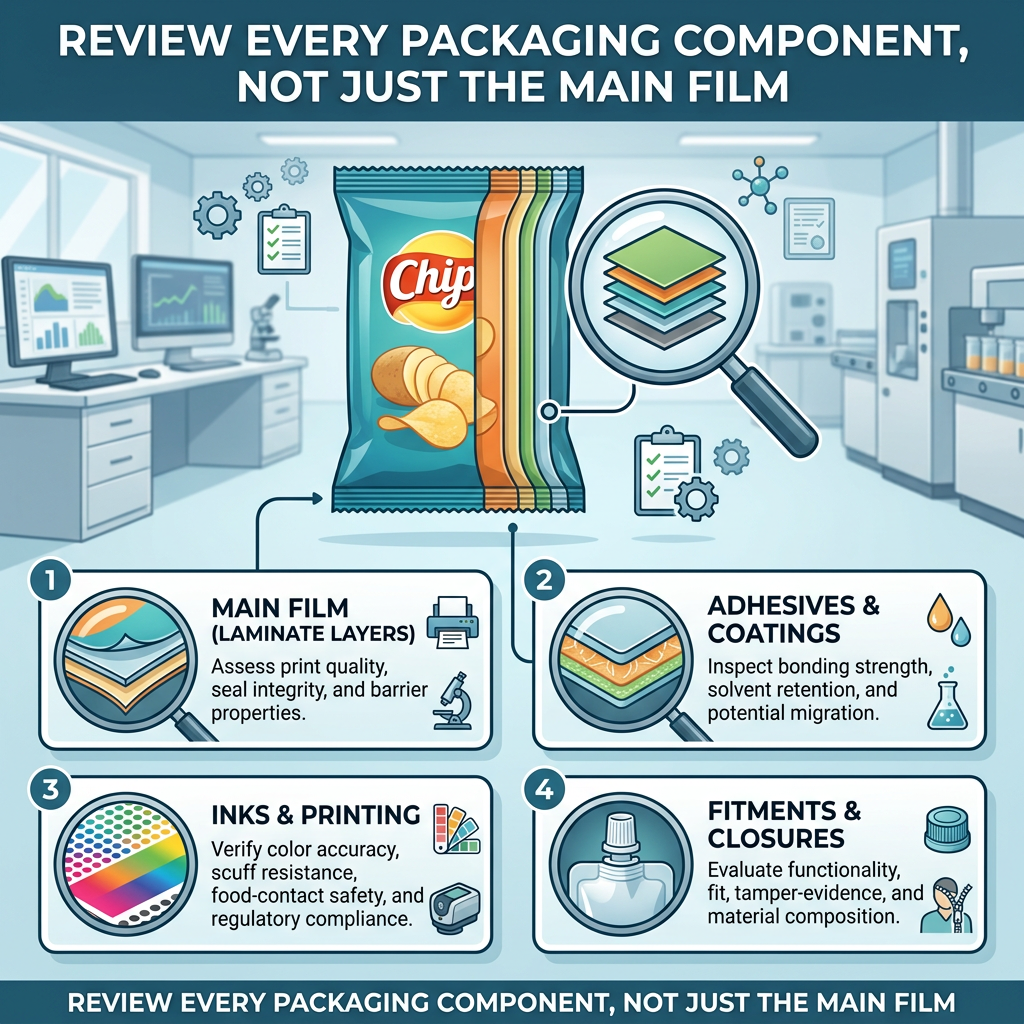
A flexible package is a multi-material system. The food-contact packaging requirements review should therefore cover the complete structure and any component that can contribute to migration, direct contact, or set-off. A typical laminated pouch may contain several polymer layers, an adhesive, an ink system, a coating, a sealant, and a fitment.
Components to identify in the specification
- Food-contact layer: Identify the polymer or sealant layer that touches the food, along with its thickness and intended function.
- Barrier layers: Aluminum foil, metallized film, EVOH, nylon, or other barrier materials may be used for oxygen, moisture, light, or aroma protection. Their use must be assessed as part of the complete structure.
- Adhesives and tie layers: Lamination adhesives and bonding layers can be indirect food-contact substances and should be covered by supplier documentation and the intended curing process.
- Inks, coatings, and varnishes: Reverse printing reduces direct contact, but it does not eliminate the need to assess potential migration or set-off during winding, storage, and filling.
- Spouts, caps, valves, and closures: The fitment material, colorants, additives, gasket, and closure design need a separate review where they contact the food or product headspace.
- Processing aids and manufacturing residues: Supplier controls should address cleaning agents, residual solvents, curing, and other process variables that could affect the finished package.
The appropriate structure depends on the product. For example, an acidic sauce, edible oil, dry powder, and retort-processed puree may require different barrier, sealant, and temperature considerations. Buyers can use the spout pouch materials guide to organize the technical discussion around layer functions and processing conditions.
Documents U.S. Buyers Should Request
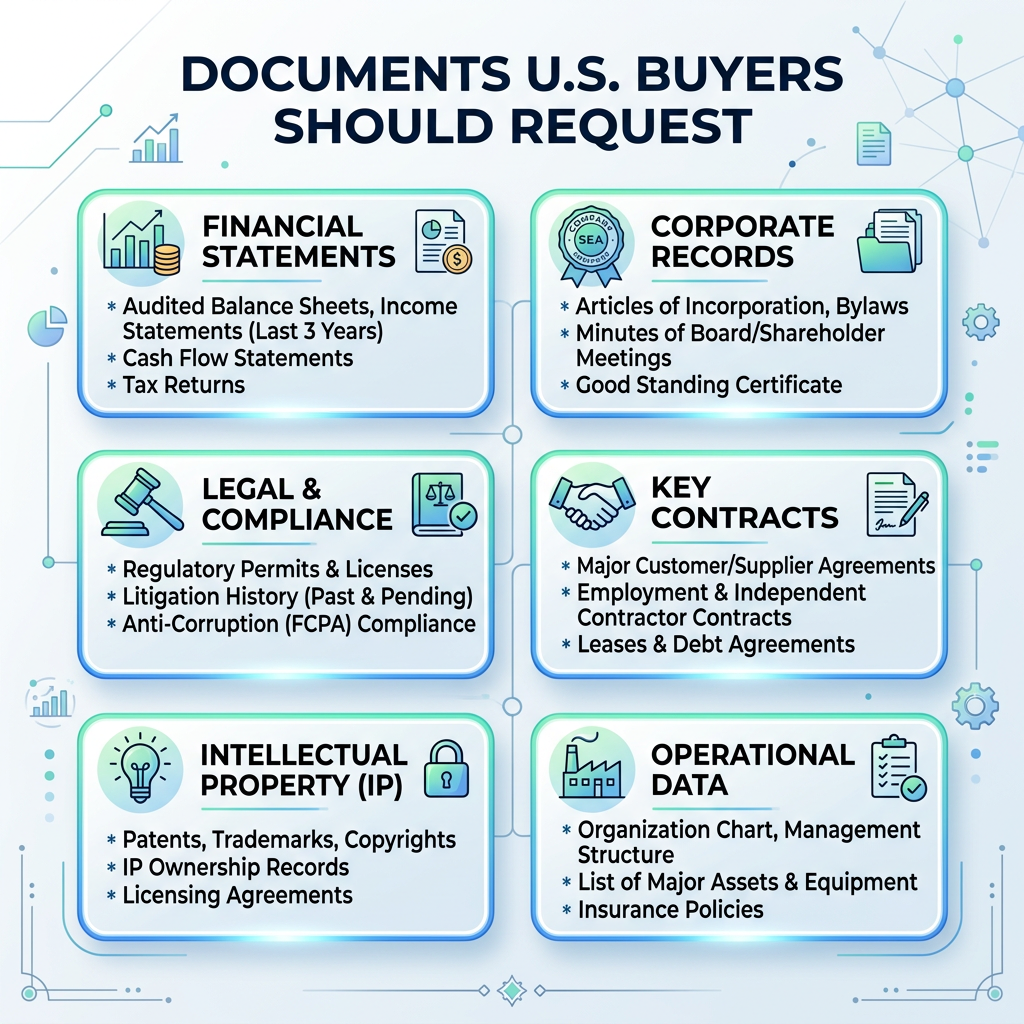
Before approving a packaging supplier, request a compliance file that connects the declaration to the actual finished construction and intended use. The file should be specific enough for the U.S. importer or brand owner to evaluate, maintain, and update.
Useful documentation includes
- Finished-structure specification: List each layer, material family, nominal thickness, adhesive, coating, ink system, spout, cap, and other fitment components.
- Food-contact declaration: State the intended U.S. food-contact use and identify the regulatory basis for relevant substances. The declaration should include limitations rather than implying unrestricted use.
- Conditions of use: Define the food categories, contact time, storage temperature, hot-fill or cold-fill conditions, freezing, pasteurization, retort, microwave, or other processing exposure.
- Raw-material and component evidence: Request supporting declarations or specifications for resins, films, adhesives, inks, coatings, and fitments where appropriate.
- Testing or evaluation reports: Ask for relevant migration, extraction, organoleptic, or finished-package testing when the risk assessment or customer specification calls for it.
- Manufacturing controls: Confirm lot identification, traceability, change control, curing controls for laminates, contamination prevention, and procedures for handling nonconforming material.
- Change-notification process: Establish how the supplier will communicate changes to raw materials, formulations, production sites, equipment, inks, adhesives, or fitments.
Documents should identify the legal entity and product scope to which they apply. A certificate issued for one film grade should not automatically be extended to a different laminate, print system, pouch size, or spout assembly. For product-specific examples, the baby food spout pouch buyer guide explains why product formulation, processing, and fitment selection should be reviewed together.
Match Testing and Validation to the Intended Use
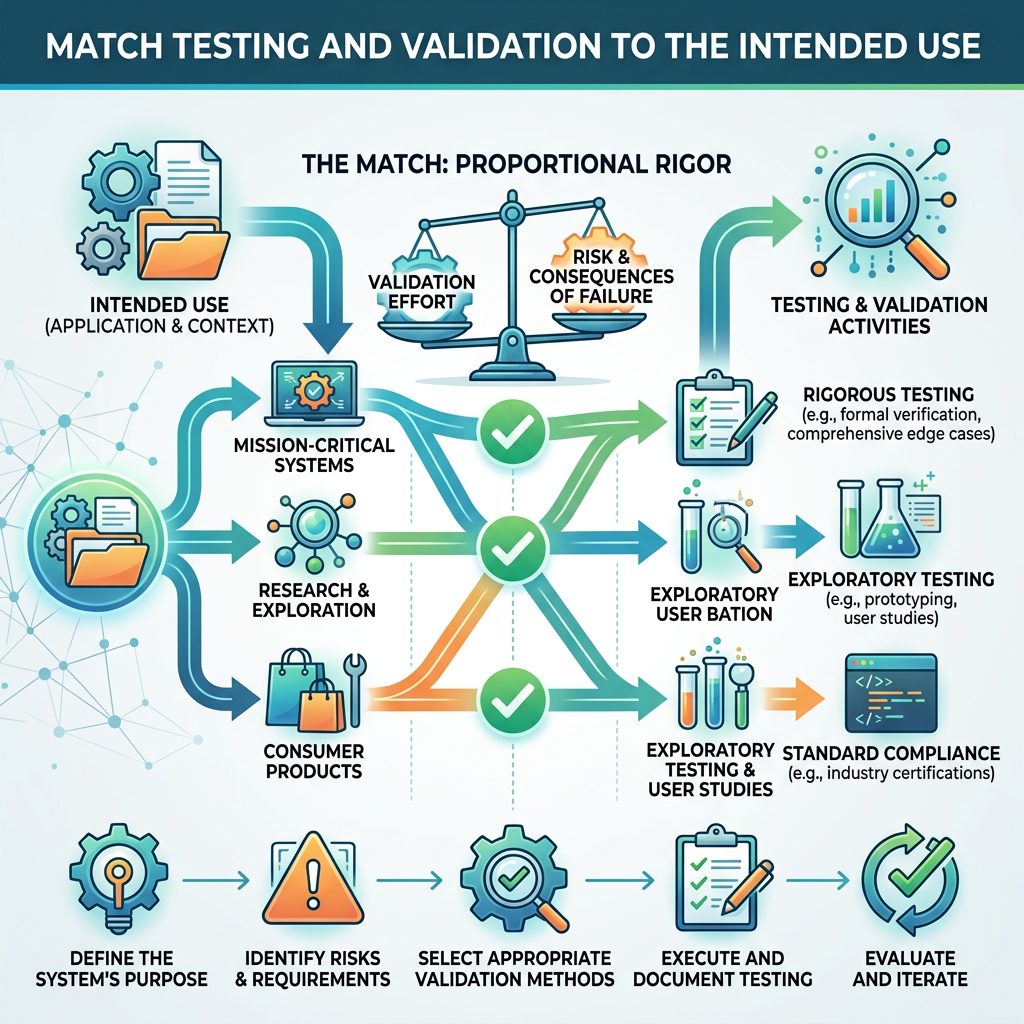
Testing does not replace a valid regulatory basis, but it can help demonstrate that the finished package is suitable for the proposed application. The testing plan should be based on the real product and process rather than a generic package description.
Define the use conditions first
- Food characteristics, such as aqueous, acidic, alcoholic, fatty, dry, particulate, or high-protein products.
- Contact time and storage temperature, including refrigerated, ambient, frozen, or elevated-temperature storage.
- Filling conditions, including cold fill, hot fill, aseptic processing, pasteurization, or retort.
- Package orientation and contact area, including whether the spout, cap, or closure is exposed to the food.
- Distribution stresses, such as compression, vibration, drops, pressure changes, and extended warehouse storage.
Depending on the risk assessment and customer requirements, evaluation may include chemical migration or extraction testing, sensory or odor assessment, seal-strength testing, leak testing, burst testing, drop testing, dimensional checks, closure torque, and compatibility testing with the actual food. Heat-seal performance and laminate bond strength are particularly important for flexible packaging because a compliant material can still fail if the finished pouch is poorly sealed or processed outside its validated window.
Retort and hot-fill applications need special attention. Temperature exposure can affect polymer behavior, adhesive curing, seal integrity, dimensional stability, and migration. If the package will hold edible oil, sauce, beverage concentrate, or puree, specify the product and process clearly before the supplier recommends a structure. The guides for edible oil spout pouches and sauce spout pouch specifications provide examples of application-specific questions.