Table of Contents
- What Is a Hot Fill Spout Pouch?
- How to Select Film for Hot Filling
- How Seal Design Affects Package Integrity
- Spout Fitment and Filling Considerations
- Validation Tests Before Commercial Production
- Hot Fill Spout Pouch RFQ Checklist
A hot fill spout pouch must be designed as a complete packaging system. Film structure, sealant layer, spout fitment, filling temperature, headspace, cooling, and distribution testing all affect package integrity.
What Is a Hot Fill Spout Pouch?
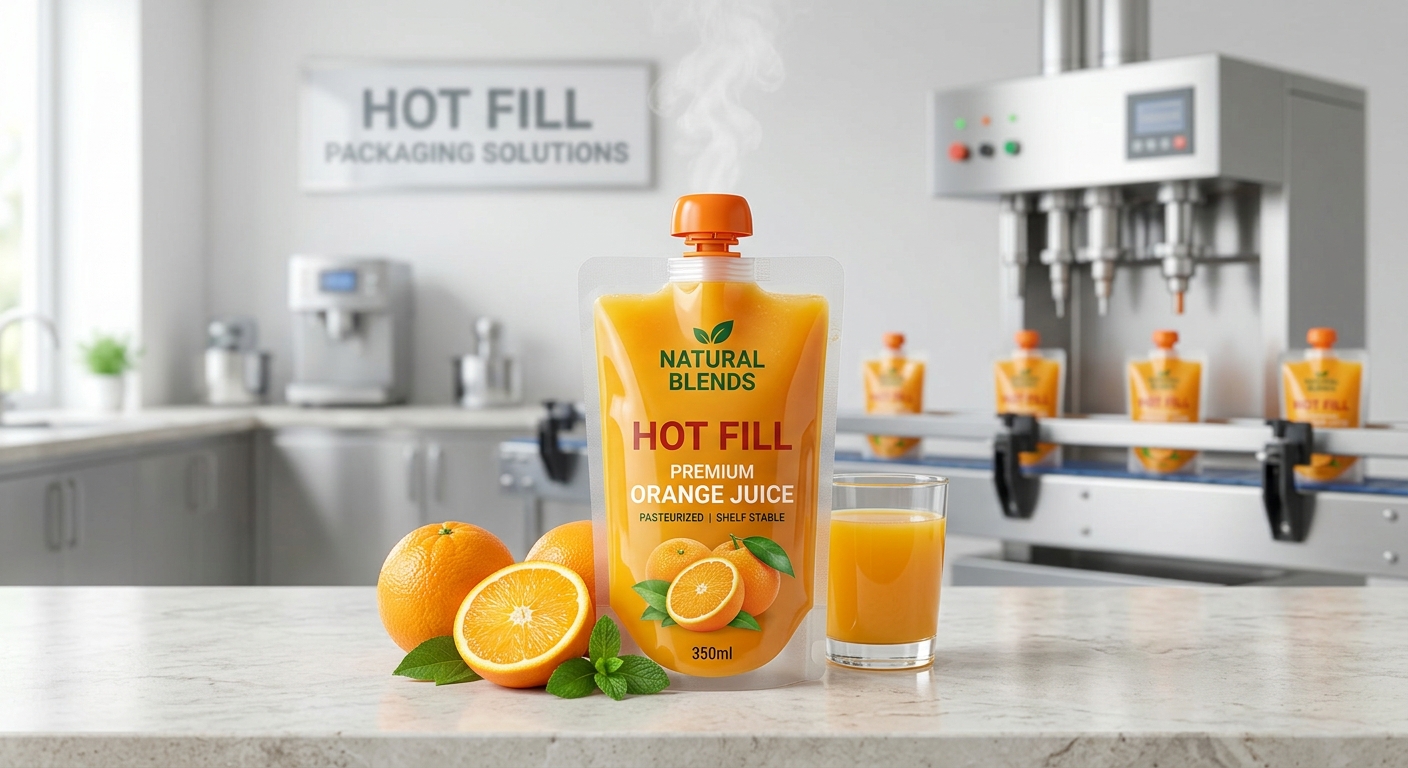
A hot fill spout pouch is a flexible pouch and fitment system designed to receive a product while it is filled at an elevated temperature. The filling process may support product preservation or process efficiency, but the packaging must tolerate the actual product temperature, contact time, cooling cycle, pressure changes, and distribution conditions. A pouch should not be classified as hot-fill capable based only on its appearance or nominal film thickness.
The package includes several interacting components: the printed outer web, one or more structural or barrier layers, the heat-sealant layer, the spout, the cap or closure, and the seals joining the pouch to the fitment. A suitable specification therefore starts with the product and filling process rather than with a standard laminate selected from a catalog.
Typical applications may include sauces, fruit preparations, beverage bases, liquid foods, and other products that are filled warm or hot. The correct structure depends on product chemistry, viscosity, acidity, oil content, solids, storage conditions, expected shelf life, and filling equipment. The required process should be confirmed through trials and documented testing.
For products intended for food contact in the United States, buyers should also establish an appropriate regulatory basis for each material and adhesive layer. See this guide to food-contact packaging requirements for U.S. imports when preparing supplier documentation.
How to Select Film for Hot Filling
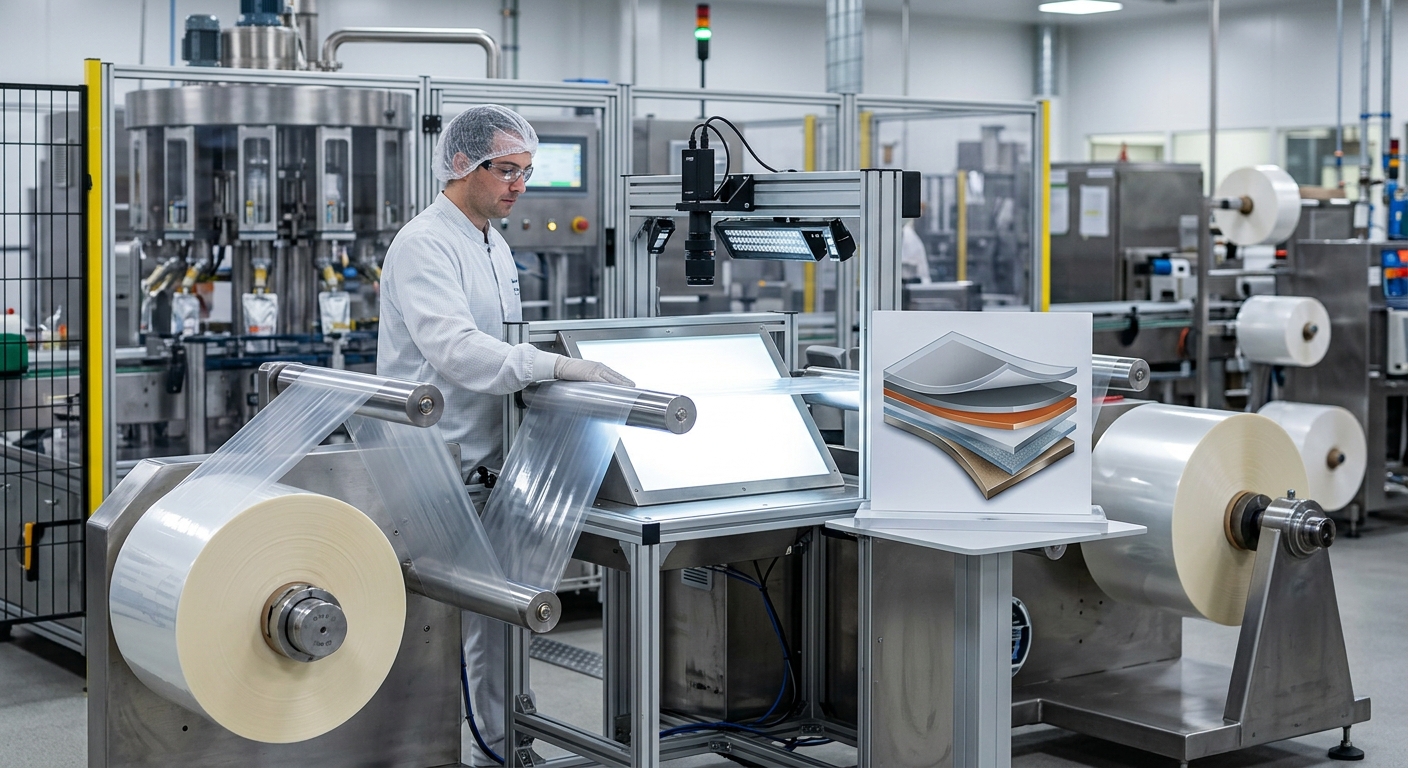
Film selection for a hot fill spout pouch is a balance between thermal resistance, seal performance, barrier needs, flexibility, print quality, and compatibility with the product. A multilayer laminate is often evaluated by function: the outer layer provides printability and handling strength, the middle layer may provide stiffness or barrier, and the inner layer forms the product-contact surface and heat seal.
Start with the product and process window
Give the packaging supplier the target fill temperature, maximum temperature, filling duration, product pH if relevant, viscosity, fat or oil content, particulate size, expected storage temperature, and whether the pouch will be hot-filled and then cooled immediately. Also identify whether the package will be filled upright, through the spout, or through another opening before spout insertion.
“Hot fill” is not one universal condition. A product filled at one temperature for a short contact time can place different demands on the sealant than a product filled at a higher temperature, held for longer, or exposed to a rapid cooling cycle. The supplier should review the complete process window, including line variation and the temperature of the pouch at the time of sealing.
Evaluate each layer by its job
- Outer layer: should support printing, abrasion resistance, and pouch handling during filling and distribution.
- Structural layer: may contribute stiffness, puncture resistance, dimensional stability, or barrier performance.
- Barrier layer: is selected according to oxygen, moisture, light, aroma, or other product protection requirements. Barrier choice should be based on shelf-life targets and test data.
- Sealant layer: must provide a reliable seal at the available machine settings and remain compatible with the product and filling temperature.
- Adhesive system: must be suitable for the selected laminate and intended process, with adequate curing time before filling.
Do not select film solely by total gauge. A thicker structure is not automatically a better hot-fill structure. Layer chemistry, sealant behavior, laminate construction, pouch geometry, and process control are equally important. For a broader review of laminate families and tradeoffs, consult the spout pouch material structures buyer guide.
How Seal Design Affects Package Integrity

In a hot fill spout pouch, seal integrity depends on more than seal strength measured under ideal laboratory conditions. The seal must remain continuous and clean when exposed to product, heat, pressure, handling, and cooling. Contamination in the seal area, uneven jaw pressure, wrinkles, insufficient dwell time, excessive temperature, or poor pouch alignment can create weak points.
Key seal areas to review
- Perimeter seals: define the pouch body and must be wide and consistent enough for the selected material and equipment.
- Spout-to-pouch seal: joins the fitment flange to the inner web and is often a critical area for leak resistance.
- Corner and gusset transitions: may experience different pressure and material stacking than flat seal sections.
- Cap and closure interface: should be assessed for fit, torque, tamper evidence if required, and leakage during handling.
Seal windows should be established on the intended production equipment. The trial should examine seal temperature, pressure, dwell time, line speed, cooling, and product contamination. A wide process window is useful because commercial lines experience normal variation, but the acceptable range must be defined through testing rather than assumed.
Hot filling can also affect pouch shape. Thermal contraction, trapped air, product expansion, and cooling may place stress on the seals or fitment. The fill level and headspace should therefore be specified alongside the film and seal design. Pouches that look acceptable immediately after filling may behave differently after cooling, stacking, or transport.
Spout Fitment and Filling Considerations
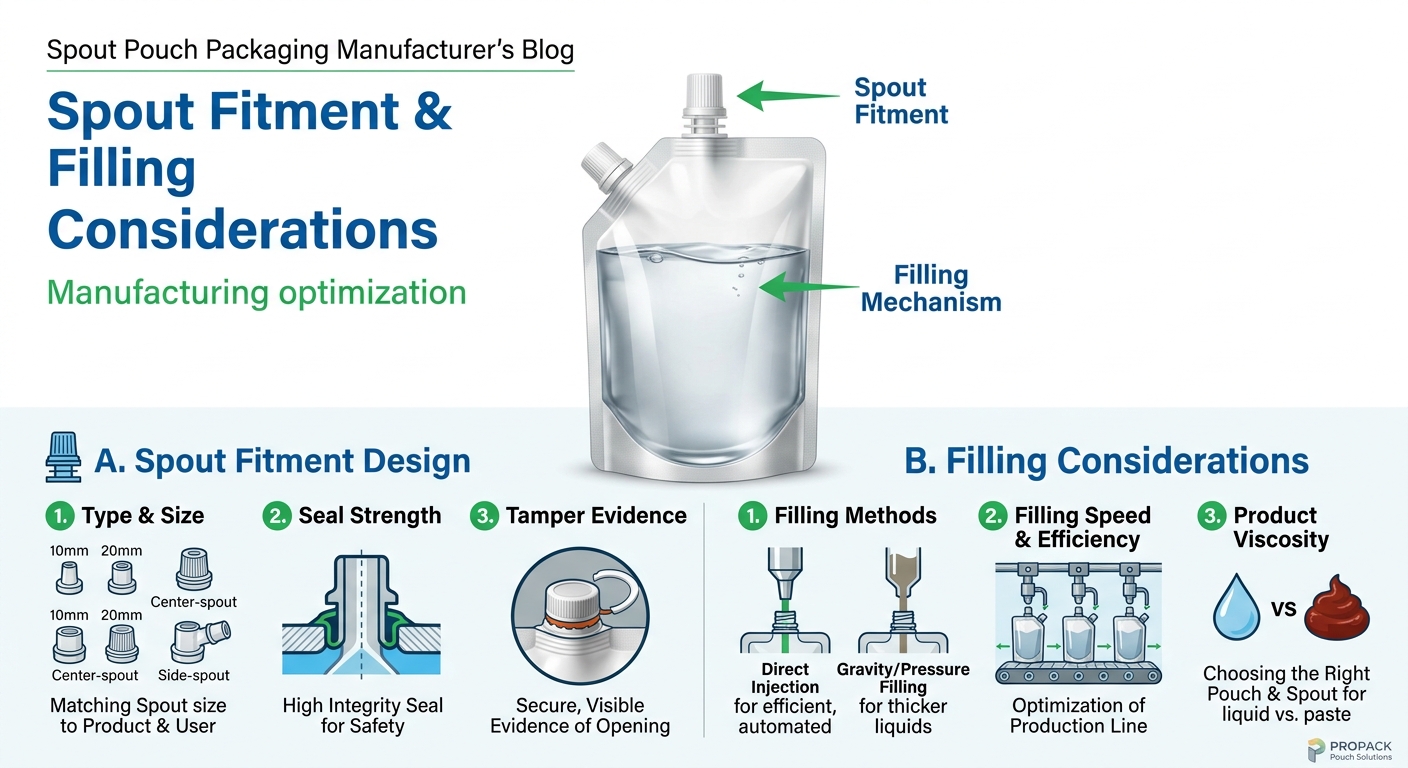
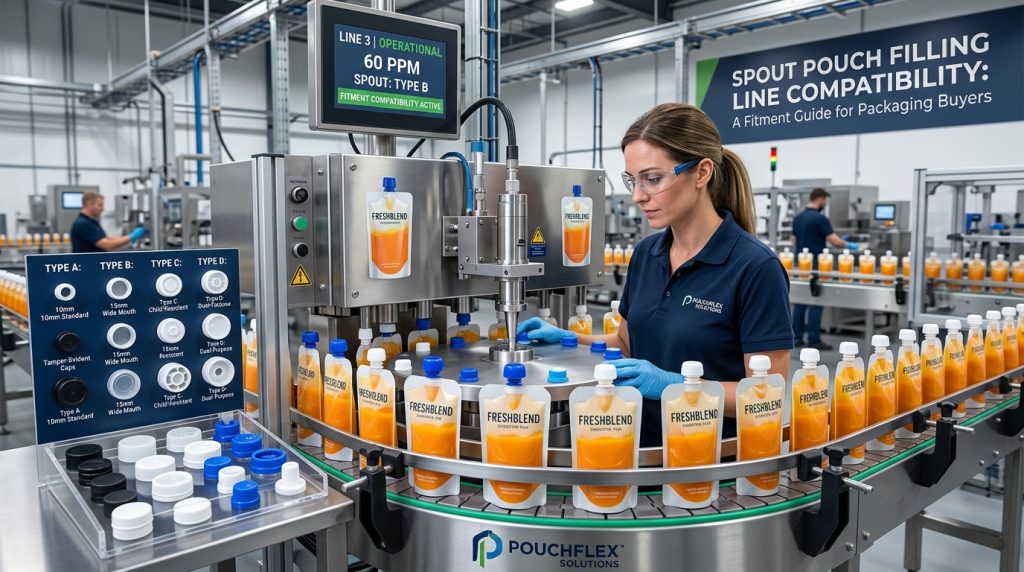
The spout is part of the thermal and mechanical package system. Fitment material, flange geometry, spout position, opening diameter, cap design, and sealing method should match the pouch, product, and filling line. A fitment that works for a cool liquid may require a different evaluation when exposed to hot product or repeated temperature changes.
Confirm the following details before sampling:
- spout location, such as top, corner, or center;
- neck and opening dimensions;
- cap type and closure torque requirements;
- fitment resin and product-contact requirements;
- flange dimensions and compatibility with the pouch sealing jaws;
- filling nozzle clearance and target fill rate;
- required headspace and maximum fill weight;
- cleaning method for product on the fitment or seal area.
For thicker products or products containing particles, the opening diameter and nozzle design can affect filling speed and splashing. For low-viscosity products, closure fit and seal cleanliness may receive greater attention. The actual product should be used for line trials whenever possible because water or a substitute may not reproduce viscosity, solids, surface tension, or contamination behavior.
If a carrying feature is required, review the separate structural and handling demands of a with-handle spout pouch specification. If the package has a non-rectangular profile, use the customized shaped spout pouch design guide to identify additional seal and filling considerations.
Validation Tests Before Commercial Production
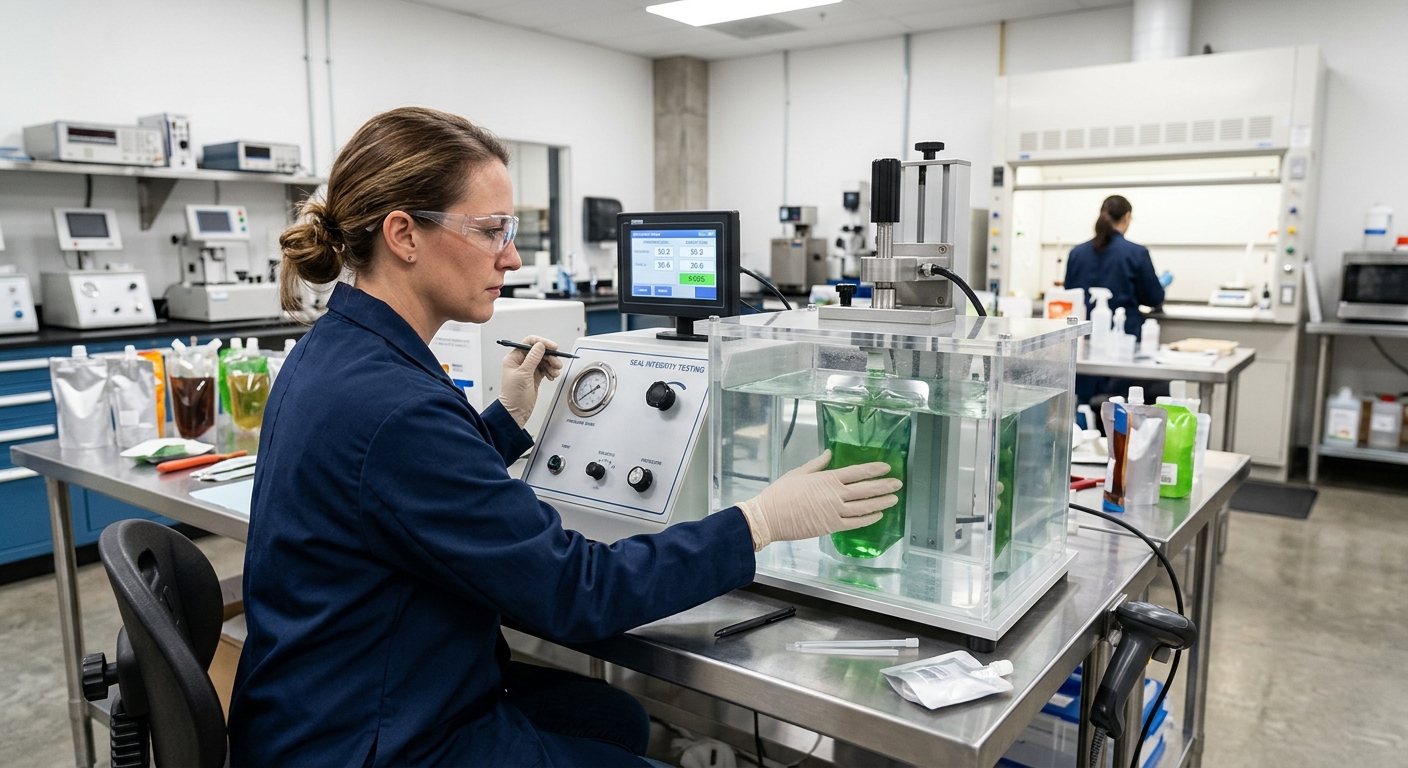
Validation should reproduce the intended product, fill temperature, filling equipment, pouch orientation, cooling method, storage conditions, and distribution handling. A supplier sample made with a different process can help evaluate appearance and fit, but it does not replace a production-representative trial.
A practical validation plan may include:
- Visual inspection: check print, wrinkles, delamination, fitment alignment, seal continuity, and pouch shape.
- Seal inspection: examine seal width, channel leaks, contamination, and seal strength using an agreed method.
- Leak or pressure testing: assess finished pouches after filling and cooling, with test conditions documented.
- Drop and compression testing: simulate relevant handling, stacking, and distribution stresses.
- Storage evaluation: observe package and product condition at the intended storage temperature and duration.
- Product compatibility testing: check for swelling, odor transfer, discoloration, delamination, embrittlement, or changes in closure performance.
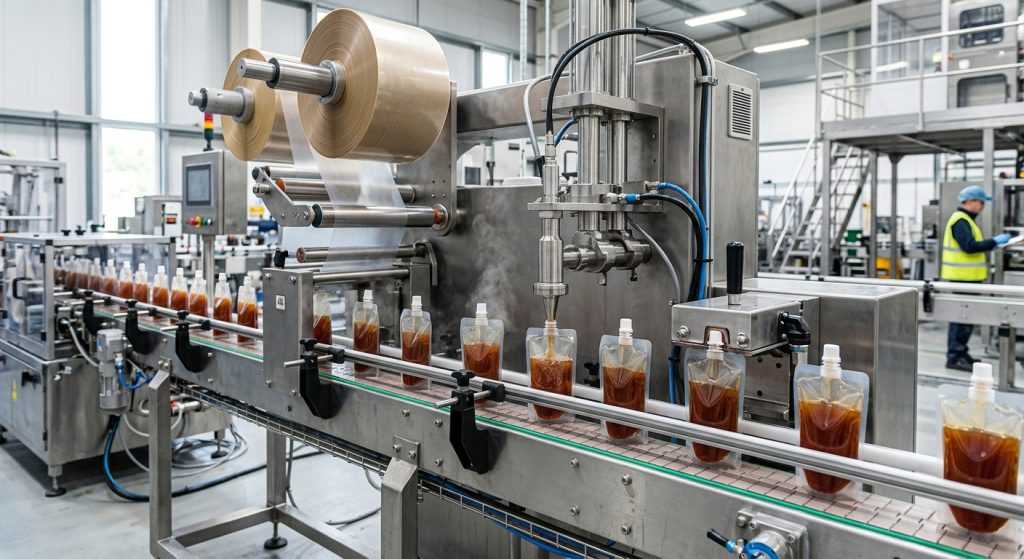
- Filling-line evaluation: record speed, temperature, seal settings, rejects, nozzle performance, and operator adjustments.
Acceptance criteria should be agreed before the trial. Shelf-life testing should measure both product quality and package integrity over the intended period. The spout pouch shelf-life testing buyer guide provides a framework for defining samples, conditions, observations, and records.
Do not treat a single successful sample as proof of production robustness. Repeat trials may be needed across normal operating limits, different fill levels, and relevant shipping conditions.
Hot Fill Spout Pouch RFQ Checklist
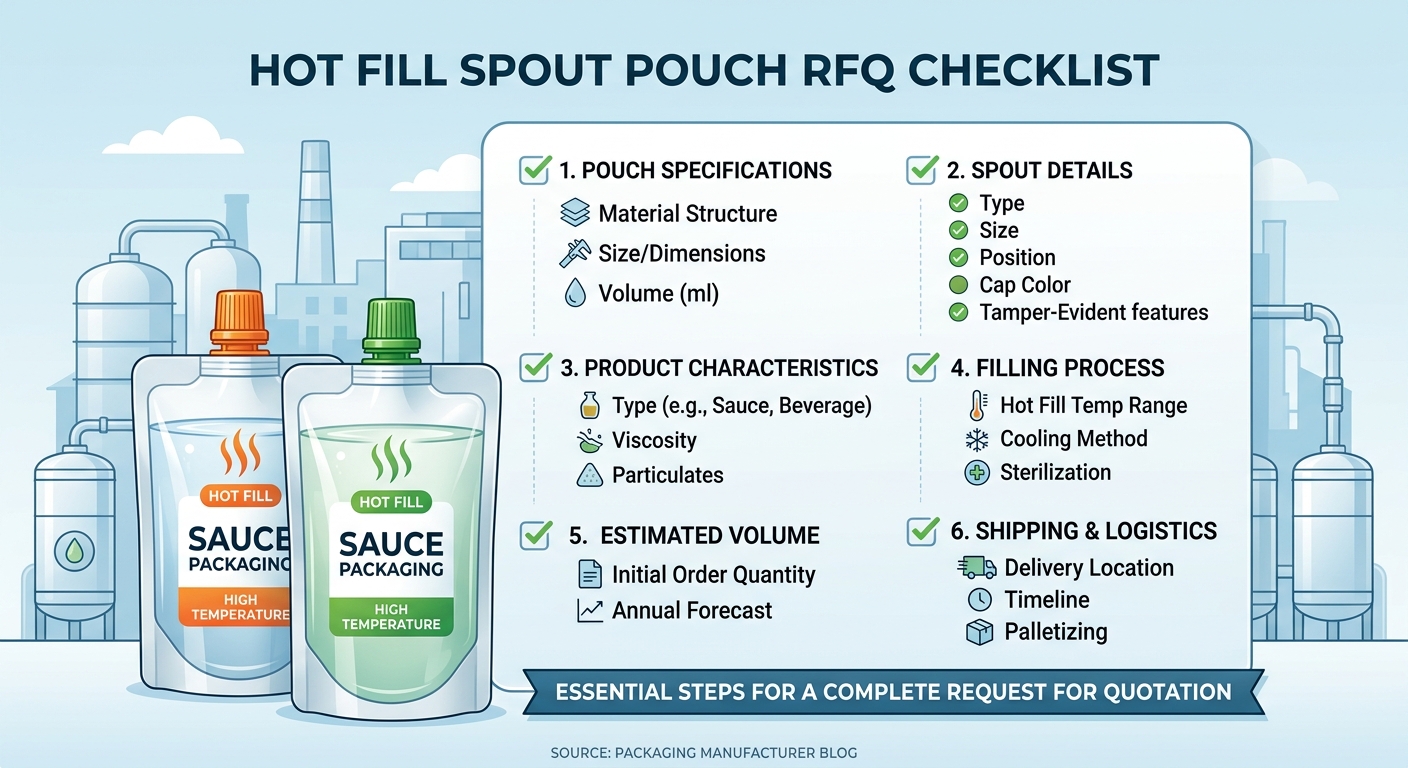
A complete RFQ helps a packaging manufacturer recommend a structure and identify process risks before sampling. Include:
- Product name, formulation category, viscosity, pH, oil content, solids, and known compatibility concerns.
- Target fill temperature, maximum temperature, contact time, cooling process, and expected storage conditions.
- Nominal fill volume or weight, pouch dimensions, fill level, headspace, and orientation.
- Spout position, opening size, cap requirements, fitment color, and tamper-evidence needs.
- Required barrier performance, shelf-life target, transparency or opacity, finish, and artwork specifications.
- Filling machine details, sealing method, line speed, nozzle dimensions, and available process settings.
- Expected annual volume, order quantity, delivery location, sampling requirements, and testing protocol.
- Food-contact or other regulatory documentation required for the destination market.
Buyers should request a written specification identifying the proposed laminate, sealant, fitment, dimensions, tolerances, printing method, and test plan. A documented change-control process is also useful because changes to film, adhesive, fitment, ink, or sealing conditions may require renewed validation. For a broader purchasing checklist, see the spout pouch RFQ checklist for packaging buyers.
The best hot-fill pouch specification is not simply the thickest or most heavily layered option. It is the structure and fitment combination that has been matched to the product, process, shelf-life objective, equipment, and distribution conditions through representative testing.