Table of Contents
- What Spout Pouch Shelf-Life Testing Evaluates
- Why the Filled Package Matters
- Define the Shelf-Life Test Objective
- Select the Pouch Structure and Spout
- Build a Practical Test Program
- Package Integrity and Performance Checks
- Interpreting Results and Setting Shelf Life
- Buyer Information for a Quote and Validation
Spout pouch shelf-life testing evaluates whether the packaged product and pouch system maintain required quality, safety, integrity, and usability throughout the intended storage and distribution period. Buyers should test the filled product in the final pouch structure, spout fitment, closure, and seal configuration under defined real-time and, where appropriate, accelerated conditions.
What Spout Pouch Shelf-Life Testing Evaluates
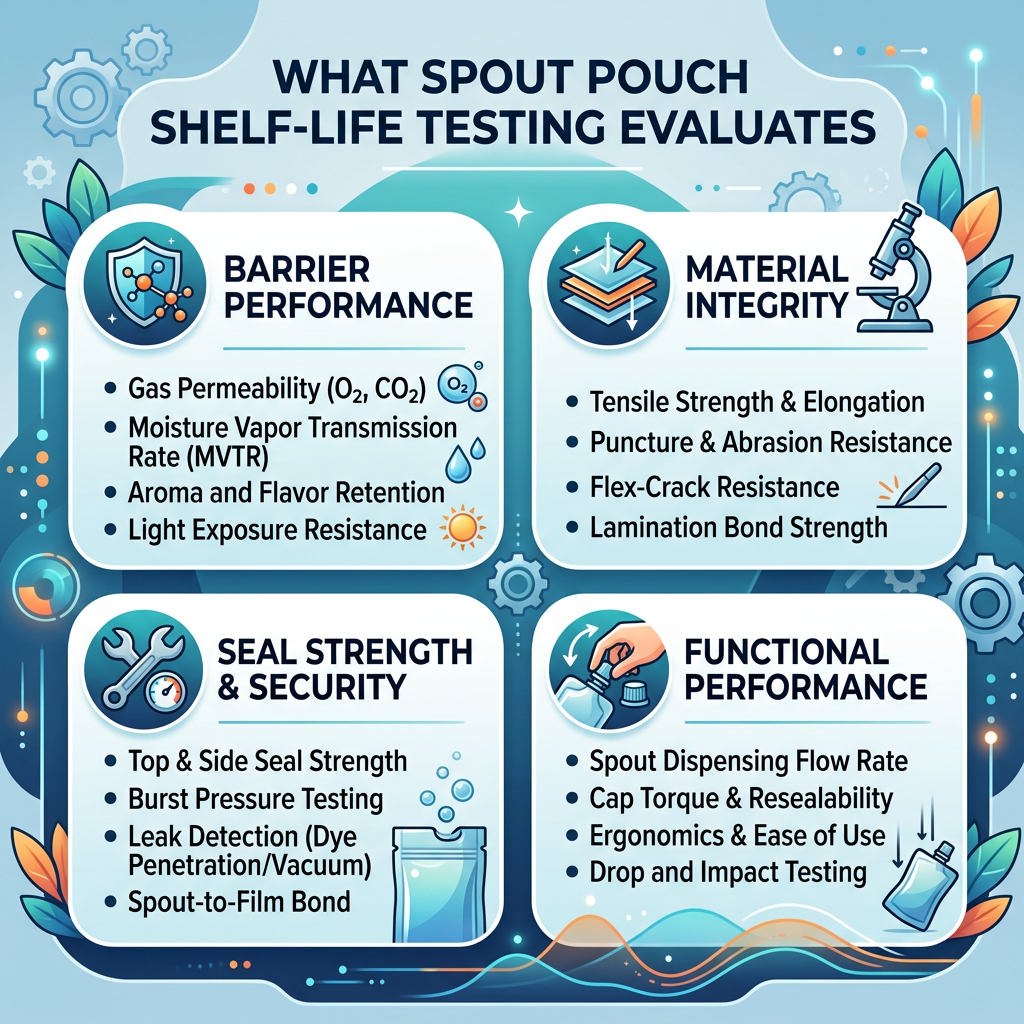
Spout pouch shelf-life testing evaluates whether a filled pouch system continues to protect the product and function as intended throughout the proposed storage period. The assessment should cover the product, laminate, seals, spout fitment, cap or closure, filling process, and distribution conditions as one package system. A pouch that looks acceptable in an empty-package inspection may perform differently after filling, thermal processing, stacking, transport, or prolonged contact with the product.
For B2B buyers, the objective is not simply to obtain a single laboratory result. The objective is to establish documented evidence for a proposed shelf life under defined conditions. The final shelf-life decision may also require product-quality, food-safety, regulatory, or customer-specific review that sits outside the packaging supplier’s scope.
Testing should therefore answer four practical questions:
- Does the product remain within its required quality and safety specifications?
- Does the pouch maintain barrier performance and package integrity?
- Does the spout and closure remain compatible, leak-resistant, and usable?
- Can the filled package withstand the intended filling, storage, handling, and distribution process?
Why the Filled Package Matters

Shelf life depends on interactions between the packaged product and the packaging materials. Product chemistry, water activity, acidity, oil content, alcohol content, solvents, particulates, viscosity, and sensitivity to oxygen or light can all affect the required package design. The filling temperature and any treatment such as hot filling, pasteurization, retort processing, or aseptic filling can create additional stresses.
The filled pouch should be produced using the intended production method or a representative process. This includes the actual pouch dimensions, laminate construction, spout material and geometry, cap, seal settings, fill volume, headspace, and closure application. Laboratory coupons or an empty pouch may help with material screening, but they cannot replace testing of the finished package when the spout and seals are part of the risk profile.
For products requiring thermal processing, define the process before selecting the test conditions. Buyers specifying retort formats can review this retort spout pouch specification guide. For hot-filled products, the filling temperature, hold time, cooling method, and package orientation should be recorded because these factors can influence seal and fitment performance.
Define the Shelf-Life Test Objective

Before requesting samples or a quotation, document what the proposed shelf life means for the product. State the target duration, storage temperature range, expected humidity exposure, distribution route, and whether the package will be refrigerated, frozen, ambient, or exposed to temperature cycling. Also define the acceptance criteria for the product and package.
Product acceptance criteria may include appearance, color, aroma, flavor, viscosity, pH, water activity, phase separation, oxidation indicators, microbiological limits, or other product-specific measures. Packaging criteria may include leakage, seal opening, delamination, swelling, distortion, cap fit, spout blockage, print damage, odor transfer, and changes in barrier-related performance.
Make a distinction between real-time and accelerated testing. Real-time testing stores the package under the intended conditions for the proposed duration and provides the most direct evidence for that condition. Accelerated testing uses more severe conditions to obtain earlier information about likely failure modes. It can support development decisions, but it should not automatically be treated as proof that a package will achieve a specific shelf life. The relationship between accelerated and real-time behavior must be justified for the product and package system.
Select the Pouch Structure and Spout
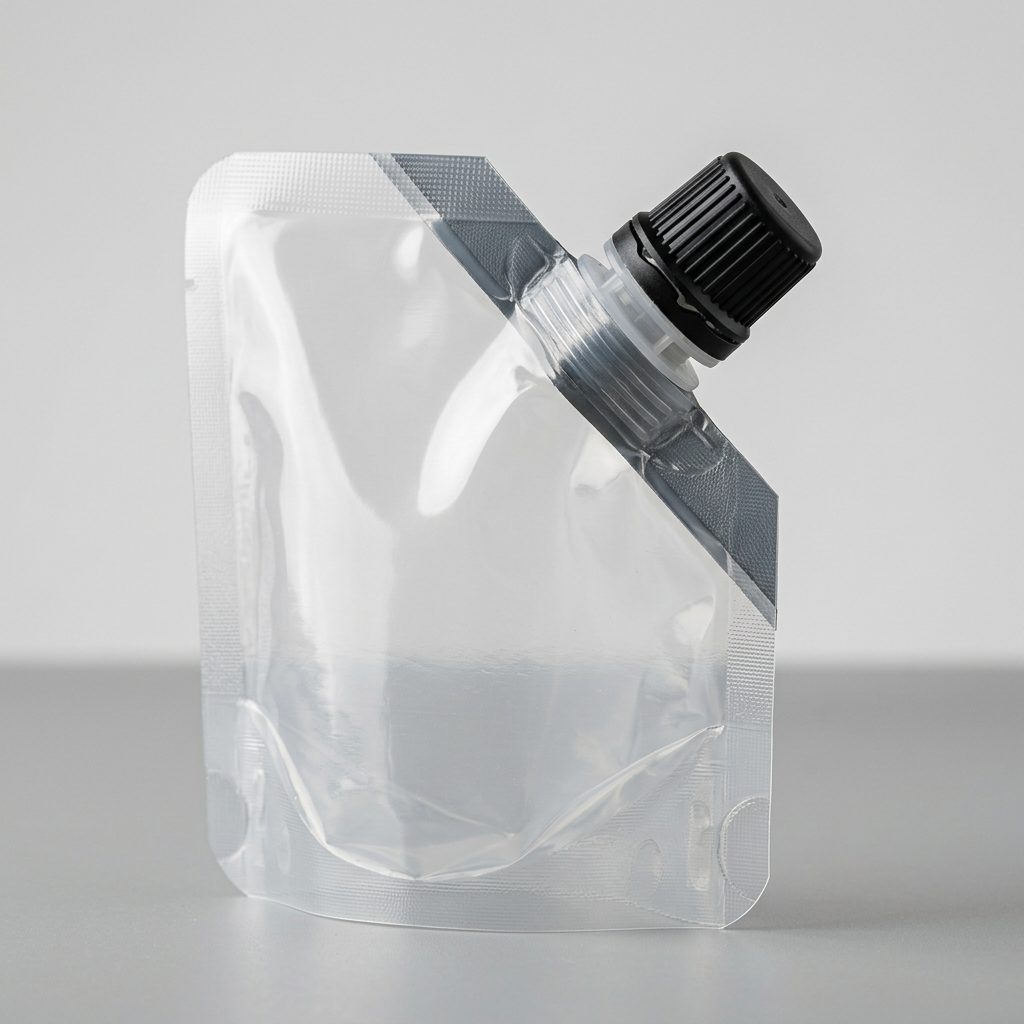
The test program is only meaningful when the pouch construction matches the intended application. A typical specification should identify the product, target fill volume, pouch dimensions, laminate layers, thickness or basis weight, sealant layer, spout material, spout diameter, cap type, fitment location, and closure requirements. The exact structure depends on the product and process; buyers should not select a laminate from a generic barrier label alone.
Consider the main transmission risks. Oxygen-sensitive products may require an oxygen barrier, while moisture-sensitive products may require a suitable moisture barrier. Light-sensitive products may need an opaque or light-blocking construction. Oils, acidic products, solvents, and aggressive cleaning formulations can interact with sealant layers, adhesives, inks, or fitment materials. Compatibility must be assessed against the actual formulation and exposure time.
Mechanical design is equally important. The pouch must tolerate filling, sealing, case packing, stacking, transport, and consumer handling. Spout placement affects filling access, product evacuation, and stress around the fitment. Cap torque, tamper evidence, opening force, and reclosure expectations should be defined before testing. Buyers can use the spout pouch filling machine compatibility guide to organize equipment and filling inputs.
Application-specific process conditions should be included in the initial brief. For example, a frozen product may require a structure and seal system that tolerates freezer storage and handling; the frozen food pouch material and seal guide provides related selection considerations.
Build a Practical Test Program

A practical program normally combines product testing, package testing, and process or distribution simulation. The exact test list should be agreed by the brand owner, product specialist, packaging supplier, and any required laboratory or regulatory reviewer.
- Baseline inspection: Record the product condition and inspect filled pouches before storage. Capture fill weight, dimensions, seal appearance, spout and cap condition, closure application, and any initial leaks or defects.
- Storage exposure: Store samples at the intended temperature and humidity where these are relevant. Include a defined sampling schedule that covers the start, intermediate points, and proposed end of shelf life.
- Product evaluation: Test the product against the agreed quality and safety criteria at each interval. The responsible product or quality team should determine the appropriate analytical methods.
- Package evaluation: Inspect seals, fitments, closures, laminate appearance, print, delamination, swelling, odor, leakage, and other relevant failure modes.
- Distribution simulation: Where appropriate, evaluate filled pouches after vibration, compression, drops, handling, or temperature cycling that represent the actual distribution environment.
- Opening and use checks: Assess cap removal, spout flow, product evacuation, reclosure, and leakage after opening if the product is intended for multiple uses.
Sample quantity should be based on the test matrix, number of storage conditions, planned intervals, destructive tests, repeats, and contingency samples. There is no universal sample count that is suitable for every product or claim. A documented sampling plan is more useful than a nominal number selected without reference to the failure risks.
Package Integrity and Performance Checks

Package integrity checks should cover the whole pouch, not only the main heat seals. Inspect the perimeter seals, fitment-to-film seal, spout body, cap or valve, corners, creases, and any areas exposed to repeated handling. A pouch can retain product during a short visual inspection while still having a weak seal, a small channel leak, or a closure problem that appears after storage or distribution stress.
Common evaluation categories include visual inspection, leak detection, seal strength, burst or pressure resistance, dimensional change, fitment retention, cap torque, opening force, and package compression. The selected methods and acceptance limits should be documented before testing begins. Test results should identify the package location and failure mode rather than recording only pass or fail.
Barrier-related checks may include oxygen transmission, water vapor transmission, or light protection, depending on the product sensitivity and package design. These measurements should be interpreted alongside product results. A barrier value by itself does not establish shelf life, because shelf life also depends on initial product condition, headspace, fill process, storage conditions, and the product’s tolerance for change.
For products filled under specialized conditions, process validation and packaging validation should remain connected. Aseptic products, for example, require a validated aseptic process in addition to a suitable pouch system. Buyers can review the aseptic spout pouch packaging guide when defining those inputs.
Interpreting Results and Setting Shelf Life
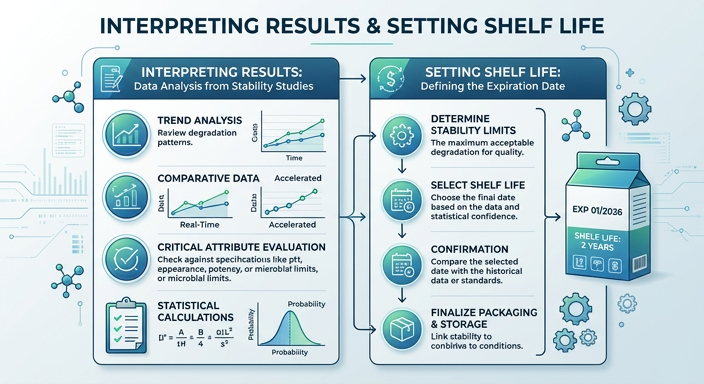
Results should be reviewed against pre-established acceptance criteria and the intended use conditions. Look for trends as well as individual failures. Gradual changes in color, viscosity, seal strength, cap torque, odor, or package dimensions may be important even when a sample has not yet failed an absolute limit.
A shelf-life conclusion should state the product version, pouch construction, spout and cap specification, fill process, storage conditions, test intervals, analytical methods, sample plan, and acceptance criteria. It should also identify any limitations. For example, a result from one formulation, fill volume, or storage condition should not automatically be applied to a different formulation or package size.
When results are outside specification, investigate the failure mode before changing the proposed shelf life. Possible actions include reviewing the laminate, sealant, adhesive, fitment, closure, seal settings, headspace, filling temperature, product formulation, or distribution conditions. Retesting a changed package should use a new controlled sample set and a documented rationale.
Packaging suppliers can support structure selection, fitment options, sample production, and package test data. The product owner remains responsible for confirming product quality, safety, labeling, and market-specific requirements. This division of responsibility should be clear in the validation plan.
Buyer Information for a Quote and Validation

Provide complete technical information at the start of supplier discussions. This helps the packaging manufacturer recommend a realistic sample structure and identify compatibility or process questions before production.
- Product name, formulation category, viscosity, pH, oil or solvent content, particulates, and sensitivity to oxygen, moisture, light, or temperature.
- Target fill volume, pouch dimensions, headspace, orientation, and expected use after opening.
- Filling method, equipment, fill speed, fill temperature, sealing temperature, dwell time, pressure, and any thermal treatment.
- Storage and distribution conditions, including refrigeration, freezing, ambient storage, humidity, stacking, and expected transport handling.
- Spout diameter, material preference, cap type, closure requirements, opening force, reclosure expectations, and fitment position.
- Required shelf-life duration, market destination, product acceptance limits, packaging acceptance limits, and documentation needs.
- Artwork status, sample quantity, target annual volume, MOQ expectations, and the timing for testing and commercial production.
HUACANG Packaging has manufactured flexible packaging in Guangzhou since 1998, including custom spout pouches, laminated bags, roll film, and bag-in-box packaging for international B2B buyers. A clear technical brief allows the supplier conversation to focus on the pouch structure, fitment, process conditions, testing plan, and required documentation.