Table of Contents
- What Spout Pouch Chemical Compatibility Means
- Chemical Risks to Screen Before Selecting a Pouch
- Component Compatibility Comparison
- A Step-by-Step Compatibility Testing Workflow
- Failure Modes and What They Indicate
- How to Write a Buyer Validation Specification
- Conclusion
A practical buyer’s guide to evaluating spout pouch chemical compatibility, including formula screening, film and fitment selection, stress-cracking checks, migration testing, and production validation.
What Spout Pouch Chemical Compatibility Means
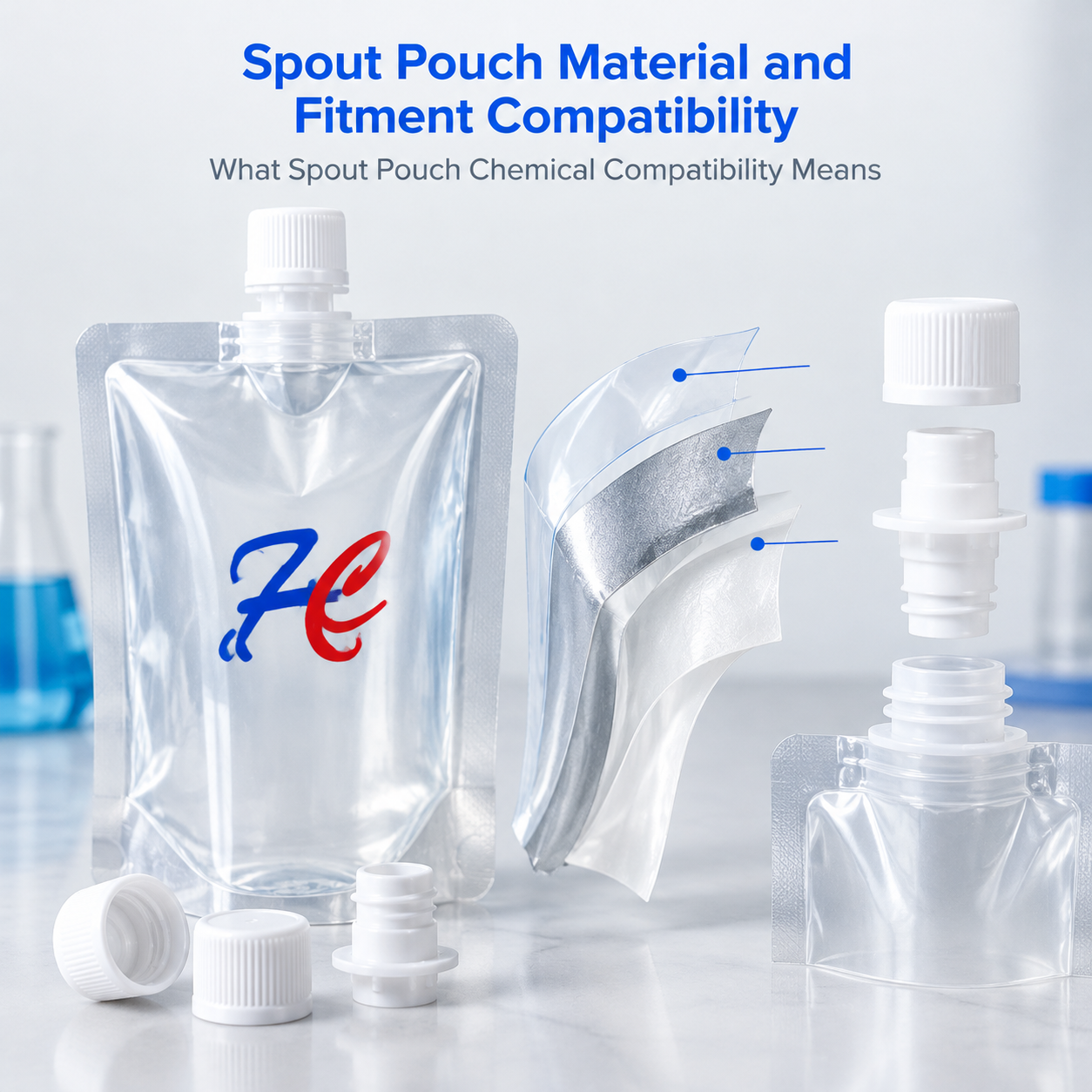
Spout pouch chemical compatibility is the documented process of confirming that a formula does not unacceptably change the pouch film, sealant, spout, cap, adhesive, ink, or package performance during the intended storage and use period. The assessment should use the actual liquid, proposed package construction, fitment, closure, filling process, temperature, and exposure time—not a generic claim that a polymer is “chemical resistant.”
Working definition
A compatible package keeps its required barrier, seal integrity, dimensions, appearance, dispensing function, and closure performance after contact with the product under defined conditions. Compatibility is application-specific: a pouch that works for a dilute detergent may not work for a concentrated solvent, oxidizer, fragrance-rich formula, or alkaline cleaner.
For a packaging buyer, the objective is to identify risk before a production run. Review the complete package system because the weakest component can determine the result. A chemically stable film does not compensate for a cap that swells, a spout that stress-cracks, or an adhesive layer that loses bond strength.
Key takeaways
- Test the finished pouch and fitment assembly with the final formula whenever possible.
- Screen surfactants, solvents, oils, fragrances, acids, alkalis, oxidizers, and preservatives separately because they can affect materials differently.
- Inspect both immediate changes and delayed changes after conditioning.
- Define pass/fail criteria before testing, including leakage, seal strength, torque, appearance, mass loss, and dispensing.
Chemical Risks to Screen Before Selecting a Pouch
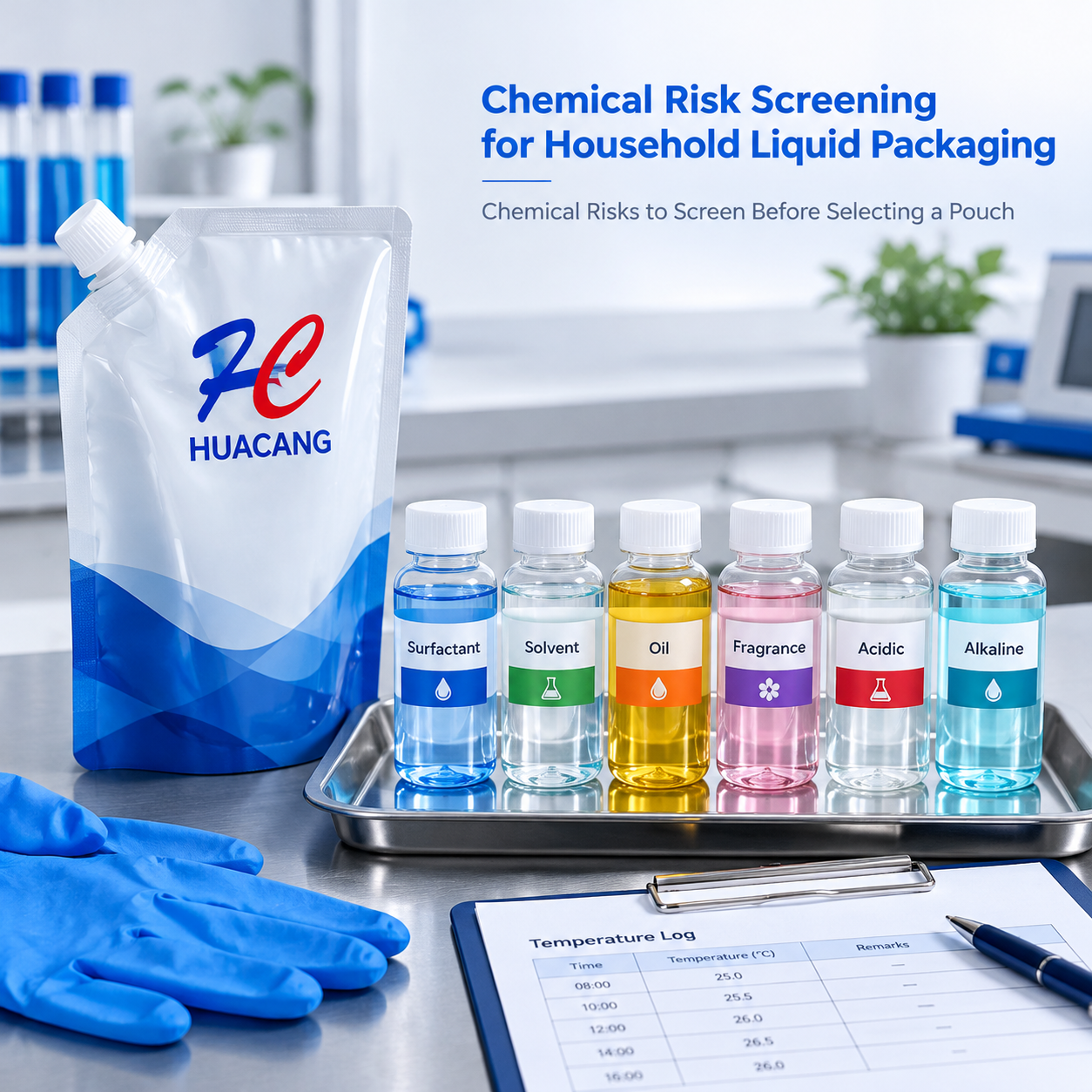
Start with the formula rather than the pouch artwork. Ask the product team for the full ingredient or chemical profile, concentration ranges, pH, density, viscosity, solvents, surfactants, oils, fragrances, preservatives, oxidizers, and any planned dilution. Also record fill temperature, maximum storage temperature, expected shelf life, headspace, orientation, transport conditions, and whether the consumer will squeeze, hang, pump, or repeatedly open the pouch.
Surfactants and detergents
Surfactants can wet seal areas, change surface appearance, and interact with sealant layers or fitment components. Concentrated detergent formulas deserve separate testing from ready-to-use dilutions. For detergent pouch compatibility, include filled samples stored upright and, where relevant, on their side so liquid contacts different seals and the cap interface.
Solvents, oils, and fragrances
Organic solvents, essential oils, perfume components, and some oil-based ingredients can cause swelling, softening, whitening, delamination, ink disturbance, or loss of mechanical strength. A laminate may appear acceptable on the outside while an internal tie layer or sealant is changing. Do not assess only the outer print surface.
Acidic, alkaline, and oxidizing formulas
pH alone is not a compatibility decision. Concentration, temperature, exposure time, buffers, salts, and oxidizing chemistry also matter. Alkaline cleaners and oxidizing products should be tested at the most demanding intended concentration and temperature. Keep incompatible test chemicals segregated and follow the product’s safety data sheet and laboratory procedures.
Mechanical and environmental stress
Chemical contact can combine with bending, squeezing, drop impact, internal pressure, heat, and residual stress from converting or fitment insertion. Plastic stress cracking may begin as fine lines near a spout, seal corner, notch, or sharply folded area. A package can pass a short static soak and still fail after repeated handling, so include realistic mechanical conditioning when the use case requires it.
For food, cosmetic, or other regulated applications, compatibility is only one part of the buyer file. Packaging migration testing and applicable market requirements should be assessed separately with the relevant compliance specialist. The U.S. FDA food-contact substances resources can help identify the regulatory framework for food-contact materials, but they do not establish compatibility for every household or industrial chemical.
Component Compatibility Comparison
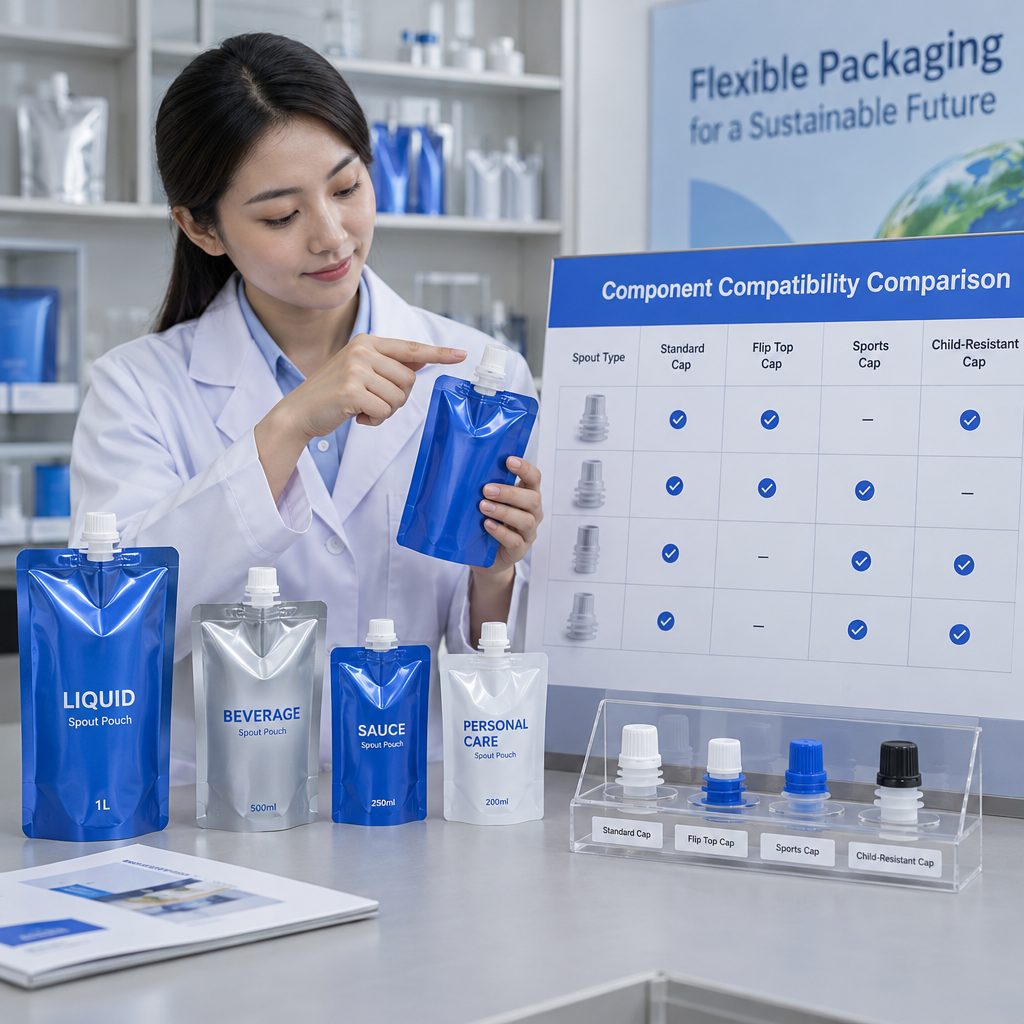
The table below is a screening framework for a chemical resistant pouch. It is not a substitute for formula-specific testing, because the same material family can perform differently depending on grade, thickness, laminate construction, additives, processing, and exposure conditions.
| Package component | Primary risks | What to inspect | Buyer decision |
|---|---|---|---|
| Outer film and print surface | Scuffing, whitening, ink attack, odor transfer, appearance change | Color, gloss, print adhesion, abrasion, odor, swelling | Confirm the outer layer and ink system tolerate handling and incidental contact. |
| Barrier or functional laminate | Delamination, pinholes, loss of barrier, layer separation | Bond condition, visual separation, mass or dimensional change, relevant barrier testing | Match the barrier to formula sensitivity and required shelf life. |
| Inner sealant layer | Softening, embrittlement, seal creep, seal contamination sensitivity | Seal strength, leak rate, elongation, appearance after contact | Approve the sealant with the actual formula and sealing process. |
| Spout and fitment | Swelling, brittleness, cracking, dimensional change, blocked flow | Threads, flange, weld area, orifice, torque, dispensing | Test the selected fitment resin and geometry as an assembly. |
| Cap and liner | Stress cracking, loss of torque, leakage, odor or color change | Opening torque, reclosure, cap fit, liner condition, leaks | Check repeated open-close cycles when the package is reusable. |
| Adhesives and tie layers | Loss of bond, migration, odor, channel formation | Peel or bond condition, delamination, odor, visual channels | Request structure and adhesive details for technical review. |
For large refill formats, a with-handle spout pouch may improve carrying and pouring, but the handle area adds another mechanical feature to validate. For premium or shaped formats, a customized shaped spout pouch introduces additional corners and seal geometry that should be included in chemical and drop testing.
A Step-by-Step Compatibility Testing Workflow
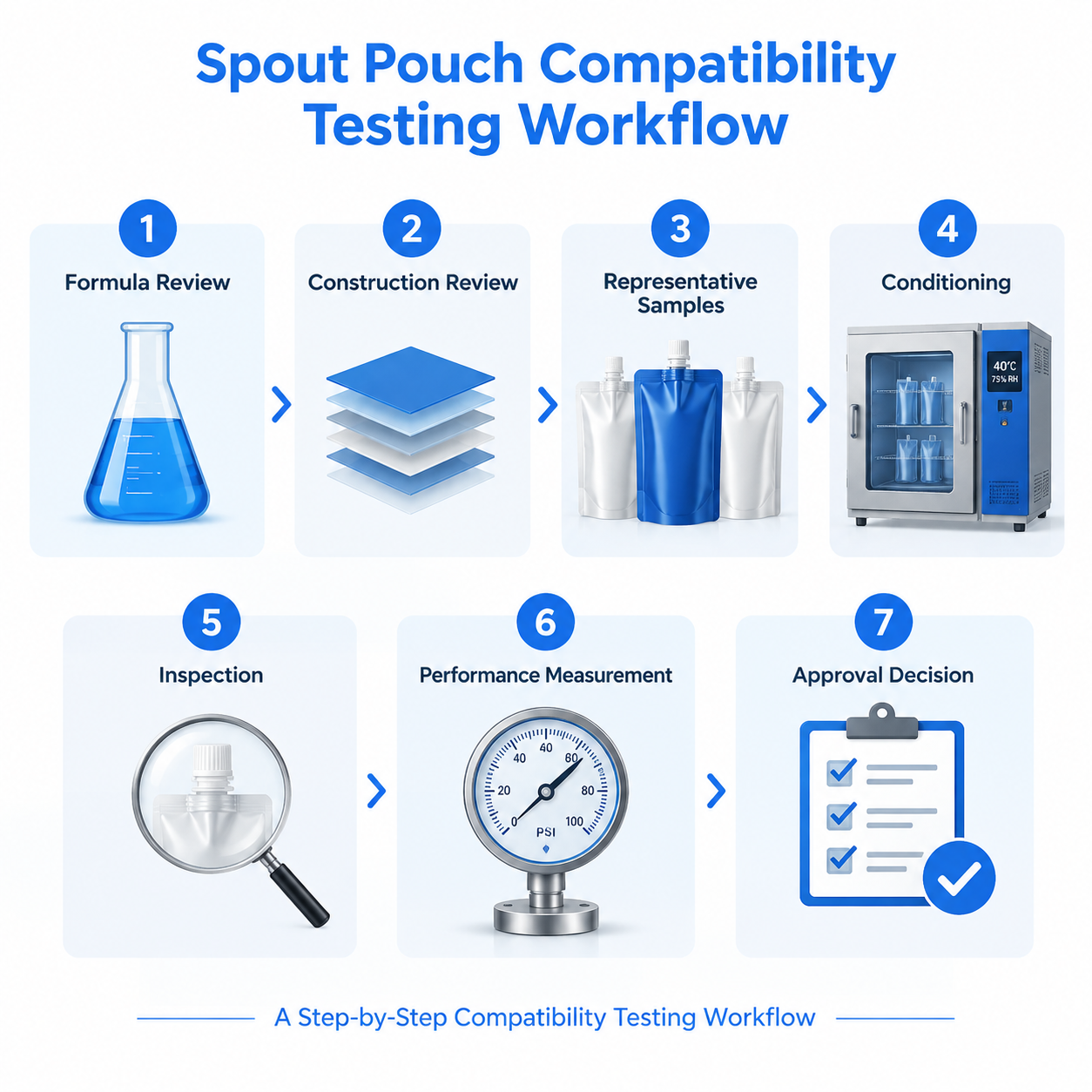
A useful qualification plan moves from material screening to finished-package validation. Record the sample structure, lot, fitment resin, cap, adhesive system, filling date, formula batch, and test conditions so results can be traced.
- Define the use profile. Set the intended fill volume, free space, orientation, storage temperature, transport conditions, shelf-life target, dispensing cycles, and maximum chemical concentration.
- Review the proposed construction. Obtain the laminate layer sequence, nominal thickness, sealant type, spout and cap materials, closure design, adhesive information, print system, and sealing parameters. If details are proprietary, request a compatibility statement or controlled technical review.
- Prepare representative samples. Use production-intent pouches and fitments. Include filled packages, empty package controls, and—when useful—coupons or component samples for isolating the film, sealant, spout, cap, and adhesive.
- Condition samples. Store samples under defined temperature and orientation conditions. Include the highest foreseeable temperature if justified by the use profile, and document whether samples are static, periodically inverted, squeezed, or subjected to vibration.
- Inspect at planned intervals. Check at baseline, early exposure, intermediate exposure, and the end of the planned test. Look for swelling, embrittlement, discoloration, odor, delamination, leakage, seal creep, cap change, thread damage, and plastic stress cracking.
- Measure package performance. Use suitable methods for leak detection, seal strength, opening and reclosure torque, dimensional change, mass loss, dispensing flow, and drop or compression performance. A laboratory should select and validate methods appropriate to the package and chemical.
- Run migration or extractables work when required. For regulated contact applications or formulas where transfer is a concern, define the analytical scope with a qualified laboratory. Compatibility observations do not prove that a package meets a migration limit.
- Make a documented decision. Approve, conditionally approve, reformulate the package, or repeat testing. Record the formula version, package version, test conditions, deviations, photographs, measurements, and final rationale.
Standards can support method selection, but they must be applied to the correct question. For example, ASTM D543 describes evaluating plastics for resistance to chemical reagents; it does not automatically qualify a complete spouted pouch for a specific product. A laboratory may also consider relevant ISO, ASTM, transport, seal, and leak methods based on the application.
Failure Modes and What They Indicate
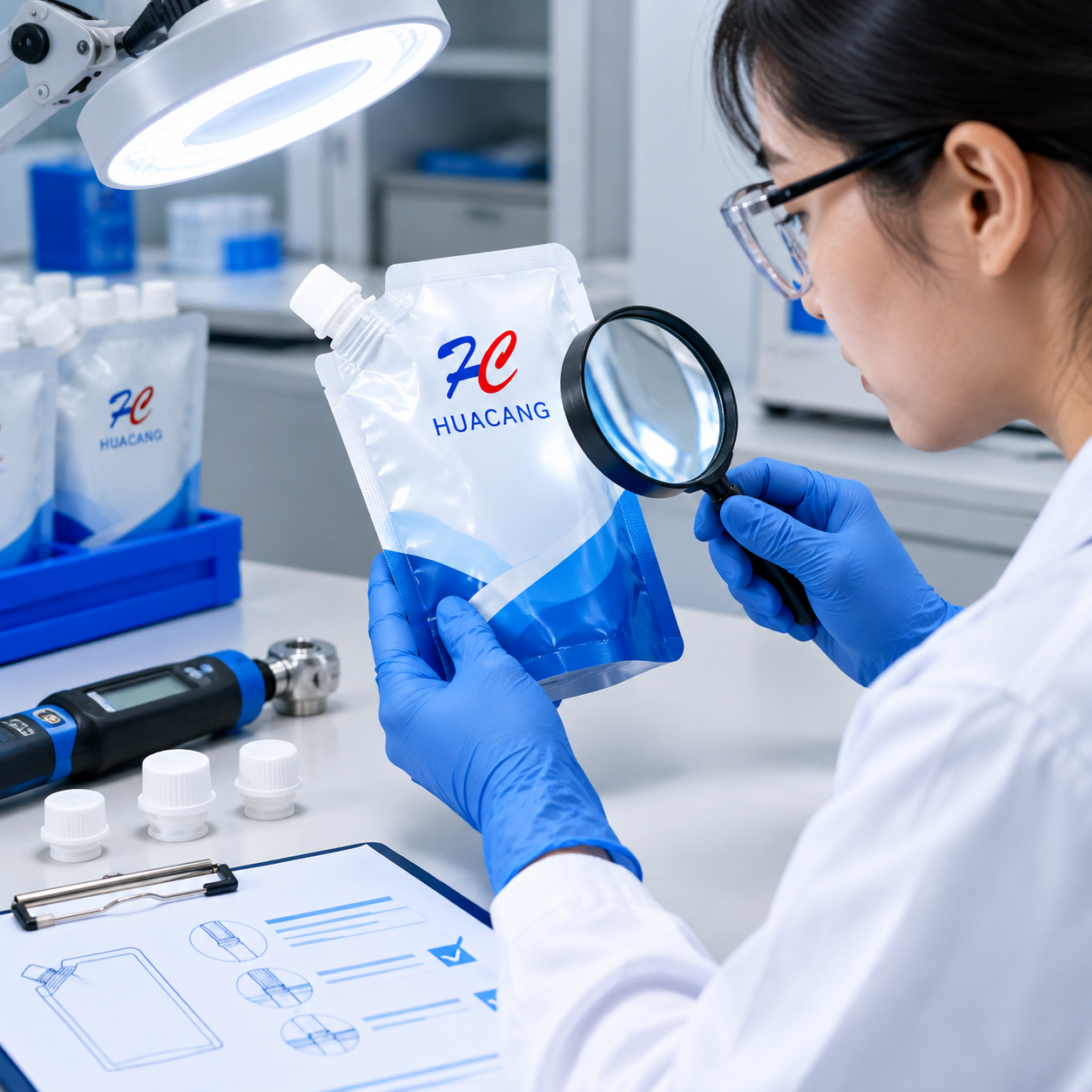
Failure analysis is more useful when the visible symptom is connected to a likely mechanism. The same symptom can have multiple causes, so confirm with controlled comparisons.
- Delamination: may indicate adhesive attack, inadequate bond development, moisture or heat effects, or stress concentrated near a seal or fitment. Compare the affected layer location and exposure side.
- Seal leakage or creep: may indicate sealant softening, chemical wetting, insufficient seal parameters, contamination, or pressure generated by expansion. Check seal strength and leak location together.
- Spout or cap cracking: may indicate chemical stress cracking, molded-in stress, excessive closure torque, sharp geometry, or a resin mismatch. Inspect threads, corners, and the fitment-to-pouch transition.
- Swelling or distortion: may indicate absorption or permeation of a formula component. Measure dimensions and mass before and after exposure, and compare with an empty control.
- Odor, color, or print change: may indicate interaction with inks, coatings, adhesives, or absorbed volatile components. Determine whether the change is cosmetic or affects product identity and regulatory requirements.
- Reduced dispensing performance: may indicate viscosity change, orifice blockage, fitment distortion, or a formula-package interaction. Test the package at the beginning and end of the conditioning period.
Do not treat a visual pass as a functional pass. A pouch can look normal while its seal strength, torque, bond strength, or barrier performance has changed. Conversely, a minor cosmetic change may be acceptable for an industrial refill if it does not affect safety, identification, or performance. The acceptance decision belongs in the product specification.
How to Write a Buyer Validation Specification
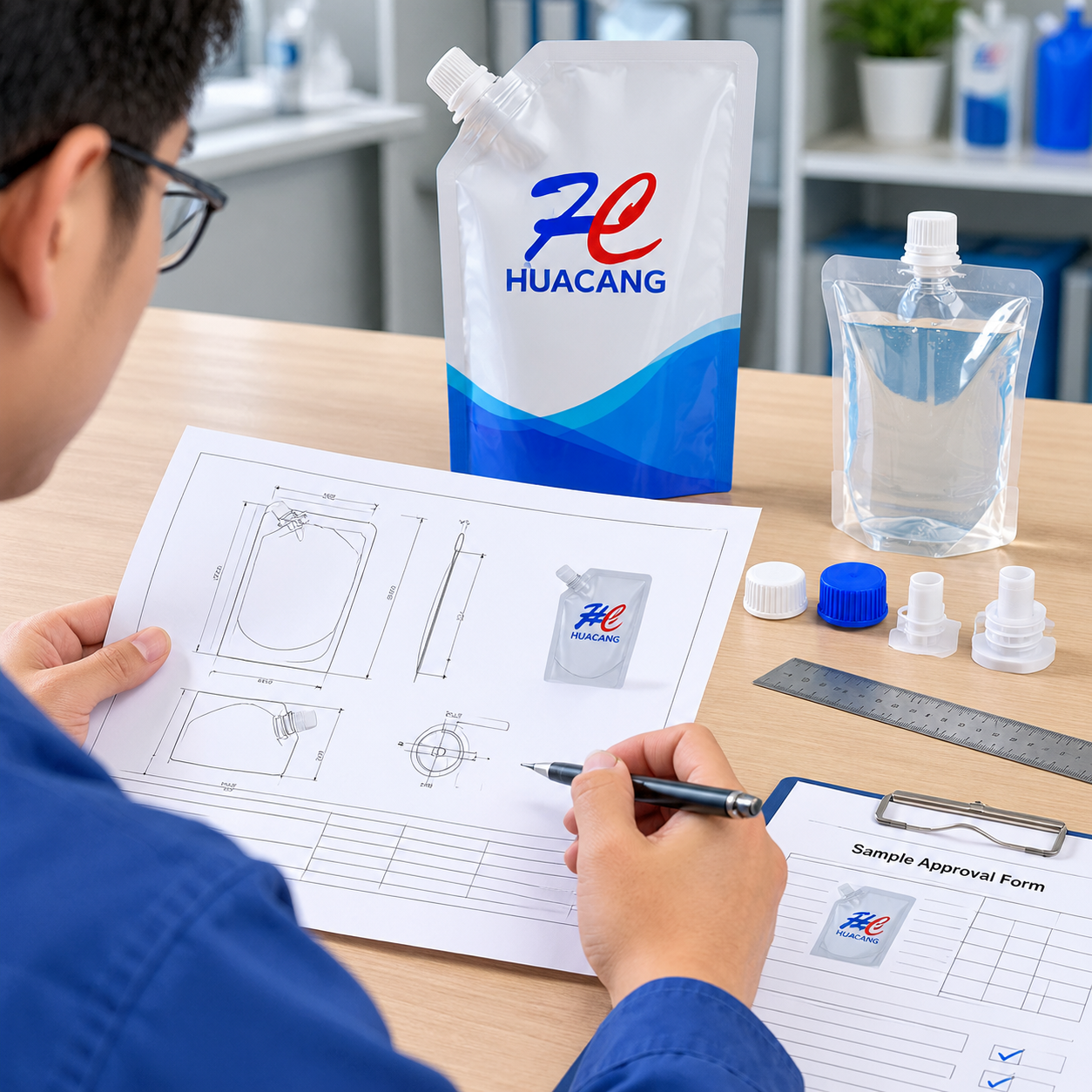
Put the compatibility requirement into the RFQ, sample approval sheet, and purchase specification. A clear brief allows the packaging supplier and test laboratory to evaluate the same package and avoids vague requirements such as “chemical-proof pouch.”
Minimum information to provide
- Formula name, version, concentration range, pH, density, viscosity, and relevant ingredients or chemical classes.
- Target fill volume, pouch dimensions, spout location, orifice size, cap type, and expected dispensing method.
- Laminate preference or required barrier, print coverage, seal requirements, and whether the package is single-use or resealable.
- Fill temperature, storage temperature range, shelf-life target, transport profile, orientation, and expected handling.
- Required tests, sample quantity, test intervals, laboratory responsibilities, and the person authorized to approve changes.
- Pass/fail limits for leaks, seal strength, torque, dimensions, appearance, odor, mass loss, dispensing, and migration where applicable.
Sampling and change control
Use samples representative of the intended production structure. If the formula, fragrance, concentration, spout resin, cap, laminate, adhesive, ink, or sealing process changes, determine whether partial or full requalification is needed. Keep retained samples and the approved construction record. For high-risk household chemical packaging, consider testing both a new package and a package that has experienced the planned opening, squeezing, drop, or transport sequence.
When the project involves a larger refill format, a handle can change load distribution and handling stresses. When it involves a shaped pouch, extra corners can change stress concentration. These design choices are feasible, but they should be included in the same validation logic as the chemical exposure.
Conclusion
Spout pouch chemical compatibility depends on the complete package system and the real use conditions. Screen the formula, review every package component, test production-intent samples, measure functional performance, and document pass/fail criteria before approving volume production. This workflow helps buyers select a suitable chemical resistant pouch while reducing the risk of leakage, cracking, delamination, and late-stage package changes.
FAQ
Can one spout pouch structure work for all detergents?
No. Detergents differ in surfactants, solvents, fragrances, alkalinity, concentration, and storage conditions. A structure that performs well with one formula should be screened with the final formula or a justified worst-case formulation before approval.
What is the first sign of plastic stress cracking in a pouch fitment?
Fine lines, whitening, crazing, or small cracks may appear near threads, corners, notches, the flange, or other areas with molded-in or assembly stress. Inspect the fitment after chemical exposure and handling, then confirm with leak, torque, and dimensional checks.
Is a chemical resistant pouch automatically safe for regulated products?
No. Chemical resistance, food-contact compliance, cosmetic suitability, migration, and product safety are related but separate evaluations. The applicable market and product requirements should be reviewed with a qualified compliance or laboratory partner.
Should compatibility testing use empty film samples or filled pouches?
Use both when practical. Film or component coupons can help isolate a mechanism, but filled production-intent pouches are needed to evaluate seals, fitments, caps, headspace, orientation, dispensing, and interactions between the layers.
What changes require compatibility retesting?
Retesting may be needed after changes to the formula, concentration, fragrance, solvent, temperature, laminate, sealant, adhesive, ink, spout or cap resin, closure geometry, sealing process, or package size. The extent of requalification should follow the risk of the change.
Need Custom Spout Pouch Packaging?
Share your product, fill volume, packaging requirements, artwork, and estimated order quantity. Our packaging team can recommend a suitable pouch structure, spout option, and quotation.