Table of Contents
- What to Include in a Spout Pouch RFQ
- 1. Describe the Product and Filling Process
- 2. Specify Pouch Format, Capacity, and Dimensions
- 3. State Material, Barrier, and Process Requirements
- 4. Define the Spout and Cap Fitment
- 5. Identify Seal, Handling, and Distribution Conditions
- 6. Provide Artwork and Printing Details
- 7. Include Quantity, Sampling, and Commercial Inputs
- 8. Clarify Validation and Documentation Expectations
- Copy-and-Use Spout Pouch RFQ Template
- Common RFQ Mistakes to Avoid
A practical RFQ checklist for buyers sourcing custom spout pouches. Identify the technical and commercial details a packaging supplier needs to assess feasibility, prepare samples, and quote accurately.
What to Include in a Spout Pouch RFQ
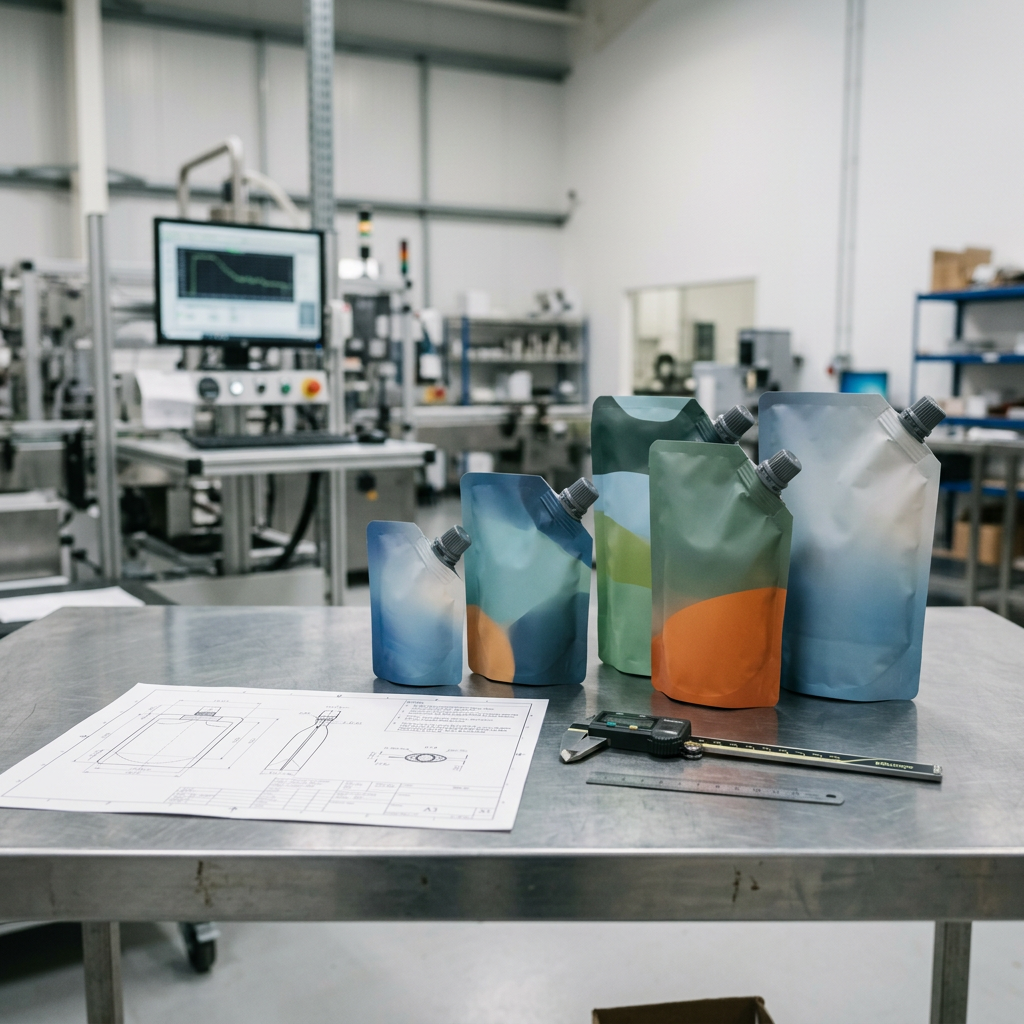
A complete spout pouch RFQ checklist should tell the supplier what product the pouch will hold, how it will be filled, the required pouch format and capacity, the preferred spout and cap, laminate expectations, printing requirements, order quantity, and delivery terms. Those inputs allow a manufacturer to assess whether the proposed package is suitable for the product and process, identify open technical questions, and issue a more useful quotation.
A spout pouch is a flexible laminate package fitted with a molded plastic dispensing spout and a matching closure. It is commonly used for liquids, gels, purees, sauces, concentrates, and refill products. The right construction depends on the actual product and packing conditions; capacity alone is not enough to specify it.
This checklist assumes a custom printed pouch for a B2B buyer. It is intended to organize a quote request, not replace product-packaging compatibility testing, line trials, or the buyer’s regulatory review. For a focused example, see this guide to specifying liquid soap spout pouches.
1. Describe the Product and Filling Process

Start with the contents and filling operation. These facts influence film selection, sealant choice, pouch geometry, spout diameter, and the validation work needed before commercial production.
- Product category and formulation: State whether the product is a beverage, sauce, puree, edible oil, detergent, cosmetic, or another material. Identify relevant characteristics such as acidity, alcohol content, oil or fat content, fragrance, particulates, viscosity, and abrasive ingredients.
- Fill condition: Specify ambient, hot-fill, retort, chilled, frozen, or aseptic filling as applicable. Include the expected fill temperature and any post-fill cooling or processing steps.
- Filling equipment: Identify whether the pouch will be filled through the spout or an open pouch, then capped or sealed on the buyer’s line. Share available information about nozzle dimensions, capping equipment, target line speed, and handling orientation.
- Use environment: Note expected storage temperature, product shelf-life target, shipping route, and whether the package may experience freezing, heat exposure, or elevated altitude.
Describe the product plainly instead of assuming that a category name conveys the full risk. For example, two sauces can have different acid levels, oil levels, particles, and fill temperatures. Buyers sourcing food packaging for U.S. import should also establish the appropriate documentation and food-contact basis for their specific use; this food-contact packaging guide for U.S. imports explains the buyer-side review considerations.
2. Specify Pouch Format, Capacity, and Dimensions

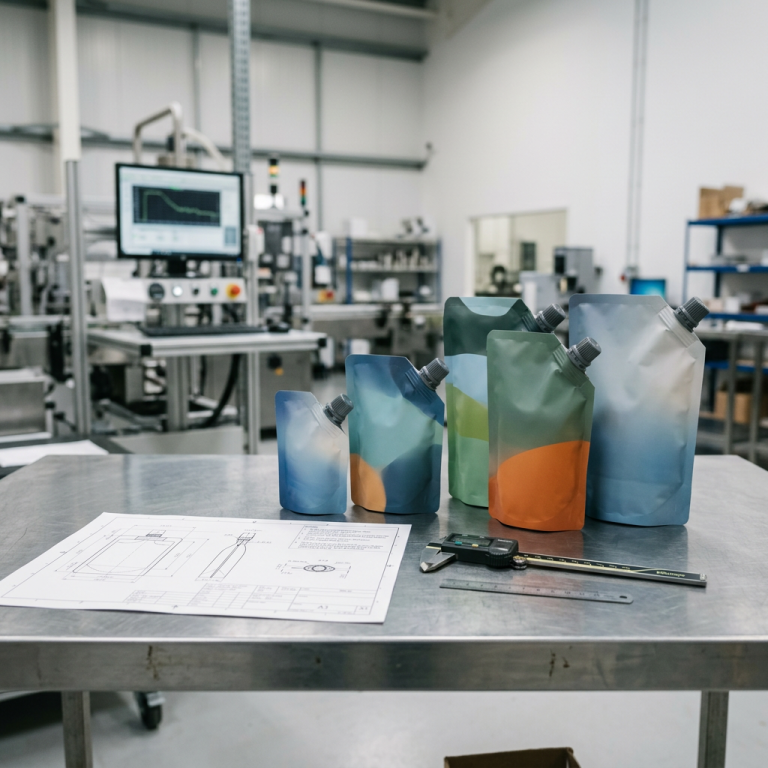
Give the target net fill volume or weight, plus a dimensioned drawing when one is available. A pouch’s external dimensions, gusset, headspace, fitment location, and fill volume must work together. Quoting only a nominal capacity can lead to assumptions about the pouch’s proportions or usable fill level.
Identify the requested format: stand-up pouch, flat pouch, shaped pouch, or another agreed configuration. For stand-up pouches, specify the bottom gusset style and intended display orientation. State whether the spout should be top-center, top-corner, or positioned elsewhere. Also note whether the pouch requires a hang hole, tear notch, handle, rounded corners, or a clear window.
Include the unit of measure and tolerance expectations. For example, distinguish between a 500 mL target fill and a pouch with a 500 mL total internal volume. Headspace may be needed for filling consistency, closure application, product expansion, or the buyer’s processing method.
When a reference pouch is supplied, describe which details are for comparison and which are mandatory. A sample can communicate appearance and approximate shape, but it does not establish material structure, seal performance, or fitment dimensions unless those specifications are confirmed separately.
3. State Material, Barrier, and Process Requirements
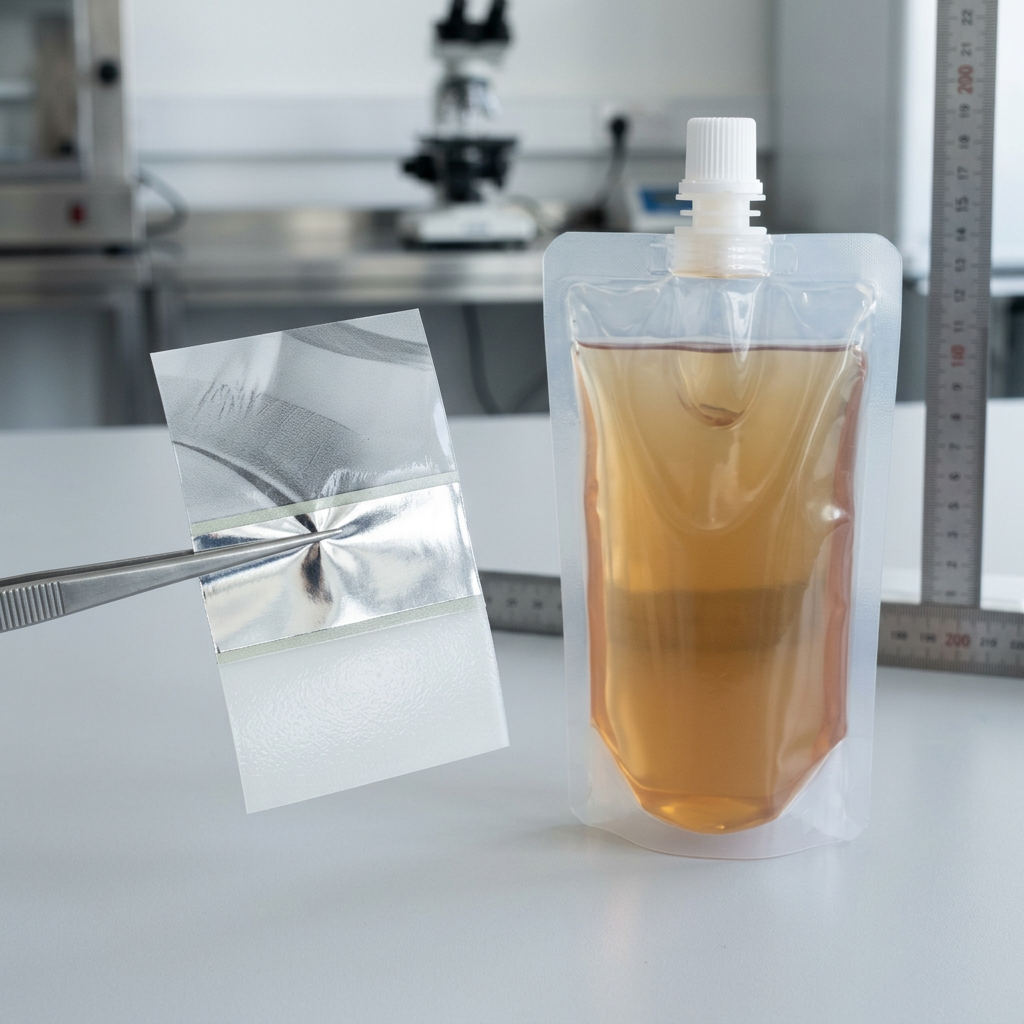
A typical spout pouch uses a multilayer laminate. The outer layer supports printing and surface protection, intermediate layers can provide barrier or stiffness, and the inner sealant layer contacts the product and forms seals. The appropriate structure depends on the product, processing conditions, target shelf life, appearance, and end-use requirements.
In the RFQ, state whether you have a required material structure or need the supplier to recommend one based on the disclosed use case. If a structure is prescribed, include all known details: film types, approximate thickness or gauge, metallized or foil barrier preference, clear areas, and any material restrictions defined by the buyer. Avoid requesting a barrier level without identifying the product and distribution conditions it must support.
Make the process requirements explicit. Hot-fill, retort, and frozen distribution place different demands on films and seals. A pouch intended for an aseptic system requires more than a general request for a high-barrier pouch; it must be evaluated in relation to the validated filling process. Review the considerations in this aseptic spout pouch buyer guide when that process is relevant.
For edible products containing fat or oil, ask for a structure recommendation based on the formulation, fill temperature, shelf-life objective, and distribution. The same approach applies to products with aggressive surfactants, fragrances, or solvents.
4. Define the Spout and Cap Fitment
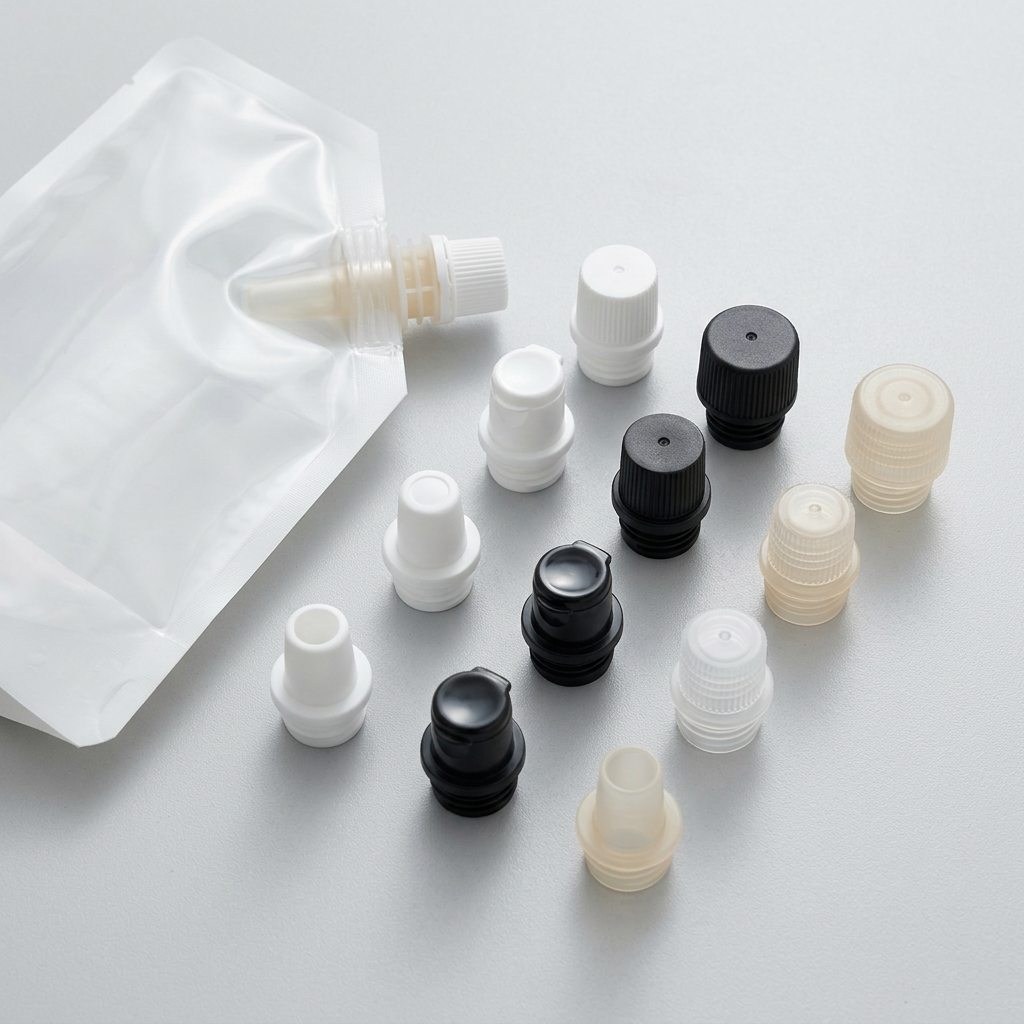
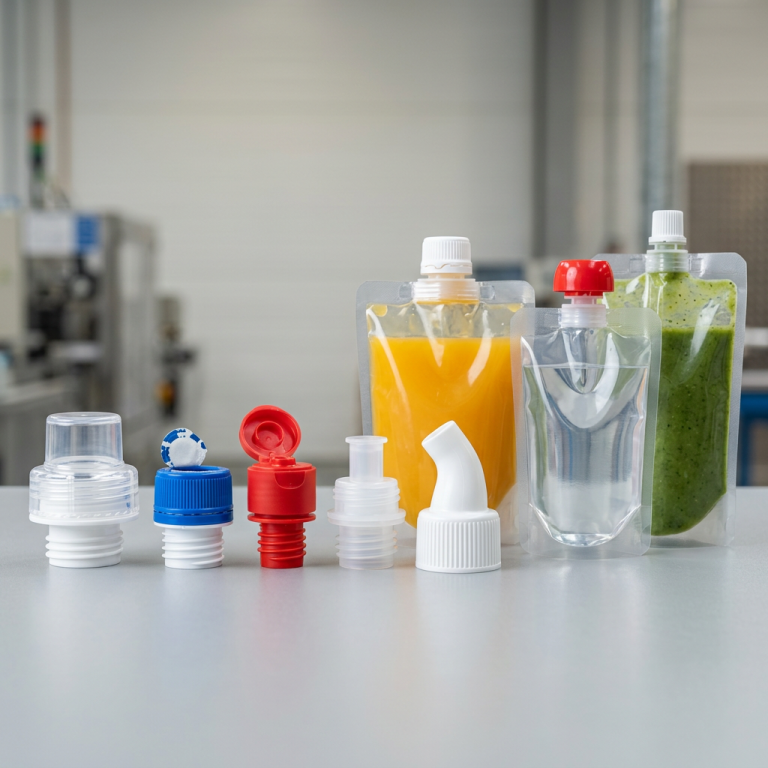
The fitment is the spout and closure assembly attached to the pouch. It determines how the buyer fills, caps, dispenses, reseals, and presents the product. Specify the fitment early because its size, welding area, and placement affect pouch design and line compatibility.
- Spout location: top-center, top-corner, or another defined location.
- Spout orientation: horizontal or vertical as required by pouch design and filling equipment.
- Diameter and neck finish: provide the requested diameter or a reference fitment, with critical dimensions where known.
- Cap style: screw cap, flip-top, disc top, or another requested closure type. State the required color and whether a tamper-evident feature is required.
- Dispensing need: free-flowing liquid, controlled pour, squeeze dispensing, or product with particulates. Product viscosity and particle size can affect the appropriate opening.
- Filling and capping method: confirm whether the supplier applies the cap or whether the buyer’s equipment will do so.
Do not assume fitments with a similar visible size are interchangeable. Confirm the actual dimensions, closure interface, application method, and validation requirements with the packaging supplier and filling-line provider.
5. Identify Seal, Handling, and Distribution Conditions
Seal design should be discussed as part of the full package system. Tell the supplier whether the pouch will be squeezed repeatedly, dropped during distribution, packed in master cartons, shipped in e-commerce parcels, stacked on pallets, or exposed to low temperatures. These conditions help define what samples and evaluation may be appropriate.
Include any known requirements for seal widths, pouch edge configuration, seal appearance, burst or leak evaluation methods, and acceptable defect criteria. Where the buyer has a testing protocol, share the method, sampling plan, pass/fail criteria, and the stage at which testing is expected. A test result is meaningful only when its method and conditions are identified.
State how pouches will be packed after filling. Carton count, dividers, case orientation, pallet configuration, and shipping lane can influence the risk of scuffing, puncture, or fitment damage. If the product is frozen or chilled, disclose the lowest anticipated temperature and the duration of exposure. For frozen applications, material and seal selection should be tied to the product and freezer distribution profile, as explained in this frozen food pouch material and seal guide.
6. Provide Artwork and Printing Details
Provide final print-ready artwork when it is available, preferably in an editable vector format with linked images and fonts converted or supplied according to the supplier’s prepress requirements. If artwork is still in development, send a layout or mockup and identify the expected number of colors, base color, metallic effects, matte or gloss areas, transparent areas, and variable elements.
Ask the supplier for the relevant dieline before finalizing regulated text, barcodes, or critical design features. Keep important copy, codes, and registration-sensitive artwork away from seals, gussets, tear features, and the fitment welding area. The RFQ should also state whether multiple SKUs share one pouch size and structure, because SKU count can affect cylinder or plate setup, proofing, and production planning.
State the required color-approval process. For example, identify whether approval will be based on a digital proof, press proof, production sample, or an agreed color standard. Do not treat a screen image as the sole basis for color approval.
7. Include Quantity, Sampling, and Commercial Inputs
State the order quantity for each size and SKU, not only the total project quantity. Quote feasibility and unit cost can change with pouch dimensions, artwork versions, material structure, fitment type, and run length. Include forecast volume if it is relevant, but label it clearly as a forecast rather than a committed purchase quantity.
Tell the supplier what you need before a production order: stock fitment samples, unprinted pouch samples, printed samples, line-trial material, or a pre-production approval sample. Explain the intended evaluation, required quantity, and shipping destination. Samples made with production-equivalent materials and fitments may still differ from a commercial run in printing method, run conditions, or other details; confirm what the supplied sample represents.
For the commercial quote, specify the requested Incoterm, destination port or delivery address, preferred currency, payment expectations if applicable, and required delivery date. Ask suppliers to identify the assumptions behind the quote, including quantity breaks, tooling or setup items, artwork status, packing configuration, and freight scope. This guide to spout pouch cost factors for custom orders provides useful context for reviewing quote differences.
8. Clarify Validation and Documentation Expectations
List the documents and evaluations required for your procurement process before requesting a final quote. Depending on the application and market, this may include material specifications, statements related to food-contact use, fitment specifications, inspection criteria, traceability information, certificates of analysis where appropriate, or third-party test reports requested by the buyer. Requirements vary by product, destination, and customer program.
Be precise about whether a document is mandatory for supplier qualification, needed before sampling, or required before shipment. Also state who is responsible for confirming final product-packaging compatibility and line performance. In most projects, the buyer, product owner, co-packer, and packaging supplier each provide part of the technical input. A clear responsibility split prevents an RFQ from implying requirements that no party has defined.
For a new product or format, plan for staged approval: specification review, sample review, filling-line trial, and commercial-production approval. The sequence and acceptance criteria should be agreed by the parties involved rather than assumed from a prior project.
Copy-and-Use Spout Pouch RFQ Template
Use the following outline to prepare a clear initial request. Attach artwork, drawings, reference samples, and technical documents where available.
| RFQ item | Information to provide |
|---|---|
| Product | Product type, formulation characteristics, viscosity, particulates, and intended use. |
| Filling process | Fill method, fill temperature, capping method, line equipment, and target line speed if known. |
| Pouch format | Stand-up or flat format, target fill, dimensions, gusset, headspace, spout location, and required features. |
| Laminate | Required structure or request for recommendation, barrier preference, clear areas, and processing restrictions. |
| Fitment | Spout orientation and size, cap style, cap color, tamper-evident requirement, and dispensing need. |
| Artwork | Artwork files or layout, color count, finish, SKU count, and approval method. |
| Distribution | Storage and transit temperatures, carton and pallet plan, shipping conditions, and handling risks. |
| Testing and documents | Required test methods, acceptance criteria, technical documents, and approval milestones. |
| Order and delivery | Quantity by SKU, sampling needs, forecast, Incoterm, destination, and required delivery date. |
Where details are not yet known, say so. It is more efficient to identify an undecided point than to present an assumption as a fixed requirement. The supplier can then indicate which input is needed to complete the quotation.
Common RFQ Mistakes to Avoid
- Requesting a price from capacity alone: A 500 mL pouch can have different dimensions, laminate structures, fitments, printing, and processing requirements.
- Leaving out fill conditions: Ambient filling, hot filling, retort processing, frozen storage, and aseptic filling are materially different use cases.
- Sending artwork without a dieline: This can create avoidable changes around seals, gussets, and fitment areas.
- Using a reference sample as the full specification: It may not disclose the actual laminate, sealant, fitment dimensions, or applicable acceptance criteria.
- Combining all SKUs into one quantity: Suppliers need quantities by size, artwork version, and structure to quote accurately.
- Not defining the delivery basis: A factory-gate price and a delivered price do not cover the same scope.
- Skipping line-trial planning: A pouch that appears suitable in a sample review still needs evaluation with the buyer’s actual product and filling operation when applicable.
A well-prepared RFQ reduces preventable quotation revisions and gives both buyer and supplier a clearer basis for technical discussion. It should be updated as artwork, filling details, and commercial requirements are finalized.