Table of Contents
- What Are Beverage Concentrate Spout Pouches?
- Start With the Product and Filling Process
- Selecting a Pouch Format and Capacity
- Choose the Laminate Around Actual Risks
- Specify the Spout and Cap as a System
- Confirm Filling and Seal Validation
- Prepare Artwork and Commercial Inputs
- Beverage Concentrate Pouch Quote Checklist
A practical guide for beverage brands and co-packers selecting custom spout pouches for liquid, syrup, and powder-to-liquid beverage concentrates.
What Are Beverage Concentrate Spout Pouches?
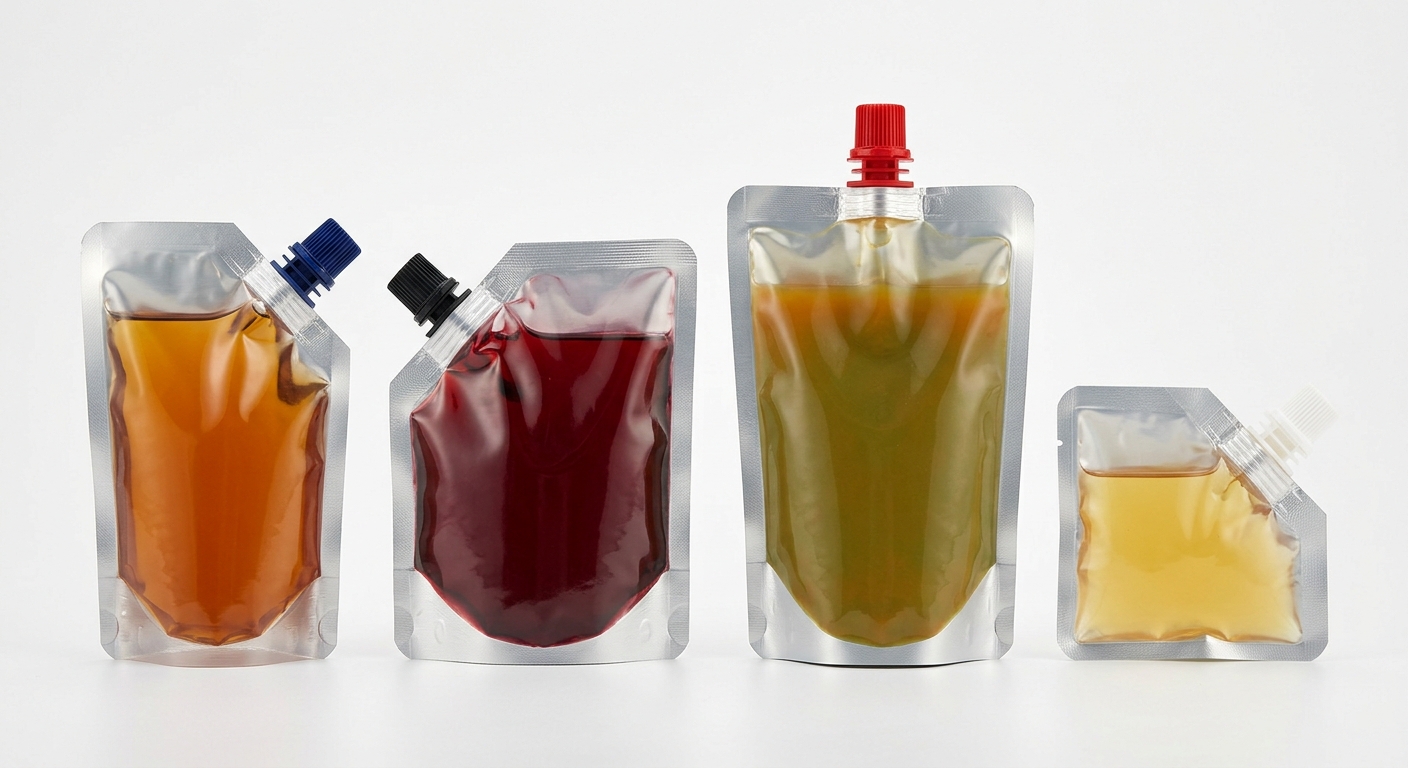
Beverage concentrate spout pouches are flexible, multilayer packages with a resealable spout and cap for holding concentrated drinks, syrups, liquid flavorings, mixers, and similar products that consumers dilute or dispense in measured portions. For B2B buyers, the correct pouch is determined first by the concentrate’s formulation and filling process, then by its required shelf life, dispensing experience, distribution route, and brand presentation.
A concentrate may be acidic, sugar-rich, oil-containing, pulp-bearing, or sensitive to oxygen, moisture, light, or flavor transfer. Those properties affect the film structure, sealant, fitment design, and validation plan. A pouch that works for a room-temperature fruit syrup may not be suitable for a hot-filled tea concentrate, a retorted product, or an essential-oil flavor base.
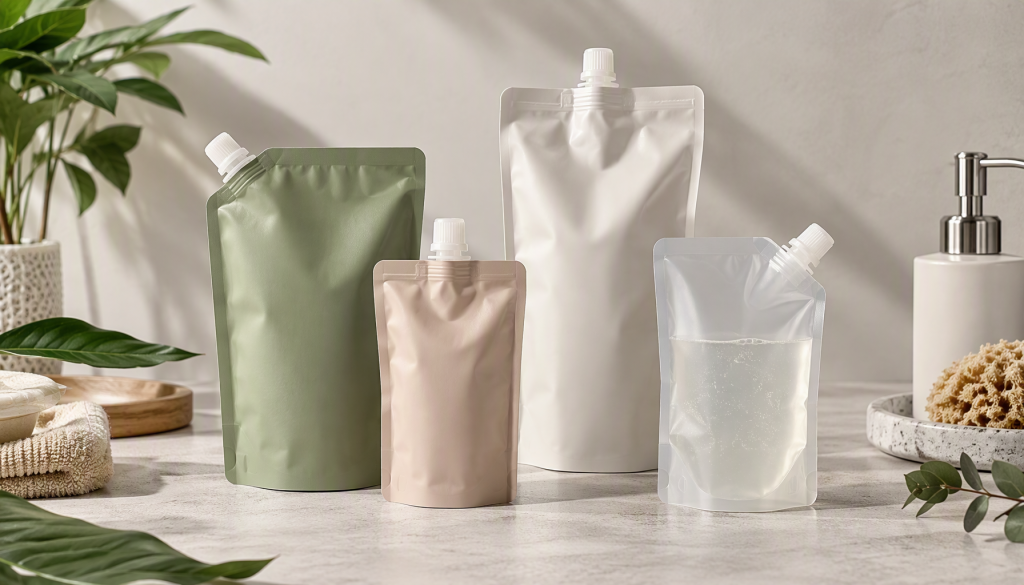
The usual package consists of printed outer film, one or more functional barrier layers, a food-contact sealant layer, and a separately applied spout-and-cap fitment. Common configurations include three-side-seal pouches, stand-up pouches with bottom gussets, and shaped pouches. The spout can sit at a top corner, at the center top, or on the front panel according to filling equipment and intended pouring behavior.
Start With the Product and Filling Process
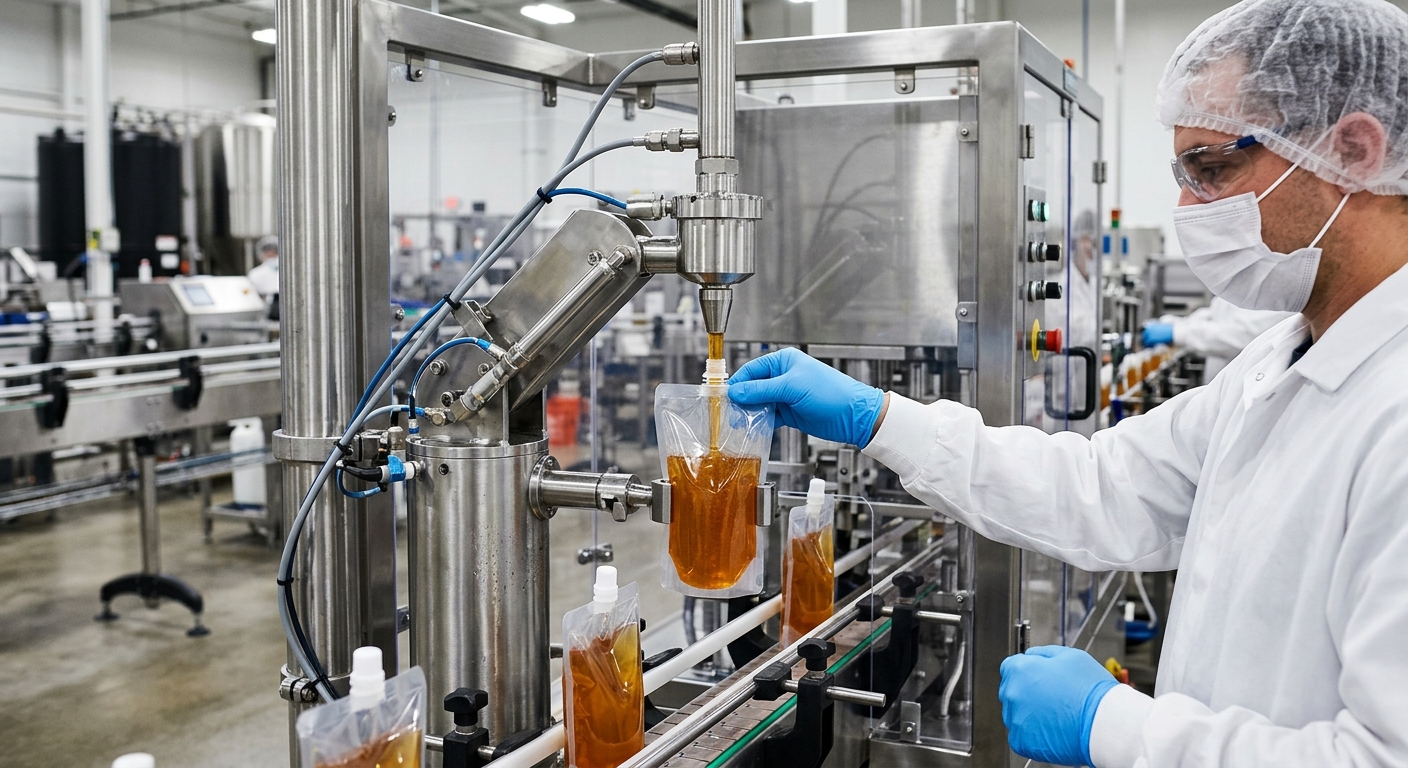
Before selecting a film or requesting a quotation, document what the pouch must contain and how it will be filled. This avoids choosing material solely from nominal volume or appearance.
Product information to provide
- Formula type: water-based, juice-based, syrup, dairy-containing, oil-containing, or dry mix.
- Known pH, soluble solids or Brix, viscosity, particulates, and any ingredients with strong aroma or flavor oils.
- Required unopened shelf life and storage conditions.
- Sensitivity to oxygen, moisture, light, odor pickup, or flavor loss.
- Whether the customer refrigerates the pouch after opening and expected use period after opening.
Process information to provide
- Filling temperature, product temperature at sealing, and target fill weight or volume.
- Filling orientation and whether the machine holds or indexes pouches by the spout.
- Any pasteurization, hot-fill, retort, cooling, or handling step after filling.
- Expected transport temperature range, case packing method, and pallet configuration.
Hot-fill and retort are different processes and require different material and fitment decisions. If the concentrate is filled warm or hot, supply the actual temperature, dwell time, and cooling sequence rather than using a general term. Buyers evaluating elevated-temperature filling can review this guide to specifying hot-fill pouch structures. Retort processing should be treated as a separate packaging specification and verified with the supplier and process partner.
Selecting a Pouch Format and Capacity
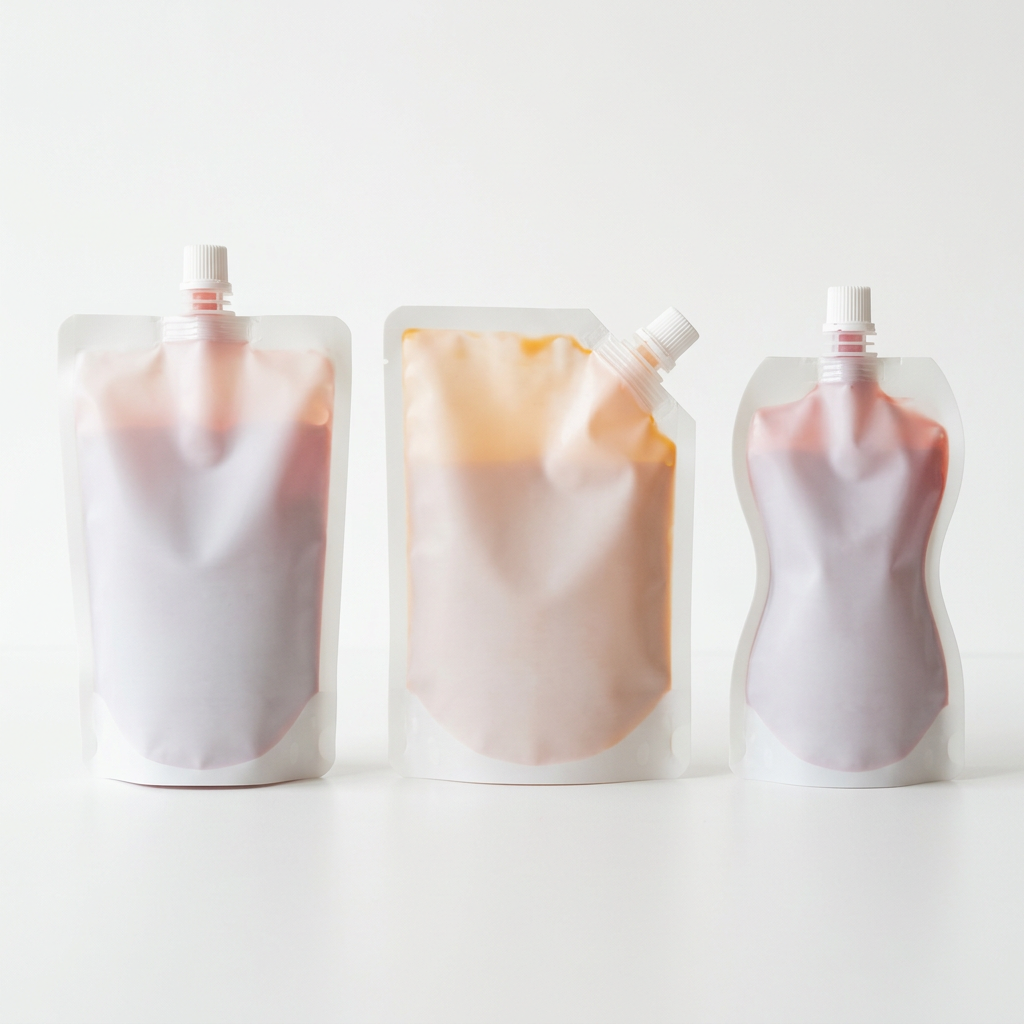
For many beverage concentrates, a stand-up pouch provides a stable retail-facing format and a practical pack shape for larger volumes. Three-side-seal formats can be useful where a flatter profile, secondary carton, or specific machine handling arrangement is preferred. The best choice depends on fill volume, headspace, product density, shelf display, and the way the user grips and pours the pouch.
Nominal capacity does not by itself establish final pouch dimensions. A 500 mL concentrate with a density different from water requires a different fill weight, while needed headspace and gusset geometry also change the usable volume. The spout position affects both the filling setup and the consumer pour angle. A corner spout often supports controlled pouring from a stand-up pouch; a top-center arrangement may suit other handling or presentation needs.
| Decision | What to evaluate | Why it matters |
|---|---|---|
| Fill quantity | Net volume, density, fill weight, and headspace | Sets usable capacity and pouch dimensions. |
| Base format | Stand-up, three-side-seal, or shaped pouch | Affects stability, material use, display, and handling. |
| Spout placement | Corner, center-top, or front panel | Affects pouring, filling equipment, and pack appearance. |
| Use occasion | Single-use, multi-serve, or foodservice refill | Influences cap selection, capacity, and dispensing expectations. |
Use a physical sample filled to the intended weight before locking dimensions. For a more detailed sizing process, see the spout pouch size and capacity guide.
Choose the Laminate Around Actual Risks
A spout pouch laminate generally combines layers that provide print support, mechanical strength, barrier performance, and heat sealing. The right structure is not simply the thickest available material. It is a structure that addresses identified product risks while remaining compatible with conversion, fitment application, filling, sealing, and distribution.
For beverage concentrates, the relevant questions often include whether oxygen exposure can change flavor or color, whether light protection is required, whether the product contains oils or flavor compounds that interact with packaging materials, and whether moisture control is needed. High-sugar syrup can also place stress on seals if residue reaches the seal area during filling. These are application-specific considerations, not universal laminate rules.
Typical material families may include polyester, nylon, polyethylene, polypropylene, metallized films, aluminum foil, or coated barrier films in different combinations. Each layer has a specific function, and final suitability depends on the full structure and process. A clear pouch may support product visibility but can offer different light protection than an opaque construction. Foil-based structures can provide strong light and gas barrier characteristics, but buyers should weigh product needs, desired appearance, flex-crack considerations, and conversion requirements.
Read more about layer functions and the selection sequence in how to choose a spout pouch laminate. Material selection should be confirmed through samples and product-specific validation, especially when shelf life, processing, or ingredient compatibility is critical.
Specify the Spout and Cap as a System
The spout is more than a convenience feature. Its internal diameter, neck geometry, cap, weld area, and placement must work with the concentrate’s viscosity, particulates, intended dosage, filling method, and consumer use.
A smaller opening may support more controlled dosing for thin liquids, while a larger opening can improve flow for thicker syrups or products with particulates. However, a larger opening can change pouring behavior and may require different filling tooling. Cap style affects opening torque, reclosure, tamper-evidence options where specified, and how easily the pack is used with wet or sticky hands.
Confirm whether the filling line is designed for pre-spouted pouches, how it locates the fitment, the preferred cap state at filling, and the required spout dimensions. The pouch supplier, filling equipment provider, and co-packer should align these details before a production run. This spout pouch filling machine compatibility guide outlines the machine-related information to check.
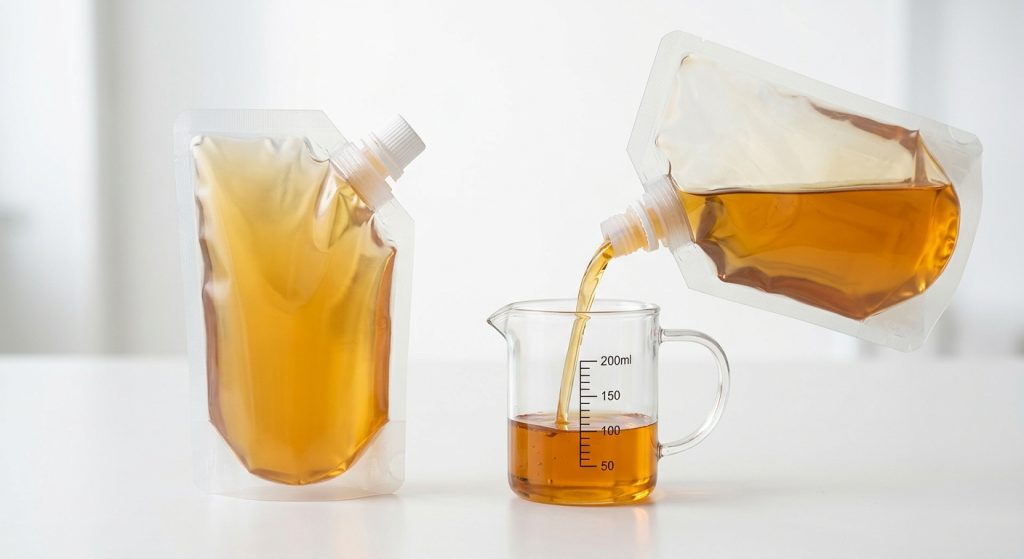
For a multi-serve beverage concentrate, assess the complete dispensing experience: pouch grip, spout angle, flow rate, drip control, cap removal, reclosure, and the likelihood of product residue on the neck. Use actual filled samples in this assessment; empty-pouch handling alone is not enough.
Confirm Filling and Seal Validation
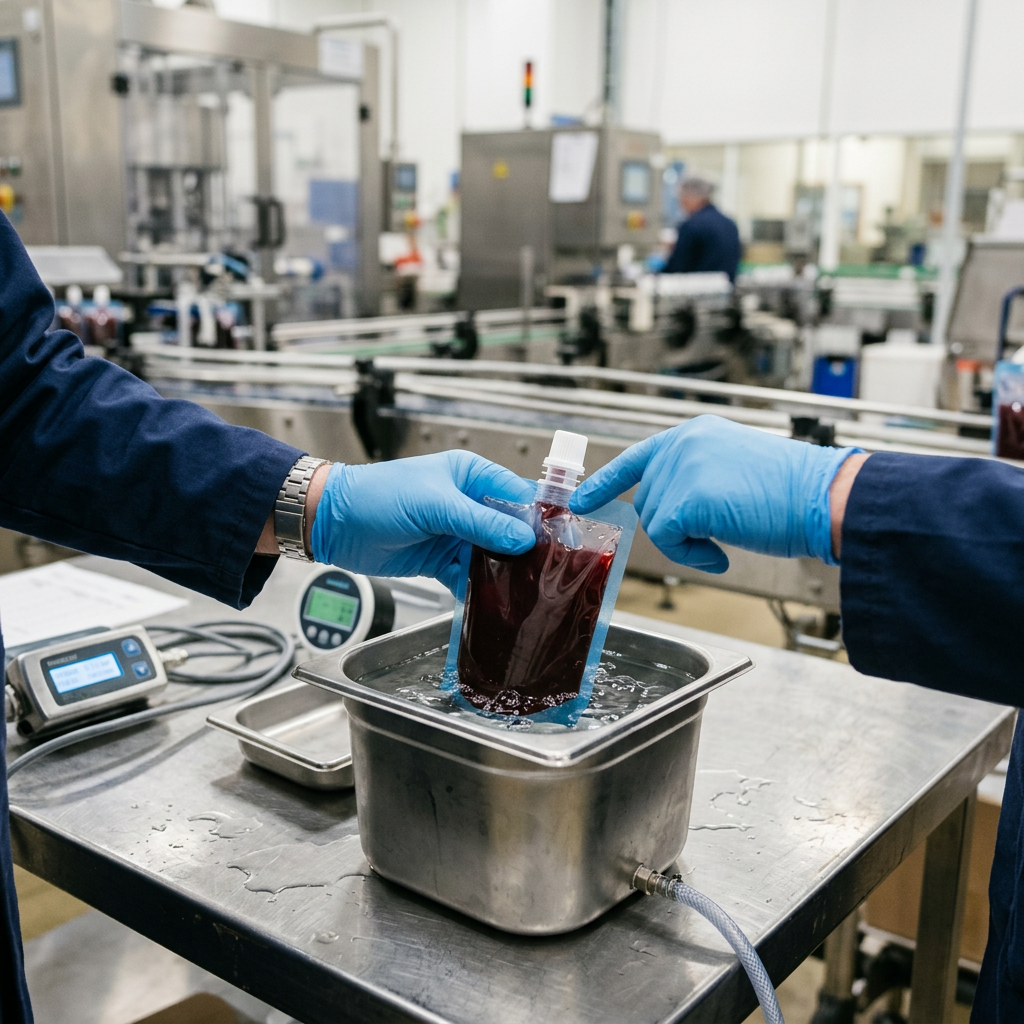
Reliable pouch performance depends on the converted pouch, fitment weld, top and side seals, filling operation, and distribution environment. Product on a seal surface, overfilling, unsuitable seal settings, or misalignment at the filling line can create problems even when the pouch material is otherwise appropriate.
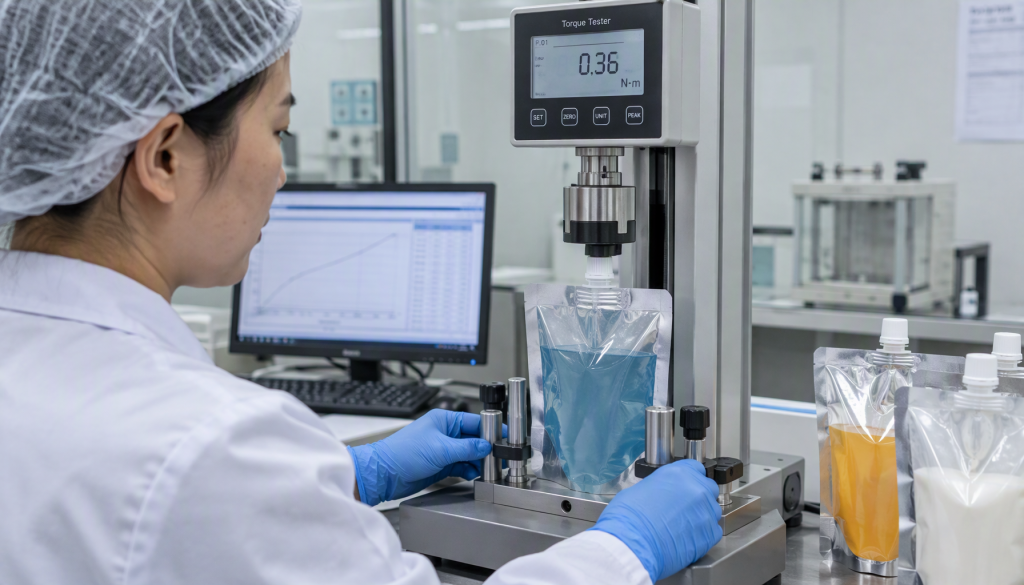
Set up a validation plan with the actual concentrate and intended process. It should cover the conditions relevant to the project, such as fitment attachment integrity, package seal integrity, filled-pouch drop or compression exposure, cap function, visual inspection, and transportation simulation appropriate to the supply chain. Test methods and acceptance criteria should be agreed by the buyer, co-packer, and supplier instead of assumed from a generic pouch specification.
Leak testing is one useful part of that work, but it does not replace process validation or shelf-life assessment. The spout pouch leak resistance testing guide explains common testing considerations. If the pouch will be run on a new line, conduct a machine trial early enough to adjust dimensions, spout position, sealing settings, or handling components before full production.
Prepare Artwork and Commercial Inputs
Once the pouch structure and dimensions are sufficiently defined, align artwork, print method, finish, and order planning. Provide editable artwork files where possible, identify brand colors, and reserve space for required product information, date coding, lot coding, and any market-specific labeling. Avoid placing critical text across gussets, seals, or curved areas around the spout.
Print design should account for registration tolerance, pouch seams, fitment location, and the difference between a flat proof and a formed flexible package. Matte, gloss, transparent windows, metallic effects, and opaque panels can alter the visual result and should be reviewed in a proofing process. See the custom spout pouch printing and artwork guide for artwork preparation considerations.
MOQ is shaped by dimensions, laminate structure, print design, cylinder or plate requirements where applicable, fitment type, and production setup. Estimate demand by SKU and pack size before finalizing a custom program. The spout pouch MOQ planning guide can help buyers organize a first order around these variables.
Beverage Concentrate Pouch Quote Checklist
A complete inquiry makes it easier to compare suppliers on a like-for-like basis and reduces specification revisions. State assumptions clearly when product details are still under development.
- Product name, formula type, known pH, Brix, viscosity, particulates, and ingredient sensitivities.
- Required net content, product density if known, desired pouch format, target dimensions, and requested headspace.
- Storage target, intended shelf life, distribution route, and whether refrigeration is required after opening.
- Filling method, filling temperature, production speed, machine model or fitment handling requirements, and post-fill treatment.
- Spout location, preferred opening diameter, cap style, and any required dispensing or tamper-evidence features.
- Laminate preference if known, barrier needs, opacity or window requirements, and print finish.
- Artwork status, number of SKUs, annual or per-order volume, destination, requested samples, and target timing.
For beverage concentrates, do not assume that a reference pouch used for another liquid will perform the same way. Product formulation, fill conditions, and consumer dispensing requirements should drive the final specification.