Table of Contents
- Coffee Bag Packaging Basics
- Why Roasted Coffee May Need a Degassing Valve
- Selecting a Barrier Structure
- Choose the Right Coffee Bag Format
- Coffee Bag Specifications to Confirm
- Filling, Sealing, and Line Compatibility
- Printing and Artwork Requirements
- Validation Before Production
- Coffee Packaging RFQ Checklist
A B2B specification guide to coffee bag packaging, covering one-way valves, laminate barriers, pouch formats, dimensions, sealing, printing, and supplier quote inputs.
Coffee Bag Packaging Basics
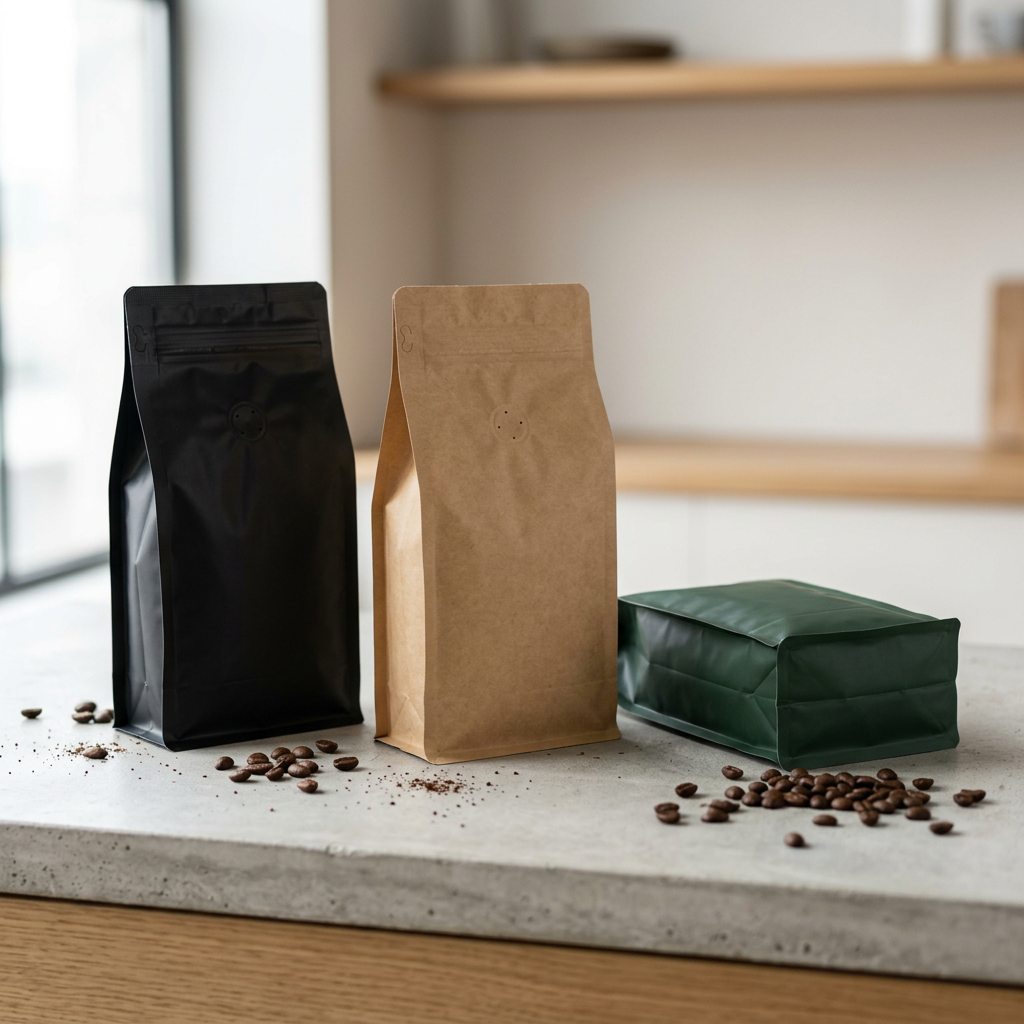
Coffee bag packaging should be specified around the coffee’s gas release, oxygen and moisture sensitivity, pack size, filling method, and intended shelf-life target. For most roasted coffee, a high-barrier laminated pouch with heat-sealable inner layers is the practical starting point. A one-way degassing valve is commonly considered for freshly roasted coffee because carbon dioxide can continue to evolve after roasting. The final structure, however, should be confirmed through pack and product trials rather than selected by appearance alone.
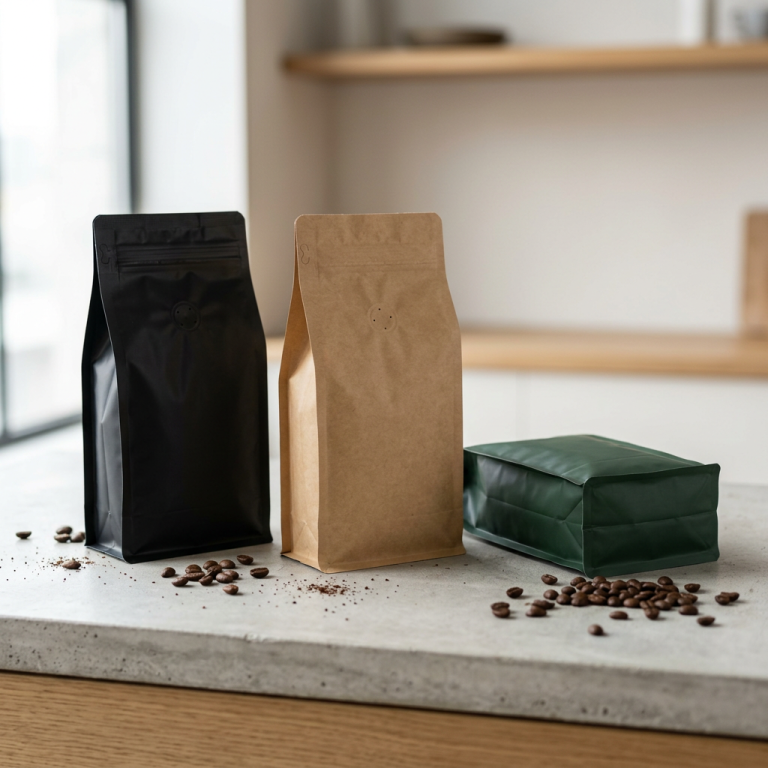
Coffee packaging can be made as a stand-up pouch, flat-bottom bag, side-gusset bag, or flat pouch. Features such as a zipper, tin tie, tear notch, hang hole, and valve should support the brand’s actual use case and packing process. Whole beans and ground coffee may use similar formats, but their particle behavior, fill density, degassing profile, and consumer handling requirements can differ.
This guide assumes dry roasted whole-bean or ground coffee packed in flexible laminated bags. It does not replace product-specific shelf-life studies, line trials, or food-contact documentation review for the destination market.
Why Roasted Coffee May Need a Degassing Valve
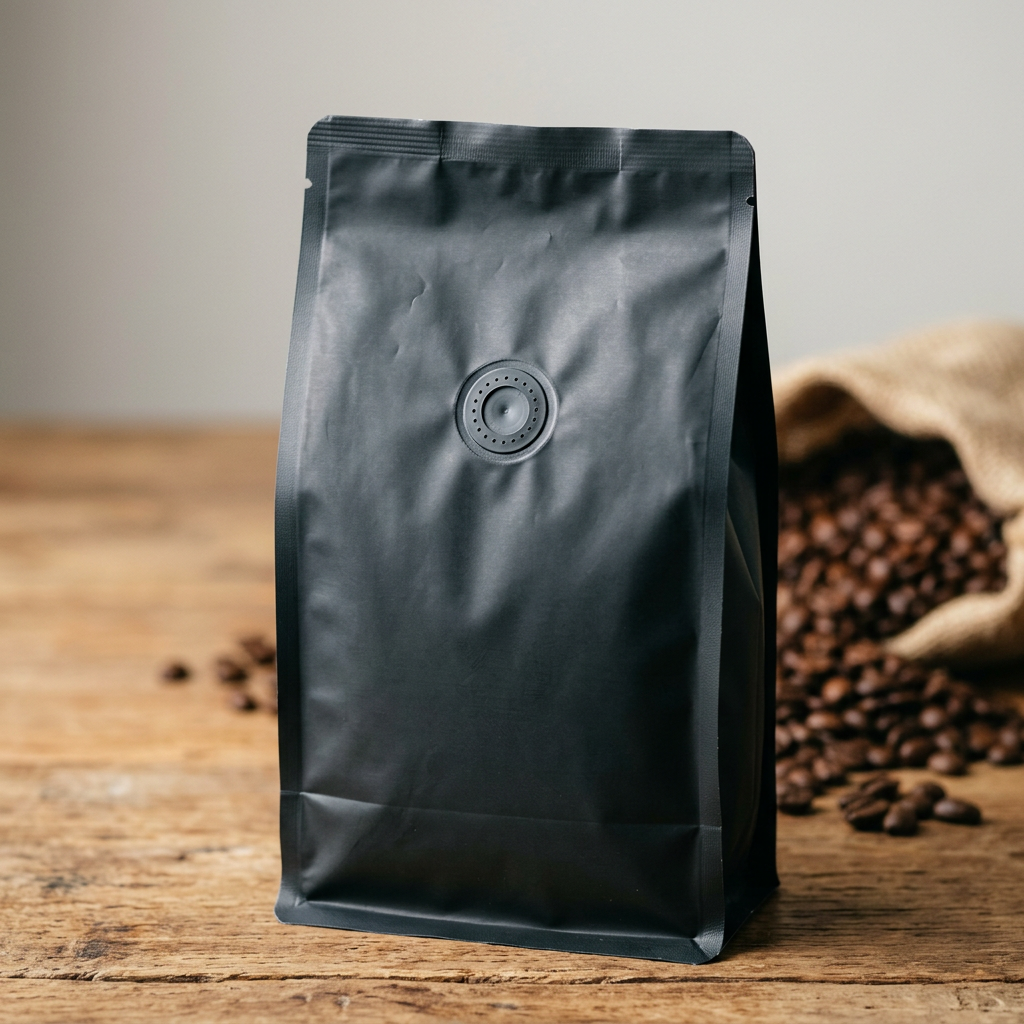
Roasting produces carbon dioxide within coffee. After packing, this gas may continue to release, particularly during the period immediately after roasting. If a sealed pouch is packed before enough gas has dissipated and has no controlled release path, internal pressure can increase. A one-way degassing valve is designed to let gas leave the package while limiting outside-air entry under normal conditions.
The valve is a component, not a substitute for a suitable laminate or a validated packing process. Valve need depends on factors including roast level, time between roasting and filling, product temperature at filling, headspace, bag volume, dose weight, distribution conditions, and the roaster’s target freshness window. Coffee that has rested for a longer period may have a different pressure profile than coffee packed soon after roasting.
Valve placement and procurement points
- Placement: Position the valve on a flat, printable panel with enough clearance from seals, gussets, zippers, and folds.
- Bag geometry: Allow sufficient panel area so the valve is not distorted when the bag is filled or stacked.
- Application process: Confirm whether valves are applied during bag conversion and whether their location suits your filling equipment.
- Product testing: Validate pressure behavior and valve function with the actual roast, fill weight, and storage conditions.
- Consumer presentation: Avoid placing essential legal copy or small critical text beneath the valve footprint.
Not every coffee package requires a valve. Brands using a controlled rest period, nitrogen flushing, a different package system, or a short distribution cycle may make a different technical choice. The decision should be based on product trials rather than a general assumption that every coffee bag needs a valve.
Selecting a Barrier Structure

A coffee bag laminate typically combines functional layers rather than relying on one material to provide every property. The outer web supports print and handling, the middle layer may provide barrier and stiffness, and the inner web provides the heat-seal surface and product-contact layer. Material selection must be matched to the product, process, desired finish, and end market.
For many coffee applications, buyers evaluate protection against oxygen, moisture, light exposure, aroma loss, and odor pickup. The relative importance of each factor depends on the coffee, distribution environment, and packaging presentation. Barrier performance is influenced by the complete structure, material gauges, seal integrity, package geometry, conversion quality, and storage conditions—not only by a single named film.
Common laminate design considerations
- Printed outer layer: Often selected for printability, surface protection, and the desired matte, gloss, or tactile appearance.
- Barrier layer: May be an aluminum foil, metallized film, coated film, or clear high-barrier film, depending on required visibility, barrier needs, and design goals.
- Sealant layer: Selected for heat-seal behavior, seal strength, and compatibility with the filling process.
- Opaque versus clear windows: A window changes light exposure and may affect the package’s barrier profile. Evaluate it as part of the full design.
- Material simplification: A reduced-material or mono-material design can involve barrier and processing tradeoffs; it should be reviewed against the actual product-protection requirement.
Ask the supplier to identify the proposed layer sequence and the function of each layer. Where performance values are required, agree on the relevant test method, specimen conditioning, and acceptance criteria before release. A material data sheet alone does not establish the shelf life of a finished coffee pack.
Choose the Right Coffee Bag Format
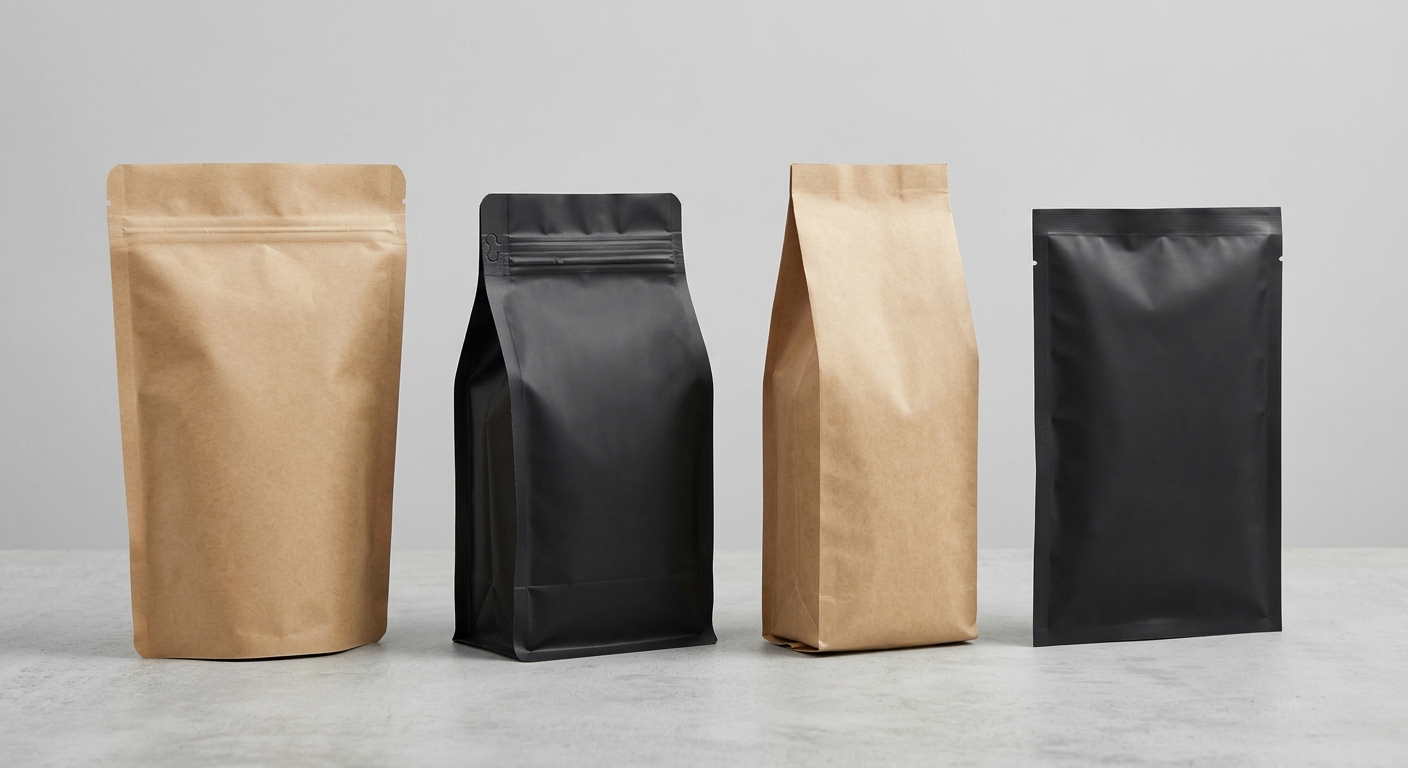
The best coffee bag format balances shelf presentation, fill efficiency, pack stability, shipping needs, and the consumer’s resealing expectations. Format should be selected before artwork is finalized because gussets, bottom construction, zipper position, and valve area directly affect the printable layout.
Stand-up pouches
A stand-up pouch uses a bottom gusset to stand on a shelf. It is commonly considered for retail coffee packs because it offers a broad front panel and can incorporate a zipper and valve. Confirm the base geometry and filled stability at the actual product weight; an unstable pouch can lean or fall even if the nominal dimensions appear appropriate.
Flat-bottom bags
Flat-bottom bags provide multiple display panels and a box-like shelf profile. They can suit brands that need a more structured retail presentation, additional copy space, or a premium visual format. The structure has more folds and panels to account for during artwork preparation and valve placement.
Side-gusset bags
Side-gusset bags expand at the sides as they are filled and are widely associated with coffee packaging. They may be closed with a heat seal, folded closure, tin tie, or other design depending on the package and packing method. Accurate gusset dimensions are essential because they affect both fill volume and printed panel alignment.
Flat pouches
Three-side-seal or four-side-seal pouches are often used for samples, single-serve portions, smaller coffee quantities, or secondary packs. Their compact shape can support efficient material use, but they do not offer the same upright shelf presence as a stand-up or flat-bottom format.
For broader guidance on zipper function, opening access, and food-pouch selection, see this zipper pouch buying guide for food packaging.
Coffee Bag Specifications to Confirm
Clear specifications reduce avoidable changes between sampling and production. Provide the product and process details first, then define the pouch construction and artwork requirements. A bag that holds a target net weight in one coffee type may not hold the same weight of another because bulk density and particle size differ.
Core specification checklist
- Product: whole bean or ground; roast profile; grind range if applicable; expected product temperature at filling.
- Net fill: target product weight per pack, permitted filling tolerance, and expected bulk density range.
- Format: stand-up, flat-bottom, side-gusset, or flat pouch; required finished dimensions and gusset dimensions.
- Structure: proposed laminate, material gauge, finish, opacity or window requirement, and barrier objective.
- Closure: zipper, tear notch, tin tie, permanent heat seal, or a combined solution.
- Valve: required or not required; location, diameter or footprint where applicable, and panel orientation.
- Sealing: preferred seal width, seal areas, and any line-specific limitations.
- Printing: artwork files, panel map, color references, finish, variable data, and proofing process.
- Pack-out: bag count per carton, carton limits, pallet requirements, and shipment destination.
Do not set bag dimensions from net weight alone. Fill trial data is especially useful for coffee because bean shape, roast level, grind, and settling behavior affect the occupied volume. Request a physical sample or preproduction sample when the format, size, or material structure is new to the brand.
Filling, Sealing, and Line Compatibility
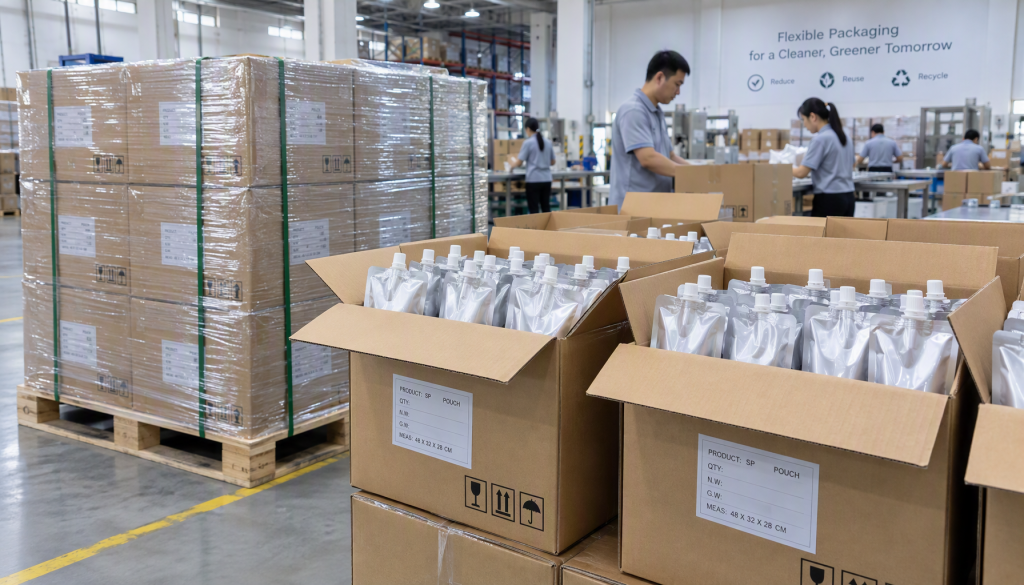
Package design must work with the intended filling process. Before ordering, provide information about whether coffee will be filled manually, semi-automatically, or on a form-fill-seal or premade-pouch line. The supplier and filler should review pouch presentation, opening method, fill spout clearance, sealing jaws, cooling time, registration marks where needed, and discharge handling.
For preformed coffee pouches, practical questions include how the pouch is opened, whether the zipper is open or closed during filling, how product dust is controlled at the seal area, and whether the filled bag is nitrogen flushed or otherwise conditioned. Coffee particles and dust in the seal zone can affect seal consistency, so the actual line setting and housekeeping practices matter.
Key process checks
- Verify that the pouch opens consistently without damaging gussets or zipper tracks.
- Match the sealant layer and sealing window to the equipment’s temperature, pressure, dwell time, and cooling conditions.
- Keep product and powder dust away from the seal area.
- Confirm valve position does not interfere with grippers, guides, or downstream packing equipment.
- Assess finished-pack handling, including compression in cartons and distribution vibration.
When a new closure, material, or pouch format is introduced, run a line trial before full commercial production. This is the most reliable way to identify practical interaction between the pouch and the actual operation.
Printing and Artwork Requirements
Coffee packages often carry dense information: brand elements, origin, roast description, weight, brewing guidance, lot or date coding area, barcodes, and required market labeling. Build the dieline around the final pouch format and identify non-printable or restricted areas created by seals, gussets, zippers, tear notches, hang holes, and the valve.
Artwork should clearly distinguish the front, back, side, bottom, and gusset panels. Keep small text, barcodes, and fine registration-sensitive graphics away from major folds and seal areas. Where exact brand colors are important, supply approved references and agree on a proofing and approval process. Matte and gloss varnishes can influence the perceived color and scuff visibility, so finish selection should be reviewed with the printed proof or production-standard sample.
For a detailed preparation checklist, review HUACANG Packaging’s guide to custom pouch artwork, colors, and finish selection. Although the examples focus on spouted formats, its practical guidance on files, panels, color approval, and surface finishes also applies to printed coffee pouches.
Validation Before Production
A production-ready coffee bag is confirmed through samples and trials, not just a drawing. The validation plan should reflect the risks that matter to the product and supply chain. Agree in advance on what will be reviewed, which samples will be retained, and what conditions will be used for any performance checks.
Typical validation activities
- Dimensional check: Verify finished width, height, gussets, and critical feature positions against the approved drawing.
- Visual review: Check print registration, color appearance, finish, panel alignment, valve position, and obvious conversion defects.
- Fill and seal trial: Run the proposed pouch on the intended equipment with actual coffee.
- Package integrity review: Assess seals and pouch condition after filling, handling, and appropriate internal checks.
- Distribution assessment: Review packs after representative carton packing, stacking, and transport simulation or shipment conditions as appropriate.
- Shelf-life study: Where a specific shelf life is claimed, evaluate retained product using the brand’s defined protocol and acceptance criteria.
Testing scope, methods, and pass criteria should be agreed with the responsible brand, co-packer, laboratory, or quality team. Flexible packaging suppliers can provide manufacturing information and samples, but the brand remains responsible for confirming suitability for its coffee and sales market.
Coffee Packaging RFQ Checklist
A complete request for quotation allows a manufacturer to assess material use, converting steps, printing requirements, valve integration, and production quantity more accurately. It also helps identify open technical decisions before artwork and tooling work begin.
- Product description: whole bean or ground coffee, roast condition, and fill temperature.
- Target net weight and estimated packed volume or bulk density.
- Preferred bag format, dimensions, gussets, and front/back panel requirements.
- Whether a one-way degassing valve, zipper, tear notch, tin tie, or window is required.
- Target laminate direction or existing reference structure, if available.
- Artwork status, number of SKUs, print colors, finish, and barcode requirements.
- Filling method, line details, and whether nitrogen flushing is planned.
- Order quantity by SKU, sample needs, delivery location, and required timing.
- Any market-specific documentation or product-contact requirements that must be reviewed.
Order quantity is closely connected to format, material structure, printing setup, and SKU count. Buyers planning a first custom project can use this minimum order quantity planning guide for custom pouches to organize the inputs that commonly affect MOQ discussions.