Table of Contents
- What FDA Food-Contact Means for Spout Pouches
- Confirm the Food-Contact Compliance Basis
- Specify Intended Use Before Selecting Materials
- Select a Pouch Structure and Spout System
- Request Documentation and Validation Evidence
- Build a Clear Buyer Specification
- Common Purchasing Mistakes
A practical guide for food brands, importers, and co-packers buying spout pouches intended for food contact in the United States.
What FDA Food-Contact Means for Spout Pouches
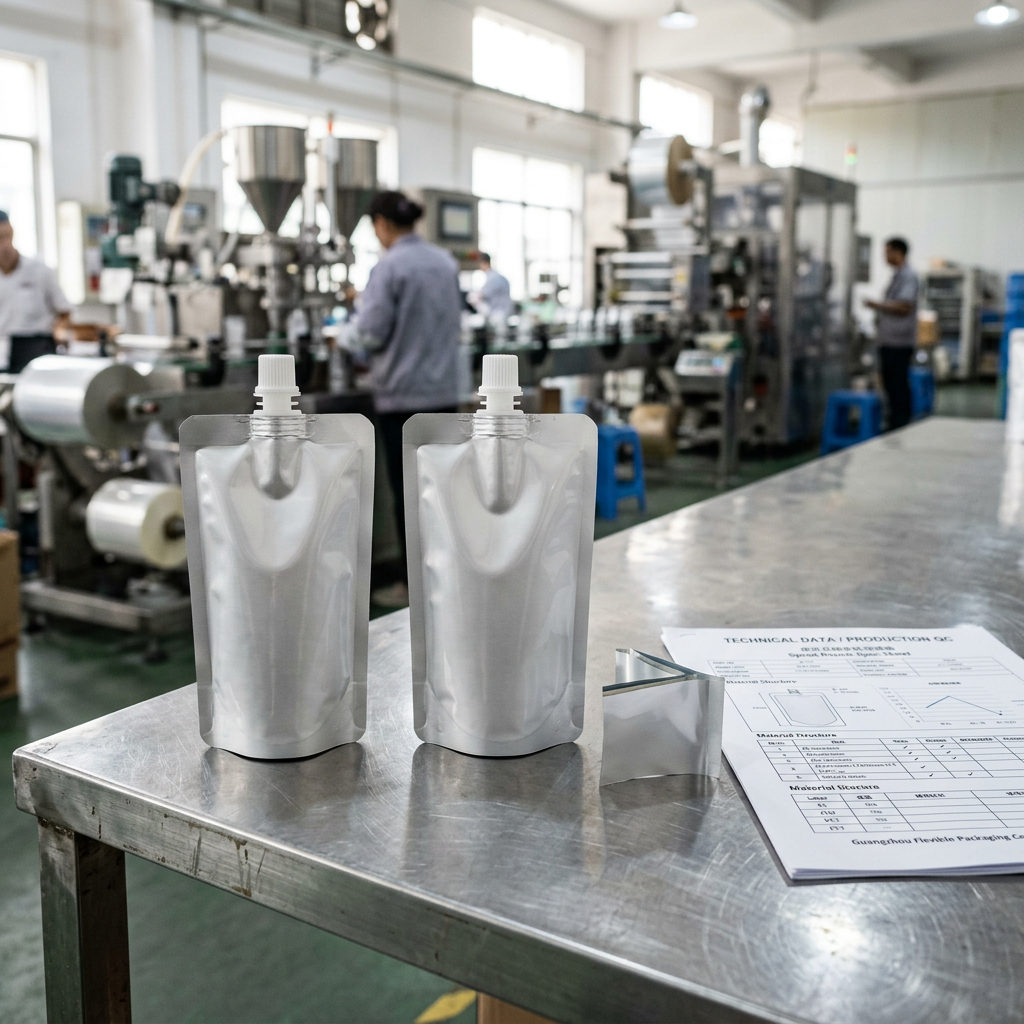
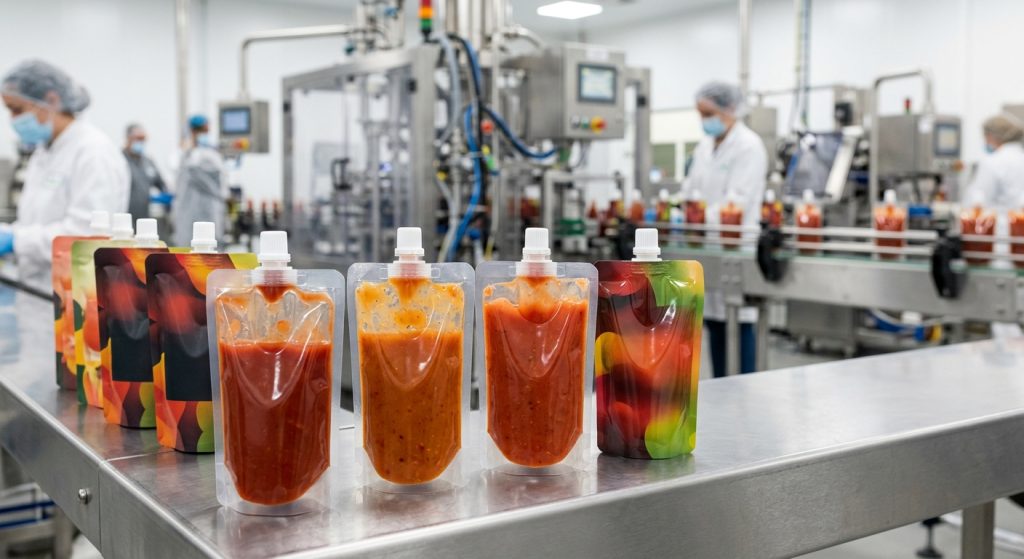
FDA food-contact spout pouches are flexible packages whose food-contact materials are selected and documented for their intended food, time and temperature of contact, and filling conditions under the applicable U.S. food-contact framework. For a buyer, the critical point is that FDA does not generally issue a blanket approval for a finished pouch. Instead, the pouch manufacturer and its material suppliers need a suitable compliance basis for every food-contact component, including films, sealants, inks or coatings where relevant, adhesives, the spout, and the cap.
A spout pouch is normally a multilayer laminate with a molded fitment sealed into the pouch body. The food-facing sealant layer and the food-contact side of the fitment are especially important, but the complete construction matters. Constituents from adhesives, printing systems, barrier layers, pigments, or recycled-content layers may be relevant depending on the construction and intended use.
This guide assumes the pouch will directly contact a conventional food or beverage sold or distributed in the United States. It is not a substitute for a legal compliance review, migration assessment, process validation, or product-specific confirmation from the parties responsible for placing the finished food on the U.S. market. Buyers should define the application first, then request documentation that matches it.
Confirm the Food-Contact Compliance Basis

“FDA approved” is often used loosely in packaging requests, but it is not a sufficiently precise purchase requirement. Ask a supplier to identify the compliance basis applicable to the finished construction and stated use. Depending on the material, this may involve an applicable U.S. food-contact regulation, an effective Food Contact Notification, or another legally applicable basis. The supplier should not make a broad statement that ignores food type, temperature, or contact duration.
For a laminated pouch, the review should cover the complete bill of materials. Typical components include an outer printable film, ink and overprint varnish, laminating adhesive, barrier film, inner sealant film, the spout, cap, and any specialty features such as a tethered cap, laser-scored opening, or handle. A component may be separated from food by another layer, but that does not remove the need to understand its role in the construction.
Request a written declaration or technical statement that identifies the pouch structure, fitment material, intended food-contact use, and relevant limitations. A general certificate that names only “food grade material” does not give a buyer enough information to compare applications or manage changes. Match the declaration to the version of the pouch being quoted, including material gauges and fitment type.
For imported flexible packaging, traceability also matters. The buyer should be able to connect purchase order, approved artwork, material structure, fitment specification, production lot, and supporting documents. Our guide to food-contact packaging requirements for U.S. imports outlines the documentation and technical evidence buyers should organize before shipment.
Specify Intended Use Before Selecting Materials

Food-contact suitability is use-specific. Before asking for a declaration, provide a concise use profile to the pouch supplier. The food formula and process determine whether a proposed laminate and fitment are appropriate for further technical review.
- Food type: State whether the product is aqueous, acidic, alcoholic, fatty, dry, powdered, dairy-based, or otherwise formulated. Include oil content, pH range, alcohol content, salt level, and ingredients that may affect seals or plastics when relevant.
- Contact conditions: Identify the maximum filling temperature, anticipated storage temperature, distribution conditions, and expected shelf life. State whether the pouch will be refrigerated, frozen, hot-filled, pasteurized, retorted, or used under aseptic filling conditions.
- Package use: Describe whether the package is single-serve, refillable, repeatedly opened, used for dispensing, or handled by children. This affects pouch geometry, cap security, fitment selection, and durability expectations.
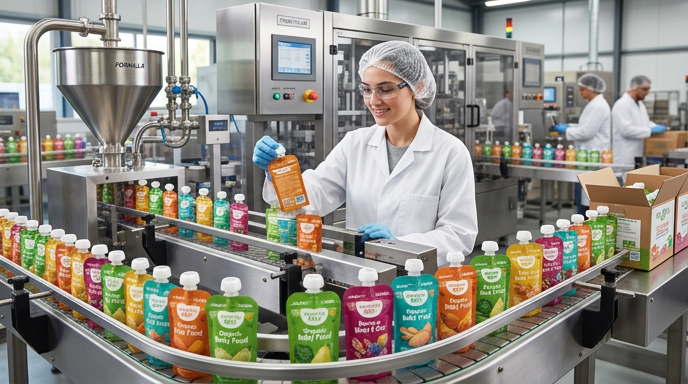
- Fill process: Provide the filling method, headspace target, fill weight or volume, line speed range, seal area requirements, and any post-fill treatment. The pouch must work with the actual filling and sealing equipment, not only with a bench sample.
- Market and labeling: Identify the intended country of sale and any retailer, brand-owner, or co-packer specifications that supplement U.S. food-contact requirements.
Hot fill, retort, and aseptic applications need special care because the package experiences elevated temperatures and process-specific stress. Do not treat these terms as interchangeable. A pouch intended for a validated aseptic process should be specified accordingly; see this aseptic spout pouch buyer guide for the related packaging and process questions. Likewise, a retort application requires a laminate, fitment, and sealing system selected for the actual thermal profile, not simply a claim that the pouch is heat resistant.
Select a Pouch Structure and Spout System

A food-contact declaration is one part of pouch selection. The laminate must also deliver the barrier, mechanical, sealing, and converting performance needed for the product. Typical spout pouch structures use an outer print web, one or more functional layers, and a food-contact sealant layer. Common polymer families may include polyethylene, polypropylene, polyester, nylon, and barrier materials, but an appropriate structure depends on the application rather than a single preferred material.
Start with the product’s primary packaging risks. Oxygen-sensitive foods may need an oxygen-barrier approach. Products with aroma-sensitive ingredients may require aroma retention consideration. Oils, sauces, acidic purees, and high-temperature fills can change the material and seal-system discussion. Freezer use raises concerns around flex-crack resistance, impact handling, and low-temperature seal performance. For applications that will be frozen after filling, review the selection considerations in our frozen food pouch material and seal guide.
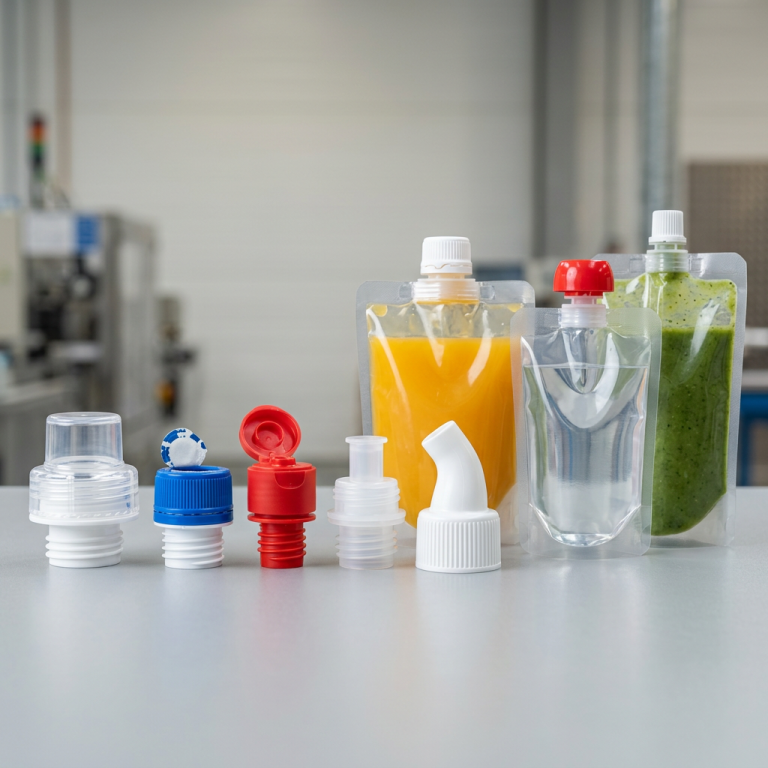
The spout and cap must be specified as a functional system. Include spout diameter, orientation, weld footprint, thread or closure style, tamper-evident needs, cap torque requirements where applicable, and dispensing purpose. A narrow spout can support controlled pouring for thin liquids, while a wider fitment may suit thicker sauces or puree products. Product viscosity, particulates, and consumer dispensing behavior should guide the selection. The fitment weld area must be compatible with the laminate’s sealant layer and the pouch-making process.
For edible oil, buyers should consider oxidation sensitivity, leak resistance, dispensing control, oil exposure, and transportation loads together. The edible oil spout pouch specification guide provides a product-specific starting point. Beverage concentrates similarly require decisions around viscosity, acidity, dose control, and filling conditions; consult the beverage concentrate spout pouch guide when those factors apply.
Request Documentation and Validation Evidence
Build documentation requirements into the request for quotation and purchase order. This prevents a common problem: receiving a generic statement after production has started, when a material substitution or missing fitment record is harder to resolve.
A practical buyer package may include the following items:
- A food-contact declaration or statement for the agreed pouch construction and intended use.
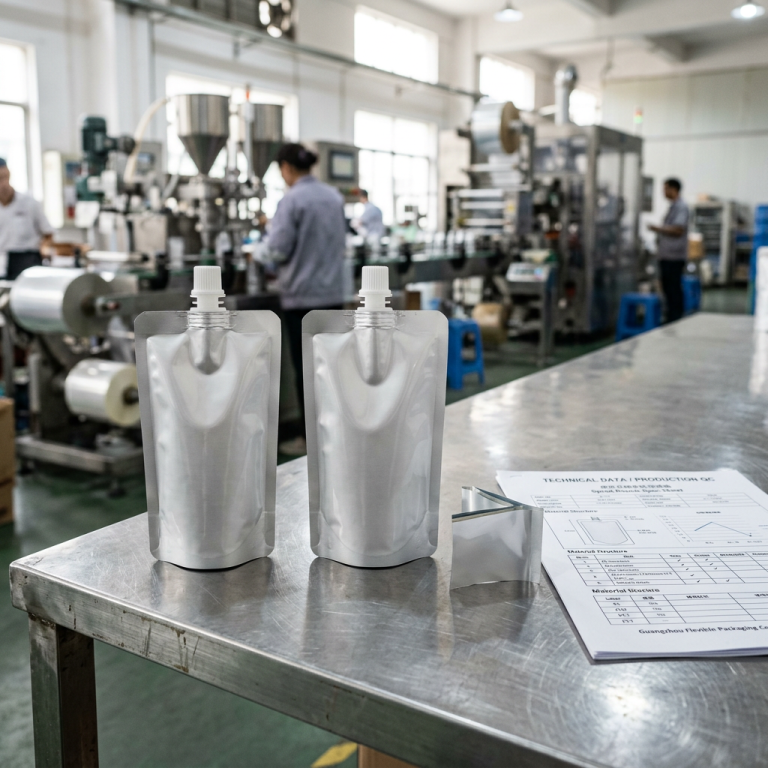
- A material specification identifying layer sequence, material types, nominal thicknesses or basis weights, and the food-contact sealant layer.
- Spout and cap specifications, including material identification and fitment configuration.
- Lot traceability or a certificate of conformance format tied to the finished pouch shipment.
- Specifications for dimensional tolerances, pouch capacity, seal areas, spout location, pouch orientation, and artwork revision.
- An agreed process for notifying the buyer before changes to material sources, structure, fitment, adhesive, ink system, or manufacturing location.
- Application-relevant test plans or records agreed by the buyer and supplier, such as seal-strength, leak, burst, drop, transport, or filling-line trials.
Test results should be interpreted in context. A pouch can pass a simple leak test and still fail on a high-speed line, after repeated cap opening, during freezing, or under stacked distribution loads. Use pilot samples and commercial-line trials to evaluate the completed package with the actual product, fill conditions, closure application, and distribution scenario. The food brand owner, importer, and co-packer should align their responsibilities for final package qualification.
Custom printing adds another controlled variable. Artwork, color targets, finish, and change control should be confirmed separately from food-contact documentation. See our custom printed spout pouch artwork guide for print-ready inputs and approval considerations.
Build a Clear Buyer Specification
A strong specification gives the packaging supplier enough information to propose a technically relevant pouch, while giving the buyer a controlled record for approval. Use the following checklist as an RFQ starting point:
- Product name, product category, formula characteristics, and food-contact conditions.
- Fill volume or net weight, target pouch dimensions, pouch format, and required headspace.
- Filling process, fill temperature, sealing method, expected line speed, and post-fill treatment.
- Storage and distribution conditions, including ambient, refrigerated, frozen, or elevated-temperature exposure.
- Required shelf-life target and the package risks the buyer needs to manage, such as oxygen, moisture, aroma, light, puncture, or leakage.
- Requested laminate construction or permission for the supplier to propose options based on the use profile.
- Spout diameter, position, orientation, cap style, dispensing requirement, and tamper-evident feature if required.
- Printing method, artwork files, number of colors, finish, barcode requirements, and approval process.
- Compliance documents, quality records, sample needs, trial plan, annual forecast, shipment destination, and target order quantity.
Order quantity affects printing, material purchasing, fitment procurement, setup, and production planning. Early volume estimates help the supplier recommend practical options and avoid an otherwise suitable structure becoming uneconomical at a small run size. Buyers planning a first custom order can use the spout pouch minimum order quantity guide to prepare the quantity and forecast inputs commonly requested in a quote.
Common Purchasing Mistakes
The most preventable purchasing errors result from treating food-contact documentation as a single certificate instead of a use-specific technical record. Avoid these issues when sourcing FDA food-contact spout pouches:
- Using “FDA approved” as the entire requirement. Define the food, contact conditions, pouch construction, and fitment, then request supporting documentation for that use.
- Approving a laminate before sharing the filling process. Hot fill, retort, aseptic, chilled, and frozen applications can require materially different decisions.
- Reviewing the pouch body but not the fitment. The spout and cap are food-contact components and must be included in the supplier’s documentation and change control.
- Assuming one sample proves commercial performance. Test samples on the intended filling equipment and assess the finished package under realistic storage and distribution conditions.
- Allowing unannounced substitutions. Require written approval before changes that may affect food-contact status, seal performance, dimensions, barrier, print, or fitment compatibility.
- Mixing compliance, quality, and commercial decisions. A food-contact declaration does not replace product testing, a quality agreement, artwork approval, or a mutually agreed specification.
For most buyers, the best result comes from a documented sequence: define the application, select a preliminary structure, confirm the compliance basis and limits, receive samples, run package trials, approve controlled specifications, and then release production. This sequence gives each party a clear basis for decisions without making unsupported assumptions about the finished package.